
Class 8: Chemistry Chapter 6 solutions. Complete Class 8 Chemistry Chapter 6 Notes.
Selina Class 8 ICSE Solutions Chemistry : Chapter 6- Chemical Reactions Solutions
Selina 8th Chemistry Chapter 6, Class 8 Chemistry Chapter 6 solutions
Question 1.
(a) Define a chemical reaction.
Solution:
A chemical reaction is defined as any chemical change in matter involves transformation into substances with distinct properties.
(b) What happens during a chemical reaction?
Solution:
A chemical reaction involves the breaking of chemical bonds between the atoms or groups of atoms of reacting substances and rearrangement of atoms making new bonds to form new substances.
(c) What do you understand by a chemical bond?
Solution:
A chemical bond is the force of attraction that holds the atoms of a molecule together, in a compound.
Question 2.
Give one example each of which illustrates the following characteristics of a chemical reaction:
(a) Evolution of a gas
Solution:
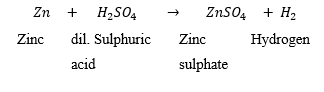
When Zinc reacts with dil. sulphuric acid. Hydrogen gas is evolved, with an effervescence
(b) Change of colour
Solution:
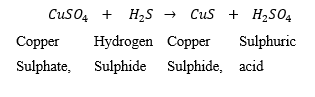
When blue coloured copper sulphate solution reacts with hydrogen sulphide gas, a black coloured solid substance copper sulphide is formed.
(c) Change in state
Solution:
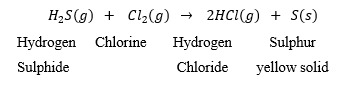
When hydrogen sulphide gas reacts with chlorine gas, it produces sulphur which is a solid substance and hydrogen chloride gas.
Question 3.
How do the following help in bringing about a chemical change?
(a) Pressure
Solution:
Some chemical reactions take place when reactants are subjected to high pressure.
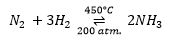
For example, Nitrogen and hydrogen produce ammonia gas when reactants are subjected to high pressure.
(b) Light
Solution:
Some chemical reactions can take place in the presence of light.
For example, Photosynthesis.

(c) Catalyst
Solution:
A catalyst can increase or decrease the chemical reaction’s rate and some chemical reactions desperately need a catalyst to change the rate of the reaction, in case it is too slow or too fast.
Positive catalyst:
Finely divided iron is used as a positive catalyst to increase the rate of reaction in the manufacturing of ammonia from hydrogen and nitrogen.

Negative Catalyst:
When a catalyst decreases the rate of reaction. For example, Negative catalyst like phosphoric acid is used to decrease the rate of the decomposition of hydrogen peroxide.
(d) Heat
Solution:
Some chemical reactions take place only when heat is present.
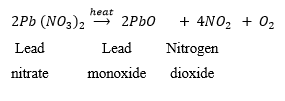
For example, when lead nitrate is heated, it breaks into lead monoxide, nitrogen dioxide and oxygen.
Question 4.
(a) Define catalyst.
Solution:
A substance that either increases or decreases the rate of a chemical reaction without itself undergoing any chemical change during the reaction is called a catalyst.
(b) What are (i) positive catalysts and (ii) negative catalysts? Support your answer with one example for each of them.
Solution:
(i) Positive catalyst:
A positive catalyst is a substance which increases the rate of chemical reaction.
Example: When potassium chlorate heated to 700°C decomposes to evolve oxygen gas when is added the decomposition takes place at 300°C

(ii) Negative catalyst:
A negative catalyst is a substance which decreases the rate of chemical reaction.
Example: Negative catalysts such as Phosphoric acid, alcohol, etc.
Phosphoric acid acts as a negative catalyst to decrease the decomposition of hydrogen peroxide.
(c) Name three biochemical catalysts found in the human body.
Solution:
Biochemical catalysts found in the human body are:
1. Pepsin
2. Trypsin
3. Lipase.
Question 5.
What do you observe when
(a) dilute sulphuric acid is added to granulated zinc?
Solution:
Zinc reacts with dilute sulphuric acid to produce effervescence and hydrogen gas is evolved.

(b) a few pieces of iron are dropped in a blue solution of copper sulphate?
Solution:
A few pieces of iron are dropped into a blue coloured copper sulphate solution, it makes the blue colour of the solution fades and eventually turns it into green.
(c) silver nitrate is added to a solution of sodium chloride?
Solution:
A solution of silver nitrate is added to a solution of sodium chloride, it produces a white insoluble precipitate of silver chloride.
AgNO3 (aq)+NaCl(aq)→AgCl(ppt)+NaNO3 (aq)
(d) ferrous sulphate solution is added to an aqueous solution of sodium hydroxide.
Solution:
A ferrous sulphate solution is added to aqueous sodium hydroxide solution, it produces a dirty green precipitate of ferrous hydroxide.
FeSO4 (aq)+2NaOH(aq)→Fe(OH)2↓+Na2SO4 (aq)
(e) solid lead nitrate is heated?
Solution:
When solid lead nitrate is heated, it decomposes to produce light yellow solid lead monoxide, reddish brown nitrogen dioxide gas and colourless oxygen gas.

(f) when dilute sulphuric acid is added to barium chloride solution?
Solution:
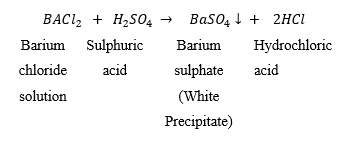
When a few drops of dilute sulphuric acid is added to barium chloride solution, a white precipitate of barium sulphate is formed.
Question 6.
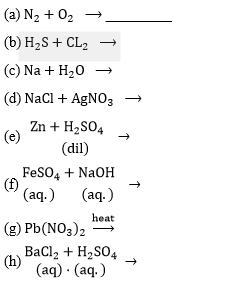
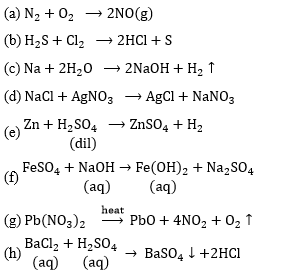
Complete and balance the following chemical equations:
Solution:
Exercise – II
Question 1.
1. Fill in the blanks.
(a) A reaction in which two or more substances combine to form a single substance is called a combination reaction.
(b) A catalyst is a substance which changes the rate of a chemical reaction without undergoing a chemical change.
(c) The formation of gas bubbles in a liquid during a reaction is called effervescence.
(d) The reaction between an acid and a base is called a neutralization reaction.
(e) Soluble bases are called alkalis.
(f) The chemical change involving iron and hydrochloric acid illustrates a displacement reaction.
(g) In the type of reaction called double decomposition reaction, ions two compounds exchange their positive and negative radicals ions respectively.
(h) A catalyst either increases or decreases the rate of a chemical change but itself remains unchanged at the end of the reaction.
(i) The chemical reaction between hydrogen and chlorine is a combination reaction.
(j) When a piece of copper is added to the silver nitrate solution, it turns blue in colour.
Question 2.
Classify the following reactions as combination, decomposition, displacement, precipitation and neutralization. Also, balance the equations.
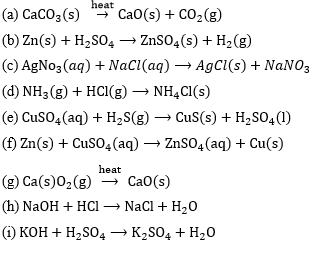
Solution:
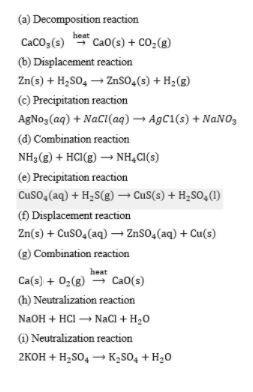
Question 3.
Define:
(a) Precipitation
(b) Neutralization
(c) Catalyst
Solution:
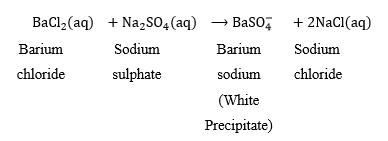
(a) Precipitation is a chemical reaction in which two compounds in their aqueous state react to form an insoluble salt as one of the product.
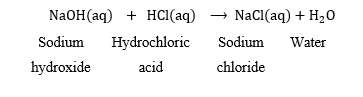
Acid + Base → Salt + Water
Example:
(b) Neutralization is a chemical reaction in which a base or an alkali reacts, with an acid to produce a salt and water only.
(c) Catalyst is a substance that either increases or decreases the rate of a chemical reaction without itself undergoing any chemical change is called a catalyst.

Here iron act as a catalyst and increases the rate of the chemical reaction.
Question 4.
Explain the following types of chemical reactions giving two examples for each of them.
(a) Combination reaction
(b) Decomposition reaction
(c) Displacement reaction
(d) Double decomposition reaction
Solution:
(a) A combination reaction is a reaction in which involves two or more substances combine to form a single substance.
A+B→AB
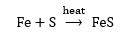
E.g. (i) When iron and sulphur are heated together, they combine to form iron sulphide.
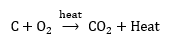
(ii) When carbon bums in oxygen to form a gaseous compound called carbon dioxide.
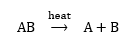
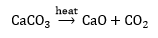
(b) In a decomposition reaction, a compound breaks up due to the application of heat into two or more simple substances.
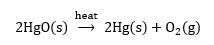
e.g. (i) Mercuric oxide when heated, decomposes to form two elements mercury and oxygen
(ii) CaCO3 when heated decomposes to calcium oxide and carbon dioxide.
(c) A displacement reaction is a reaction in which a more active element displaces a less active element from a compound.
AB+C→CB+A
e.g. (i) Zinc displaces copper from copper sulphate solution.
Zn+CuSO4 (aq)→ZnSO4 (aq)+Cu
(ii) Iron piece when added to copper sulphate solution, copper is displaced.
Fe+CuSO4→FeSO4+Cu
(d) A double decomposition reaction is a chemical reaction in which two compounds in their aqueous state exchange their ions to form new compounds.
AB+CD→CB+AD
e.g (i)AgNO3+HCl ⟶AgCl+HNO3 (aq)
(ii)NaOH(aq)+HCl(aq)⟶NaCl(aq)+H2O
Download PDF
Selina Class 8 ICSE Solutions Chemistry : Chapter 6- Chemical Reactions Solutions
Download PDF: Selina Class 8 ICSE Solutions Chemistry : Chapter 6- Chemical Reactions Solutions PDF
Chapterwise Selina Publishers ICSE Solutions for Class 8 Chemistry :
- Chapter 1- Matter
- Chapter 2- Physical and Chemical Changes
- Chapter 3- Elements, Compounds and Mixtures
- Chapter 4- Atomic Structure
- Chapter 5- Language of Chemistry Solutions
- Chapter 6- Chemical Reactions Solutions
- Chapter 7- Hydrogen Solutions
- Chapter 8- Water Solutions
- Chapter 9- Carbon and Its Compounds
About Selina Publishers ICSE
Selina Publishers has been serving the students since 1976 and is one of the quality ICSE school textbooks publication houses. Mathematics and Science books for classes 6-10 form the core of our business, apart from certain English and Hindi literature as well as a few primary books. All these books are based upon the syllabus published by the Council for the I.C.S.E. Examinations, New Delhi. The textbooks are composed by a panel of subject experts and vetted by teachers practising in ICSE schools all over the country. Continuous efforts are made in complying with the standards and ensuring lucidity and clarity in content, which makes them stand tall in the industry.