
Class 11: Biology Chapter 9 solutions. Complete Class 11 Biology Chapter 9 Notes.
NCERT Solutions for 11th Class Biology: Chapter 9-Biomolecules
NCERT 11th Biology Chapter 9, class 11 Biology chapter 9 solutions
Page No: 160
Exercises
1. What are macromolecules? Give examples.
Answer
Biomolecules with molecular weights more than one thousand Dalton are called macromolecules. These are found in the acid-insoluble fraction. Examples: Protein, polysaccharides, lipids, etc.
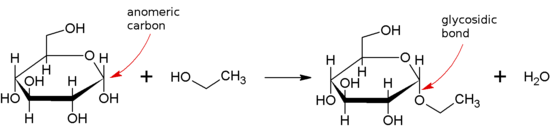
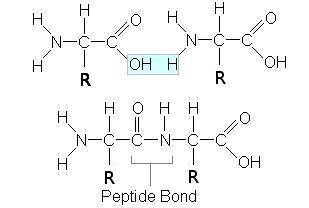
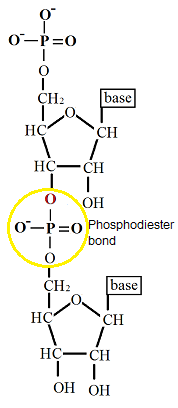
2. Illustrate a glycosidic, peptide and a phospho-diester bond.
Answer
(a) Glycosidic bond is formed normally between carbon atoms, 1 and 4, of neighbouring monosaccharide units.
(b) Peptide bond is a covalent bond that joins the two amino acids by - NH - CO linkage.
(c) Phosphodiester bond is a strong covalent bond between phosphate and two sugar groups. Such bonds form the sugar phosphate backbone of nucleic acids.
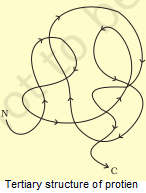
3. What is meant by tertiary structure of proteins?
Answer
The helical polypeptide chain undergoes coiling and folding to form a complex three-dimensional shape is called tertiary structure of proteins. These coils and folds are arranged to hide the non-polar amino acid chains and to expose the polar side chains. The tertiary structure is held together by the weak bonds formed between various parts of the polypeptide chain.
4. Find and write down structures of 10 interesting small molecular weight biomolecules. Find if there is any industry which manufactures the compounds by isolation. Find out who are the buyers.
Answer
Yes, we can connect the given information to purity or homogeneity of a protein. It is known that an accurate sequence of a certain amino acid is very important for the functioning of a protein. If there is any change in the sequence, it would alter its structure, thereby altering the function. If we are provided with a method to know the sequence of an unknown protein, then using this information, we can determine its structure and compare it with any of the known correct protein sequence. Any change in the sequence can be linked to the purity or homogeneity of a protein.
NCERT 11th Biology Chapter 9, class 11 Biology chapter 9 solutions
5. Proteins have primary structure. If you are given a method to know which amino acid is at either of two termini (ends) of a protein, can you connect this information to purity or homogeneity of a protein?
Answer
There are several methods provided by several scientists to find out the sequence of amino acids. Frederick Sanger proposed Sanger’s reagent to know the amino acid sequence in a polypeptide chain.
Sanger used 1-fluoro 2, 4 dinitrobenzene (FD NB) to determine insulin structure. FDNB specifically binds with N-terminal amino acid to form a dinitrophenyl (DNP) derivative of peptide. This DNP- derivative peptide can be identified by chromatography. The identified sequence of amino acids shows the homogeneity of a protein molecule
6. Find out and make a list of proteins used as therapeutic agents. Find other applications of proteins (e.g., cosmetics, etc.)
Answer
List of proteins used as therapeutic agents are Insulin, Oxytocin, Antidiuretic Hormone (ADH), Thrombin, Fibrinogen, Renin, Immunoglobulin, Diastase and Streptokinase.
Proteins are also commonly used in the manufacture of cosmetics, toxins, and as biological buffers.
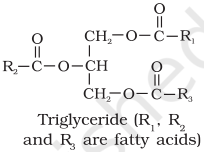
7. Explain the composition of triglyceride.
Answer
Triglycerides are composed of two types of molecules, i.e., glycerol (3 carbon molecules) and fatty acids which attach to the glycerol at the alcohol unit. It is mainly present in vegetable oils and animal fat. The structure is given:
Page No: 161
8. Can you describe what happens when milk is converted into curd or yoghurt from your understanding of proteins.
Answer
Milk is converted into curd or yogurt by the process of fermentation. Milk consists of globular proteins. During fermentation, the milk sugar (lactose) produces lactic acid. Lactic acid acts on the globular proteins present in the milk and denatures them. This denaturation destroys the tertiary and quaternary structures of proteins and the globular proteins are converted into fibrous proteins thus giving a thick texture to the milk due to coagulation of the proteins.
NCERT 11th Biology Chapter 9, class 11 Biology chapter 9 solutions
9. Can you attempt building models of biomolecules using commercially available atomic models (Ball and Stick models).
Answer
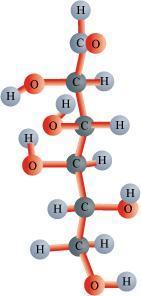
Yes. The biomolecules can be represented by the ball and stick model. The bonds which hold the atoms are represented by sticks, whereas the atoms are represented by balls.
Example: In the model of D-glucose, the oxygen atoms are represented by red balls, the hydrogen atoms by blue balls, while the carbon atoms are represented by grey balls.
10. Attempt titrating an amino acid against a weak base and discover the number of dissociating (ionizable) functional groups in the amino acid.
Answer
Titratinga neutral or basic amino acid against a weak base will dissociate only one functional group, whereas titration between acidic amino acid and a weak acid will dissociate two or more functional groups.
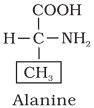
11. Draw the structure of the amino acid, alanine.
Answer
12. What are gums made of? Is Fevicol different?
Answer
Gums are natural heteropolysaccharides which are formed of a large number of different monosaccharide units linked together by glycosidic bonds.
Yes, Fevicol is different from gums as it comprises synthetic polymers.
13. Find out a qualitative test for proteins, fats and oils, amino acids and test any fruit juice, saliva, sweat and urine for them.
Answer
Qualitative tests for proteins, amino acids and fats:
• Biuret test: The Biuret test for protein identifies the presence of protein by producing light blue to purple colour of the solution.
• Grease test for oil: Certain oils give a translucent stain on brown paper. This test can be used to show the presence of fat in vegetable oils.
• Ninhydrin test: If Ninhydrin reagent is added to the solution, then the colourless solution changes to pink, blue or purple colour depending on the type of amino acid.
| Item | Name of the test | Procedure | Result | Inference | |
| 1. | Fruit juice | Biuret’s test | Fruit juice + Biuret’s reagent | Colour changes from light blue to purple | Protein is present. |
| Grease test | To a brown paper, add a few drops of fruit juice. | No translucent spot | Fats and oils are absent or are in negligible amounts. | ||
| Ninhydrin test | Fruit juice + Ninhydrin reagent + boil for 5 minutes | Colourless solution changes to pink, blue, or purple colour | Amino acids are present. | ||
| 2. | Saliva | Biuret’s test | Saliva + Biuret’s reagent | Colour changes from light blue to purple | Proteins are present. |
| Grease test | On a brown paper, add a drop of saliva. | No translucent spot | Fats/oils are absent. | ||
| Ninhydrin test | Saliva + Ninhydrin reagent + boil for 5 minutes | Colourless solution changes to pink, blue, or purple colour | Amino acids are present. | ||
| 3. | Sweat | Biuret’s test | Sweat + Biuret’s reagent | No colour change | Proteins are absent. |
| Solubility test | Sweat + Water | Oily appearance | Fats/oil may be present. | ||
| Ninhydrin test | Sweat + Ninhydrin reagent + boil for 5 minutes | No colour change, solution remains colourless | Amino acids are absent. | ||
| 4. | Urine | Biuret’s test | Few drops of urine + Biuret’s reagent | Colour changes from light blue to purple | Proteins are present. |
| Solubility test | Few drops of urine + Water | Little bit of oily appearance | Fats may or may not be present. | ||
| Ninhydrin test | Few drops of urine + Ninhydrin reagent + boil for 5 minutes | Colourless solution changes to pink, blue, or purple colour depending on the type of amino acid | Amino acids are present. |
14. Find out how much cellulose is made by all the plants in the biosphere and compare it with how much of paper is manufactured by man and hence what is the consumption of plant material by man annually. What a loss of vegetation!
Answer
Approximately, 100 billion tonnes of cellulose are made per year by all the plants in the biosphere and it takes 17 full grown trees to make one ton of paper. Trees are also used to fulfil the other requirements of man such as for timber, food, medicines, etc. Hence, it is difficult to calculate the annual consumption of plant material by man.
NCERT 11th Biology Chapter 9, class 11 Biology chapter 9 solutions
15. Describe the important properties of enzymes.
Answer
Important properties of enzymes are:
→ Enzymes are generally complex macromolecules of globular proteins with high molecular weight.
→ Enzymes do not start a reaction but increase the rate of chemical reaction.
→ Enzyme itself is not used up in the reaction it catalyzes so it can be used over again and again.
→ Enzymes have a high turn over number. It means the number of reactions that an enzyme molecule can catalyze per second.
→ Enzymes are specific in action.
→ The action of enzyme is greatly affected by temperatures. Their activity decreases with increase in temperature.
→ They show maximum activity at an optimum pH of 6 - 8.
→ The velocity of enzyme increases with increase in substrate concentration and then, ultimately reaches maximum velocity.
NCERT 11th Biology Chapter 9, class 11 Biology chapter 9 solutions
NCERT Solutions for 11th Class Biology: Chapter 9: Download PDF
NCERT Solutions for 11th Class Biology: Chapter 9-Biomolecules
Download PDF: NCERT Solutions for 11th Class Biology: Chapter 9-Biomolecules PDF
Chapterwise NCERT Solutions for Class 11 Biology:
- Chapter 1: The Living World
- Chapter 2: Biological Classification
- Chapter 3: Plant Kingdom
- Chapter 4: Animal Kingdom
- Chapter 5: Morphology of Flowering Plants
- Chapter 6: Anatomy of Flowering Plants
- Chapter 7: Structural Organisation in Animals
- Chapter 8: Cell-The Unit of Life
- Chapter 9: Biomolecules
- Chapter 10: Cell Cycle and Cell Division
- Chapter 11: Transport in Plants
- Chapter 12: Mineral Nutrition
- Chapter 13: Photosynthesis in Higher Plants
- Chapter 14: Respiration in Plants
- Chapter 15: Plant - Growth and Development
- Chapter 16: Digestion and Absorption
- Chapter 17: Breathing and Exchange of Gases
- Chapter 18: Body Fluids and Circulation
- Chapter 19: Excretory Products and Their Elimination
- Chapter 20: Locomotion and Movement
- Chapter 21: Neural Control and Coordination
- Chapter 22: Chemical Coordination and Integration
About NCERT
The National Council of Educational Research and Training is an autonomous organization of the Government of India which was established in 1961 as a literary, scientific, and charitable Society under the Societies Registration Act. Its headquarters are located at Sri Aurbindo Marg in New Delhi. Visit the Official NCERT website to learn more.