
Class 9: Sanskrit Aamod Chapter 7 solutions. Complete Class 9 Sanskrit Aamod Chapter 7 Notes.
Maharashtra Board Solutions for Class 9- Sanskrit Aamod: Chapter 7- योगमाला
Maharashtra Board 9th Sanskrit Aamod Chapter 7, Class 9 Sanskrit Aamod Chapter 7 solutions
Questions and Answers
भाषाभ्यासः
1. माध्यमभाषया उत्तरत।
प्रश्न अ.
शवासनं कथं हितकरं भवति?
उत्तरम् :
‘योगमाला’ या पाठात हठयोगप्रदीपिका या ग्रंथातून श्लोक संपादित केले आहेत. या पद्यामध्ये योगासने व त्यांचे फायदे यासंबंधी चर्चा आली आहे.
योगासनांमुळे शरीर तसेच मनाचे आरोग्य उत्तम राहते. योगसाधना करताना सर्व आसने झाल्यानंतर शवासन केले जाते. ‘या आसनात जमिनीवर पाठ टेकवून शवाप्रमाणे झोपावे अशी कृती केली जाते. शवासनामुळे शरीराचा थकवा दूर होतो तसेच मनाला शांतता मिळते. योगसाधना करताना शरीराला व्यायाम होतो. हा व्यायाम झाल्यानंतर शरीराला आराम मिळण्यासाठी शवासन आवश्यक असते.
‘योगमाला’ a collection of verses from the हठयोगप्रदीपिका composed in the fifteen century by Shri Swatvaram Yogi provides us with instructions for performing asanas and also describes their benefits.
After performing the regular asanas one shouldend the yogasadhana by ‘शवासनम्’. In shavasana one should lie still on the floor like a corpse (dead body). Shavasana takes away fatigue. By performing Shavasana the mind gets relaxed. Shavasana improves concentration and provides peace and rest to body as well as mind.
प्रश्न आ.
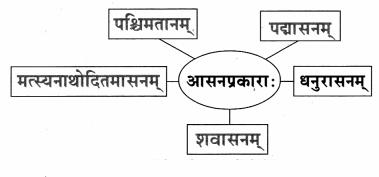
मत्स्येन्द्रासनस्य कृतिं वर्णयत ।
उत्तरम् :
योगमाला या पद्यपाठामध्ये योगसाधनेचे फायदे व योगसनांच्या कृती सांगितल्या आहेत. उजवा पाय डाव्या पायाच्या मांडीखाली ठेवावा. डावा पाय उजव्या गुडघ्याला बाहेरून वेढा घालून जमिनीवर ठेवावा, तो पाय धरून मान डाव्या बाजूला फिरवून शरीराला पीळ द्यावा. ही मत्स्येनाथोदितमासनाची कृती होय.
‘योगमाला’ a collection of verses from हठयोगप्रदीपिका by Shri Swatvaram Yogi – describes certain asanas and speak of their benefits. While performing मत्स्य नाथोदितासन one should place the right leg at the base of the left leg and should place the left leg covering the outer part of the right knee. Then he should hold the left foot with right hand and twist the body behind. This is ‘मत्स्यनाथोदितासन’.
प्रश्न इ.
पद्मासनस्य वर्णनं कथं कृतम्?
उत्तरम् :
‘योगमाला’ या पद्यपाठात विविध योगासनांच्या कृती व त्यांचे फायदे दिले आहेत. पद्मासन करताना उजवा पाय डाव्या मांडीवर ठेवावा. डावा पाय उजव्या पायावर ठेवावा.
मागून उजव्या हाताने झव्या पायाचा अंगठा पकडावा व डाव्या बताने उजव्या पायाचा अंगठा पकडावा. हनुवटी छातीवर ठेवून नाकाच्या शेंड्याकडे एकटक पहावे. पद्मासनामुळे व्याधींचा विनाश होतो. पद्मासन हे योगसाधनेतील अनिवार्य आसन आहे.
In the ‘योगमाला’ the description of asanas as well as their benefits to body and mind are discussed. पद्मासन is the most essential and basic asana. While performing WT one should place the right leg on the left thigh and the left leg on the right thigh.
Then one should hold the toes of the leg by crossing the hands at the back. After attaining a such position, one should keep his chin on chest and should look at the tip of the nose. This complete position is called as पद्मासन. Being very important and a basic asana पद्मासन has to be performed regularly.
प्रश्न ई.
योगासनै: के लाभा: भवन्ति?
उत्तरम् :
‘योगमाला’ या पद्यामध्ये हठयोगप्रदीपिका या स्वात्माराम योगी रचित ग्रंथामधून श्लोक संपादित केले आहेत. योगसाधने मुळे शारीरिक तसेच मानसिक आरोग्य उत्तम राहते. योगसाधनेत अनिवार्य असणारे पद्मासन हे रोगनाशक आहे. योगसाधनेच्या शेवटी केल्या जाणाऱ्या शवासनामुळे शरीराचा चकवा तर दूर होतोच शिवाय मनाला शांतता मिळते.
योगसनांमुळे संपूर्ण शरीराचा व्यायाम होतो व शरीर लवचिक व सुदृढ बनते. योगासनांमुळे मानसिक आरोग्यसुद्धा सुधारते. मनाची एकाग्रता आणि स्मरणशक्ती सुद्धा योगासनांमुळे वाढते. योगसाधना ही केवळ शरीरासाठी नव्हे तर मनासाठी सुद्धा लाभदायक आहे.
In the lesson ‘योगमाला’ a collection of verses from हठयोगप्रदीपिका the procedure for performing different asanas, their postures and benefits are discussed.
Doing yoga every day, helps us to be physically as well as mentally healthy. The basic and foremost asana destroys our diseases. Performing yarn at the end of all the asanas relaxes our body and provides peace to our body and mind.
Yogasanas contribute to our physical health and equally to our mental health. One can experience peace of mind, improvement in concentration and memory by doing yogasanas. Yogasanas also help in gaining physical flexibility and helps keep the body light.
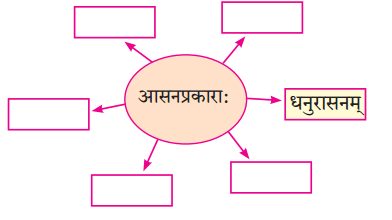
2. जलचित्रं पूरयत।
प्रश्न 1.
उत्तरम् :
प्रश्न 2.
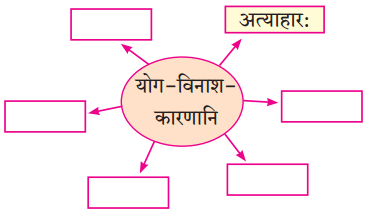
उत्तरम् :
3. चित्राणि दृष्ट्वा आसननामानि अन्विष्यत लिखत च।
प्रश्न 1.
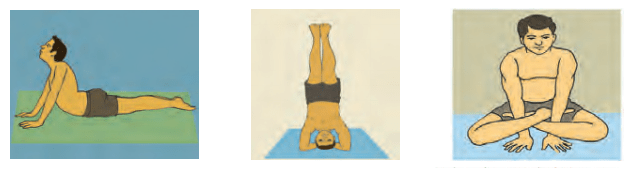
उत्तरम् :
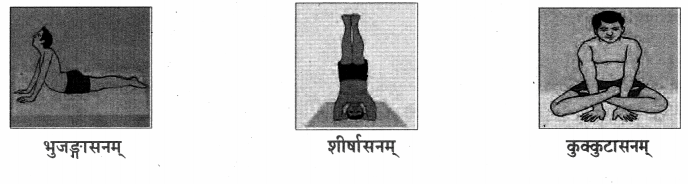
Additional Important Questions and Answers
सूचनानुसारं कृती: कुरुत।
| त्वान्त अव्यय धातु + त्वा / ध्वा / ट्वा / ढ्वा / इत्वा अयित्वा | ल्यबन्त अव्यय उपसर्ग + धातु + य / त्य | तुमन्त अव्यय थातु + तुम् / धुम् / टुम् / ढुम् / इतुम् / अयितुम् |
| धृत्वा | संस्थाप्य निधाय | – |
| गृहीत्वा | प्रसार्य | – |
| – | प्रगृहा | – |
पठत बोधत !
योगेन चित्तस्य पदेन वाचां मलं शरीरस्य च वैद्यकेन।
योऽपाकरोत् तं प्रवरं मुनीनां पतञ्जलिं प्राञ्जलिरानतोऽस्मि ।।
ज्यांनी योगाद्वारे मनाची अशुद्धता, शब्दांद्वारे वाणीची अशुद्धता आणि वैद्यकशास्त्राद्वारे शरीराची अशुद्धता दूर केली, त्या श्रेष्ठ पतंजली मुनींना मी हात जोडून नमस्कार – करतो.
I bow down modestly to पतञ्जलि the greatest of sages who removed the impurity of the mind with Yoga, (impurity) of speech with words and that of the body with the science of medicine.
पादौ हस्तौ जानुनी द्वे उरश्चाथ ललाटकम्।
अष्टाङ्गेन स्पृशेद् भूमिं साष्टाङ्गप्रणतिश्च सा।
दोन पाय, दोन हात, दोन गुडघे, छाती आणि कपाळ ही आठ अंगे जमिनीला टेकवावीत. हा साष्टांग नमस्कार होय.
One should touch the ground with these light limbs (body parts) two feet, two hands, two knees, chest and forehead. This is the साष्टांग नमस्कार (salutation with eight body parts).
आदित्यस्य नमस्कारान् ये कुर्वन्ति दिने दिने।
जन्मान्तरसहस्रेषु दारिद्र्यं नोपजायते।।
जे दररोज सूर्यनमस्कार घालतात, त्यांच्याकडे सहस्रवर्षांपर्यंत दारिद्र्य येत नाही.
Those who perform the सूर्य नमस्कार (salutation to the sun) everyday, they don’t become poor for a thousand years.
प्रस्तावना :
योगसाधना हे निरोगी व सुंदर आयुष्याचे गुपित आहे. योगासने हा शारीरिक तसेच मानसिक आरोग्य उत्तम ठेवण्यासाठी प्रभावी उपाय आहे. संयुक्त राष्ट्र संस्थेने सुद्धा योगसाधनेचे महत्त्व जाणून 21 जून हा ‘जागतिक योग दिवस’ म्हणून जाहीर केला आहे. प्रस्तुत पाठातील श्लोक हे ‘हठयोग प्रदीपिका’ या ग्रंथातून संपादित केले आहेत.
‘घेरण्ड संहिता’ आणि ‘शिव संहिता’ हे अजून दोन योगशास्त्रावरील प्रसिद्ध ग्रंथ आहेत. स्वात्माराम योगी हे हठयोग प्रदीपिका’ या ग्रंथाचे लेखक आहेत. त्यांनी अत्यंत सोप्या भाषेत ‘हठयोग प्रदीपिका’ या ग्रंथाची रचना केली आहे. विद्वान माणसाने यथाशक्तियोगसाधना करावी जेणेकरून त्याला समाधान व उत्तम आरोग्य लाभेल.
The secret of a healthy and beautiful life is the regular practice of yoga. It is extremely helpful for acquiring physical and mental strength as well as for strengthening the soul.
In fact it is only recently that the United Nations Organisation has declared 21st June as the International Yoga Day. The shlokas present here have been taken from the freatise named ‘हठयोग प्रदीपिका’. It is one of the three existing influential Yoga treatises.
The other fuo being ‘घेरण्ड संहिता’ and ‘शिव संहिता’. It has been composed by ICARA T Disciple of स्वामी गोरखनाथ, ‘हठयोग प्रदीपिका is extremely simple and easy to comprehend. An intelligent man should practise yoga regularly as per his strength so that he can experience satisfaction, happiness and health in life.
श्लोकः – 1
हठस्य चाङ्गलाघवम् ।।1।। [What is the benefit of an आसन ]
श्लोकः : हठस्य प्रथमाङ्ग तावदासनं पूर्वमुच्यते।
कुर्यात्तदासनं स्थैर्यमारोग्यं चाङ्गलाघवम् ।।1।।
अन्वयः हठस्य प्रथम – अङ्ग तावत् आसनं पूर्वम् उच्यते। आसनं स्थैर्यम् आरोग्यम् अङ्गलाघवं च कुर्यात्।
अनुवादः
हठयोगाचे सर्वात पहिले अंग म्हणजे आसन, ते पहिल्यांदा सांगितले आहे. आसन केल्यामुळे स्थैर्य, आरोग्य आणि (शरीराला) हलकेपणा मिळेल.
Then, what is being told first is that asana or body posture is the first aspect of Hathayoga, would provide stability, health and lightness to the body.
श्लोकः – 2
वामोरूपरि ………………. प्रोच्यते।।2।। [How पद्मासन is to be performed]
श्लोकः वामोरूपरि दक्षिणं च चरणं संस्थाप्य वामं तथा
दक्षोपरि पश्चिमेन विधिना धृत्वा कराभ्यां दृवम्
अङ्गुष्ठौ हृदये निधाय चिबुकं नासागमालोकयेद्
एतद् व्याधिविनाशकारि यमिनां पद्मासनं प्रोच्यते ।।2।।
अन्वयः : वाम – ऊरु – उपरि दक्षिणं चरणं संस्थाप्य, दक्ष – ऊरु – उपरि वामं चरणं संस्थाप्य पश्चिमेन विधिना कराभ्यां दृढम् अङ्गुष्ठौ धृत्वा, हदये चिबुकं निधाय, नासाग्रम् आलोकयेत् । एतद् यमिना व्याधिविनाशकारि पद्मासनं प्रोच्यते ।
अनुवादः
उजवा पाय डाव्या मांडीवर ठेऊन आणि डावा पाय उजव्यावर ठेऊन, दोन्ही हातांनी मागून पायचे अंगठे पकडावेत. हनुवटी हृदयस्थानावर ठेऊन नाकाच्या शेंड्याकडे एकटक पहावे. याला साधक पद्मासन म्हणतात ज्याने व्याधी दूर होतात.
Placing the right leg on the left thigh and the left leg on the right thigh and holding the toes with both the hands crossing at the back, placing the chin near the heart region should look at the tip of the nose. This is called the पद्मासन which destroys all diseases of the ones who perform yoga.
श्लोक: – 3
पादाङ्गुष्ठी ………………… धनुरासनमुच्यते ।।3।। [How धनुरासन is to be performed]
श्लोकः : पादाङ्गुष्ठौ तु पाणिभ्यां गृहीत्वा श्रवणावधि।
धनुराकर्षणं कुर्याद् धनुरासनमुच्यते ।।3।।
अन्वयः : पाणिभ्यां पाद-अङ्गुष्ठौ गृहीत्वा श्रवण-अवधि धनुराकर्षणं कुर्यात् (तत्) धनुरासनम् उच्यते।
अनुवादः
दोन्ही हातांनी मागून दोन्ही पायांचे अंगठे धरून कानापर्यंत धनुष्याच्या आकाराप्रमाणे आणावेत. याला धनुरासन म्हणतात.
Holding the toes of the feet with both the hands stretching the face behind till the ears touch the shoulders like a bow is what is called धनुरासन.
श्लोक: – 4
प्रसार्य …………….. पश्चिमतानमाहुः ।।4।। [How पश्चिमतानम् is to be performed]
श्लोकः : प्रसार्य पादौ भुवि दण्डरूपौ
दौथ्या पदाग्रद्वितयं गृहीत्वा। जानूपरिन्यस्तललाटदेशो
वसेदिदं पश्चिमतानमाहुः ।।4।।
अन्वयः : भुवि पादौ दण्डरूपौ प्रसार्य, दौथ्या (हस्ताभ्याम् (पद-अग्र-द्वितयं) गृहीत्वा (जानु-उपरि) न्यस्त-ललाट-देश: वसेत्। इदं पश्चिम-तानम् आहुः ।
अनुवादः
दोन्ही पाय काठीप्रमाणे जमिनीवर सरळ ठेवून, दोन्ही पावलांचा वरचा भाग हातांनी पकडून कपाळ गुडघ्याला टेकवून ठेवावे. याला पश्चिमतानासन असे म्हणतात.
Stretching the legs straight on the ground like a rod and holding the front part of the feet with both hands one should place the forehead on the knees that (would be called the पश्चिमतानासन.
श्लोकः – 5
वामोरूमूल ……………. स्यात् ।।5।। [How मत्स्यनाथोदितमासन is to be performed]
श्लोकः : वामोरुमूलार्पितदक्षपादं
जानोर्बहिर्वेष्टितवामपादम्।
प्रगृह्य तिष्ठेत् परिवर्तिताङ्गः
श्रीमत्स्यनाथोदितमासनं स्यात् ।।5।।
अन्वयः : वाम – उरु – मूल-अर्पित – दक्षपादं, जानो: बहिः वेष्टित – वामपादं – प्रगृह्णय परिवर्तिताङ्ग-तिष्ठेत् (तत्) श्रीमत्स्यनाथोदितमासनं स्यात्।
अनुवादः
उजवा पाय डाव्या पायाच्या मांडीच्या खाली ठेवून डाव्या पायाने उजव्या गुडघ्याला बाहेरून वेढा घालून, उजव्या हाताने डाव्या पायाचे पाऊल धरून अंगाला पीळ द्यावा. हे मत्स्यनाथोदित आसन.
With the right leg placed at the base of the left leg and the left leg covering the outer part of the right knee, holding the left foot with the right hand, twisting the body behind would be the Shri मत्स्यनाथोदित आसन.
श्लोकः – 6
उत्तानं ……………… चित्तविश्रान्तिकारकम् ।।6।। [Procedure and benefits of शवासना]
श्लोकः : उत्तानं शववद् भूमौ तच्छवासनम्।
शवासनं श्रमहरं चित्तवित्रान्तिकारकम् ।।6।।
अन्वयः : भूमी उत्तानं शववत् शयनं तत् शवासनम्। शवासनं, श्रमहरं, चित्त-विश्रान्ति-कारकम् (अस्ति)।
अनुवादः
जमिनीवर पाठ टेकवून प्रेताप्रमाणे (निश्चल) झोपावे, हे शवासन. शवासनामुळे थकवा दूर होतो. मनाला शांतता (विश्रांती) मिळवून देते.
Lying down supine (on the back) on the floor like a corpse (dead body) is शवासन, शवासन takes away fatigue and provides rest to the mind.
श्लोकः – 7
अत्याहार: ……………… विनश्यति।।7।।
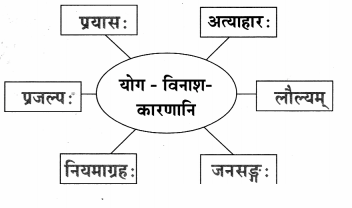
श्लोकः : अत्याहार: प्रयासश्च प्रजल्पो नियमाग्रहः।
जनसङ्गच लौल्यं च षड्भिोंगो विनश्यति ।।7।।
अन्वयः । अत्याहारः, प्रयासः, प्रजल्पः, नियम-अग्रहः, जनसङ्गः लौल्यं च षड्भि: योग: विनश्यति।
अनुवादः
पुढील सहा गोष्टींमुळे योग नाश पावतो: अति आहार, अति कष्ट, अति बडबड, दिनक्रम न पाळणे, लोकांशी संगत आणि हाव.
Yoga is destroyed by these six things-excessive eating excessive physical effort, talkativeness, not following the routine, association with people and greed.
सन्धिविग्रहः
- प्रयासच – प्रयास: + च।
- प्रजल्पो नियमाग्रहः – प्रजल्पः + नियमाग्रहः
- जनसङ्गाः – जनसङ्गः + च।
- तच्छवासनम् – तत् + शवासनम् ।
- जानोर्बहिर्वेष्टितः – जानो: + बहिः + वेष्टितः।
- पादाङ्गुष्ठौ – पाद + अङ्गुष्ठौ ।
- धनुरासनमुच्यते – धनुरासनम् + उच्यते ।
- वामोरूपरि – वाम + उरु + उपरि।
- दक्षोरूपरि – दक्ष + उरु + उपरि।
- नासाग्रमालोकयेद् – नासाग्रम् + आलोकयेत् ।
- तावदासनम् – तावत् + आसनम्।
- वसेदिदम् – वसेत् + इदम्।
समानार्थकशब्दाः
- श्रमः – प्रयासः। ‘नखाः – नखराः, शङ्कवः, कररुहाः।
- भूमि : – भूः, पृथिवी, धरा ।
- अङ्गम् – शरीरम्, काया।
- श्रवणम् – कर्णः श्रुतिः, श्रवः, श्रोत्रम् ।
- धनुः – चापः, कौदण्डम्, कार्मुकम् ।
- करः – हस्तः।
- चरण: – पादः।
- स्थैर्यम् – स्थिरता।
- भूः – धरणी, धरित्री, पृथिवी।
- दौाम् – बाहुभ्याम्, हस्ताभ्याम्।
विरुद्धार्थकशब्दाः
- अत्याहार: × अल्पाहारः, मिताहारः।
- प्रजल्पता × मितभाषणम्।
- विश्रान्तिः × श्रमः ।
- उपरि × अधः।
- गृहीत्वा × त्यक्त्वा ।
- वामः × दक्षिणः।
- दृढम् × शिथिलम्।
- आरोग्यम् × अनारोग्यम्।
- लाघवम् × गुरुत्वम्।
- स्थैर्यम् × चञ्चलता, चञ्चलत्वम्
- उपरि × अधः।
शब्दार्थाः
- स्थैर्यम् – stability – स्थैर्य, स्थिरता
- आरोग्यम् – health – आरोग्य
- लाघवम् – lightness – हलकेपणा
- उच्यते – is being told – सांगितले जात आहे
- वाम – left – डावा
- दक्षिणम् – right – उजवा
- चरणम् – foot – पाऊल
- संस्थाप्य – having kept – ठेवून
- पश्चिमेन – by side – पश्चिमेला
- धृत्वा – having held – धरून
- उरु – thigh – मांडी
- दृढम् – tight, firmly – घट्ट
- अङ्गुष्टः – thumb – अंगठा
- चिबुकम् – chin – हनुवटी
- नासाग्रः – tip of nose – नाकाचा शेंडा
- व्याधिः – disease – व्याधी
- पाणिभ्याम् – with hands – हातांनी
- गृहीत्वा – holding – धरून
- श्रवणावधि – till the ears – कानापर्यंत
- धनुराकर्षणम् – like a bow – धनुष्याप्रमाणे
- भुवि – on floor – जमिनीवर
- दण्डरूप – like a rod/straight – काठीप्रमाणे (सरळ)
- दोभ्याम् – with hands – हातांनी
- जानू – knees – गुडघे
- न्यस्त – placed – ठेवलेले
- ललाट – forehead – कपाळ
- वेष्टित – covered – वेढलेले
- प्रगृहा – holding – पकडून
- मूलार्पित – kept at the base – मुळापाशी ठेवलेले
- परिवर्तिताङ्गः – twisting the body – अंग पीळणे
- भूमौ – on the floor – जमिनीवर
- उत्तानम् – supine – पाठीवर
- शववत् – like a corpse (dead body) – प्रेतासारखे
- श्रमः – fatigue – थकवा
- विश्रान्ति – rest – विश्रांती
- चित्त – mind – मन
- अत्याहारः – excessive eating – अति आहार
- प्रयास: – excessive physical effort – अति शारीरिक कष्ट
- प्रजल्पः – talkativeness – बडबड
- नियमाग्रहः – not following routine – दिनक्रमाचे नियम पाळणे
- जनसङ्गः – association with people – लोकांची संगत
- लौल्यम् – greed – हाव, लोभ
Download PDF
Maharashtra Board Solutions for Class 9- Sanskrit Aamod: Chapter 7- योगमाला
Download PDF: Maharashtra Board Solutions for Class 9- Sanskrit Aamod: Chapter 7- योगमाला PDF
Chapterwise Maharashtra Board Solutions Class 9 Sanskrit Aamod :
- Chapter 1- सुष्ठु गृहीतः चौरः
- Chapter 2- अव्ययमाला
- Chapter 3- धन्यौ तौ दातृयाचकौ
- Chapter 4- विध्यर्थमाला
- Chapter 5- किं मिथ्या ? किं वास्तवम् ?
- Chapter 6- वीरवनिता विश्पला
- Chapter 7- योगमाला
- Chapter 8- पिनकोड्प्रवर्तकः महान् संस्कृतज्ञः
- Chapter 9- सूक्तिसुधा
- Chapter 10- पितृभक्तः नचिकेताः
- Chapter 11- मनसः स्वच्छता
- Chapter 12- अमरकोषः
- Chapter 13- सरमाया: शीलम्
- Chapter 14- काव्यशास्त्रविनोदः
- Chapter 15- मनोराज्यस्य फलम्
- Chapter 16- स्वागतं तपोधनाया: