
Class 10: Sanskrit Aamod Chapter 10 solutions. Complete Class 10 Sanskrit Aamod Chapter 10 Notes.
Maharashtra Board Solutions for Class 10- Sanskrit Aamod: Chapter 10- नदीसूक्तम्
Maharashtra Board 10th Sanskrit Aamod Chapter 10, Class 10 Sanskrit Aamod Chapter 10 solutions
भाषाभ्यास:
1. माध्यमभाषया उत्तरत ।
प्रश्न अ.
विश्वामित्र: नद्यौ किं प्रार्थयते ?
उत्तरम् :
विश्वामित्र – नदी संवाद, हे संवादसूक्त ऋग्वेदाच्या तिसऱ्या मंडलात आढळते. यामध्ये, विश्वामित्र ऋषी नदीला मातेसमान मानून तिची पूजा करतात आणि तिला जपण्याचे व तिची सेवा करण्याचे वचन देतात.
विश्वामित्र ऋषी बियास व सतलज नद्यांच्या संगमाजवळ पोहोचले. तेव्हा त्यांनी नद्यांना आदरयुक्त शुभेच्छा दिल्या. त्यांनी नद्यांना ‘माता’ असे संबोधून त्यांना उथळ होण्याची विनंती केली. याचप्रमाणे विश्वामित्रांनी नद्यांना त्यांचे प्रवाह कमी करण्यासाठी प्रार्थना केली.
विश्वामित्र – नदी संवाद is one of the dialogue-hymns found in third मण्डल of ऋग्वेद. Herein the sage विश्वामित्र worships river asa mother and pleases her with the assurance to take care of her and serve her.
विश्वामित्र, reached the union of Bias and Sutlej river. Then he greeted the rivers with respect. He termed rivers as mother and requested them to become shallow. He requested them to moderate the flow.
प्रश्न आ.
मानवानां जीवनं नदीनां साहाय्येन कथं समृद्धं जातम् ?
उत्तरम् :
विश्वामित्र – नदी संवाद, हे संवादसूक्त ऋग्वेदाच्या तिसऱ्या मंडलात आढळते. यामध्ये, विश्वामित्र ऋषी नदीला मातेसमान मानून तिची पूजा करतात आणि तिला जपण्याचे व तिची सेवा करण्याचे वचन देतात.
संपूर्ण पृथ्वीवर नदीजल हा पाण्याचा उपयुक्त स्रोत आहे. पुष्कळ वर्षांपासून नद्या या शेतीमध्ये शेतकऱ्यांना उपयुक्त ठरतात. केवल शेतांचीच नव्हे तर संपूर्ण पृथ्वीची पाण्यामुळे भरभराट झाली. पाण्याचा योग्य प्रकारे संचय करुन वीजनिर्मितीकरता जनित्र (जनरेटर) सुद्धा लावले गेले व मानवाचे जीवन पाण्यामुळे प्रकाशमान झाले. या प्रकारे नद्यांच्या साहाय्याने मानवी जीवन समृद्ध झाले.
विश्वामित्र – नदी संवाद is one of the dialogue-hymns found in third मण्डल of ऋग्वेद. Herein the sage विश्वामित्र worships river as a mother and pleases her with the assurance to take care of her and serve her.
River water is a useful source. Since many years, rivers are helpful to the farmers in agriculture. Not only the fields but the earth is prospered due to rivers. River water was well-restored. Even the generator was placed for creating electricity, thus water illuminated lives of.people. In this way human lives were flourished with the assistance of rivers..
प्रस्तावना :
ऋग्वेद संस्कृत साहित्यातील अतिशय प्राचीन वेद मानला जातो. पौराणिक प्रसंग, काव्य, प्रार्थना यांनी युक्त अशा दहा मंडलांनी तो समृद्ध आहे. ऋग्वेदाच्या विविध सूक्तांतून देव, देवता व नैसर्गिक शक्ती यांचे स्तवन केलेले दिसून येते.
विश्वामित्र – नदी संवाद, हे संवादसूक्त ऋग्वेदाच्या तिसऱ्या मंडलात आढळते. यामध्ये, विश्वामित्र ऋषी नदीला मातेसमान मानून तिची पूजा करतात आणि तिला जपण्याचे व तिची सेवा करण्याचे वचन देतात.
पाण्याचा उत्तम स्रोत असलेल्या नद्यांच्या तीरावर मानवी संस्कृती विकसित होत गेली. पाण्याच्या प्राणवाहक तत्त्वामुळे, धार्मिक कार्यातील त्याच्या विनियोगामुळे व स्वच्छतेवर दिला गेलेला भर, यामुळे भारतीय संस्कृतीमध्ये पाण्याला विशेष महत्त्व प्राप्त झाले आहे. यास्तव, आपण सर्वांनी नद्यांचे रक्षण करावयास हवे.
नेमका हाच विचार महोदया डॉ. मंजूषा गोखले यांनी ऋग्वेदातील नदीसूक्तावर आधारित संवादपाठात मांडला आहे.
ऋग्वेद is considered to be the most ancient perhaps the foremost literature in Sanskrit. It is comprised of ten HUSE is filled with liturgical material as well as mythological accounts, poetry and prayers.
Gods, goddesses, natural elements are praised through hymns of in a poetic form. विश्वामित्र – नदी संवाद, is one of the dialogue-hymns found in third मण्डल of ऋग्वेद. Herein the sage विश्वामित्र worships नदी (river) as a mother and pleases her with the assurance to care and serve her.
Human civilisation expanded on the banks of the river. Indeed, water is of special significance in Indian culture for its life-sustaining properties as well as its use in rituals and because of the stress given to cleanliness.
Hence, we should take care of the rivers. This thought is appropriately brought out through the dialogue based on नदीसूक्तम् from ऋग्वेद written by respectable Dr. Manjusha Gokhale.
अनुवादः
व्यासपीठावर – कीर्तनकार कीर्तन करत आहे, श्रोतृगण ऐकण्यात तल्लीन झाला आहे.)
गंगे, यमुने, गोदावरी, सरस्वती, नर्मदे, सिंधु, कावेरी (सर्व नद्यांनो) पृथ्वीवर (तुमचा) संगम होवो. (हिंदू पंचांगाप्रमाणे) ज्येष्ठ महिन्यात, शुक्लपक्षातील दशमीला गंगादशहरा उत्सवाचा प्रारंभ होतो. या उत्सवामध्ये नदीची पूजा करावी.
(टीप : पवित्र असणाऱ्या गंगानदीचे स्वर्गातून पृथ्वीवर याच दिवशी अवतरण झाले, असे मानतात. म्हणून हा दिवस गङ्गादशहरा किंवा गङ्गावतरणम् या नावाने साजरा केला जातो.) श्रोतृगण – नदीचे पूजन? नदीचे पूजन कशासाठी (करायचे)?
कीर्तनकार – खरोखर, नदी जीवन देणारी आहे. म्हणून या प्रसंगी, कृतज्ञता दर्शविण्यासाठी लोक पाण्यामध्ये दीपदान करतात. द्रोणामध्ये दिवे लावून नदीच्या पाण्यामध्ये अर्पण करतात. (पाण्यात सोडतात).
पिण्यासाठी पाणी (उपयोगात येते.) शेतीची वाढ होण्यासाठी (पाण्याचा उपयोग होतो.) वीज निर्माण करण्यासाठी (पाणी वापरले जाते.) (खरोखरच), पाणी जीवन जगण्यासाठी (महत्त्वाचे ठरते.) सजीवांसाठी नदी देवीतुल्य आहे. नदी ही मातृतुल्य आहे. यास्तव, आज सर्व प्रकारे नदीसूक्त ऐकण्याजोगे व स्मरणीय आहे.
श्रोतृगण – अहो पुराणिकवर्य, नदी आपली माता कशी म्हणता येईल? नदीचे (आपल्यावर) उपकार कसे काय?
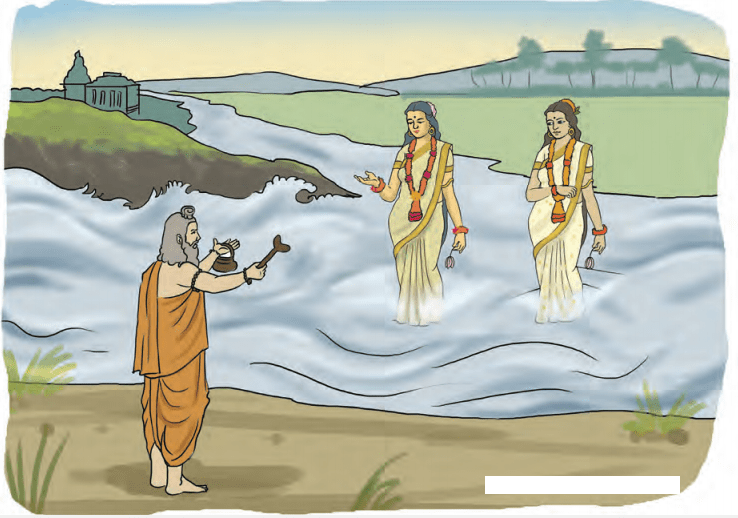
कीर्तनकार – सज्जनहो ऐका. ही कथा फार जुनी आहे. कुशिकांचे पुत्र विश्वामित्र नावाचे एक श्रेष्ठ मुनी होते. कुटुंबासहित व गोधनासहित ते दूरवरुन आले होते. मार्ग चालत चालत ते बियास व शुतुद्री (सतलज) या नद्यांच्या संगमाजवळ पोहोचले.
(त्यानंतर विश्वामित्र प्रवेश करतो. नदीला प्रणाम करुन / नमस्कार करुन)
विश्वामित्र – मी नदीचा प्रवाह कसा पार करू? गोधनाचे कसे रक्षण करू? (दुसऱ्या तीरापर्यंत) ओलांडून जाण्यासाठी मार्गाची याचना कशी करू? नद्यांकरिता शुभेच्छांची प्रार्थना कशी करू?
नदी (बियास) – हा माणूस कोण आहे? हा कशासाठी आपल्याला वंदन करत आहे व (आपली) प्रशंसा करत आहे? आर्य, (आपले) तुमचे नाव काय आहे? आम्हांला कोवून बोलावत आहेस?
विश्वामित्र – माते, मी विश्वामित्र आहे. मी रथ व गाड्यांसहीत दूरवरून आलो आहे. आम्ही सर्व दुसऱ्या तीरावर जाण्यासाठी उत्सुक आहोत.
नदी (सतजल) – हे ब्राह्मणश्रेष्ठा, तुझी वाणी खरोखर गोड आहे. (ती)
आम्हाला आनंदित करत आहे. (आम्हांला) सांग, आम्ही तुला कसे साहाय्य करू?
विश्वामित्र – माते, माझी विनंती ऐक तू माझ्यासाठी उथळ होशील का? कृपया पाण्याचा ओघ कमी कर. ज्यामुळे आम्ही सर्व दुसऱ्या तीरावर सहज जाऊ शकतो.
नदी (बियास) – खरचं, इंद्रदेवाने मला. हा मार्ग दिला आहे. वृत्रासुराला मारुन इंद्राने(च) नदीचा प्रवाह मोकळा करुन दिला आहे. मी त्याची अवज्ञा करू शकत नाही, (अन्यथा) इंद्रदेव माझ्यावर रुष्ट होतील / रागावतील (म्हणून) हे विश्वामित्रा, मला क्षमा कर. (मी) कधीही विराम घेऊ शकत नाही.
दोन्ही नद्या – हे विश्वमित्रा, आम्ही तुझ्यासाठी थांबू शकत नाही. इंद्रदेवाच्या कार्यात अधिक्षेपही करू शकत नाही.
विश्वामित्र – हे माते, इंद्रदेवाची अवज्ञा (अपमान) नको (च) करू, आम्ही केवळ दुसऱ्या तीरावर जाण्याची इच्छा करतो. माते, कृपा कर, आम्ही सर्व तुझीच मुले आहोत. / तुझेच पुत्र आहोत. तुझे उपकार आम्ही कधीही विसरणार नाही. आम्ही असे काही करणार नाही ज्याने तुझा अवमान होईल. ही माझी प्रतिज्ञा आहे.
नदी (बियास) – काय? हा माणूस मला माते असे संबोधत आहे?
नदी (सतजल) – आई स्वत:च्या पुत्राला मदत कशी नाही करणार? हे मानवश्रेष्ठा, फारच छान. पण, तुझे वंशज जर हे वचन विसरले तर?
विश्वामित्र – नाही माते, हे शक्य नाही. (असे होणार नाही) सगळ्या नद्या सुखाने वाहू देत. सर्व लोक सुखी असू देत. (विश्वामित्र जातात).
कीर्तनकार – अशा रितीने, नद्यांना आनंदित करुन विश्वामित्र दुसऱ्या तीरावर गेला, श्रोत्यांनो, अशा प्रकारे, नद्यांनी व लोकांनी परस्परांना संतुष्ट करुन संस्कृतीचे संवर्धन केले. नदी वाहत आहे.
संस्कृती विकसित झाली आहे (आणि) नदीच्या कृपेने मानव आनंदित झाले आहेत.
शेतकरी आनंदित झाले आहेत, पृथ्वी आनंदली आहे. (ही) पृथ्वी, अन्नदात्री असून समृद्ध झाली आहे. नद्यांचे पाणी नियंत्रित केले आहे. व सेतूंनी (योग्यपणे) रोखले आहे. येथे जनित्र चालविण्यात आले आहे. (एकंदरीतच) आयुष्य प्रकाशित झाले
आहे.
श्रोत्यांनो, या रितीने नद्यांच्या साहाय्याने मानवी जीवन नद्यांच्या काठावर समृद्ध झाले आहे. आता सांगा, विश्वामित्राचे वंशज असलेले आपण सर्व मानव, आजही त्याचे वचन पाळतो का?
(On the stage, कीर्तनकार, a person is singing कीर्तन (spiritual teaching through story telling), audience is engrossed in listening to it.) 0 गङ्गा, यमुना, गोदावरी, सरस्वती, नर्मदा, सिन्धु (Indus), कावेरी. May (you all) unite on the earth.
The festival of TSTARTET commences on the tenth day of the waxing moon, in the month of ज्येष्ठ (according to Hindu calendar).
The river should be worshipped on this festival. (Note: It is believed that the holy river गङ्गा descended from the heaven on the earth on this day. Thus, this day is celebrated as गङ्गावतरणम्)
Audience – Worshipping the river? Why we should worship the river?
कीर्तनकार – Indeed, the river gives (us) life. Therefore, On this occasion, people release lamps in the river to express gratitude. By lighting the small lamp in a leaf-bowl, people offer it to the river -water.
Water (can be used) for drinking. (it is used) to prosper the agriculture (It is used) to create the electricity (Indeed) the water is for (sustaining) life. The river is like goddess for living beings. The river is like mother. Hence, today by all means नदीसूक्त is worth-listening and remembering.
Audience – O great पुराणिक, How the river can be considered as our mother? How has she favoured us?
कीर्तनकार – O noble people, please listen.
Indeed this story is very old. There was a great sage named विश्वामित्र, the son of कुशिक, He had come from afar with his family and cows. Following the way, he reached the union of bias and Sutlej river. (Then enters विश्वामित्र. Saluting the river.)
विश्वामित्र – How to cross the river-flow? How to save cows? How shall I ask them a path for crossing? How shall I pray for well-being of rivers.
River (Bias) – Who is this man? Why does he salute and praise us? O noble one, What is the name of the respected one? From where are you calling us?
विश्वामित्र – Omother, I am विश्वामित्र. I have come from a far along with chariots and carts. We all are eager to go to the other bank.
River (Sutlaj) – O great brahmin, your speech is really sweet. It pleases us. Please tell, how shall we assist you?
विश्वामित्र – O mother, please listen to my request. Will you please become shallow for me? Please attenuate (moderate) the water force by which we can go to the other bank easily.
River (Bias) – Indeed, the Lord इंद्र has given me the path having killed the demon, released the flow of the river. I should not insult it, (or else) the Lord will be displeased / angry with us. (Hence), O विश्वामित्र, forgive me. There can’t be cessation ever.
Both rivers – O विश्वामित्र, We can’t stop for you. We can’t interfere in the Lord’s task.
विश्वामित्र – O mother, please do not disregard the Lord Indra’s words. We just wish to go to the other bank. O mother, please favour me. We all are your sons. We shall never forget your favour. We will not behave (wrong) due to which you will be discredited. This (indeed) is my pledge.
River (Bias) – What? Does this man call me mother?
River (Sutlej) – How would a mother not help her child? O, great man, very good. But what if your descendants forget this promise?
विश्वामित्र – No mother. This is not possible. (This won’t happen) may all rivers flow happily? May all people be happy. (विश्वामित्र exits).
कीर्तनकार – In this way, विश्वामित्र, pleasing both rivers went to the other bank. O listeners, In this way, rivers and people having gratified each other, expanded the culture. The river flows, The culture is developed and People are risen up (advanced) due to favour of the river.
Farmers are happy, The earth is delighted. The earth is independent in terms of food grains (because of fertility) and bountiful. The river water is obstructed and controlled by bridges. The generator is placed here (and) the life is gleaned.
O listeners, In this way, with the help of rivers itself, human life has prospered. Now tell (me), Do we all, the descendants of (विश्वामित्र) keep his promise even today?
शब्दार्थाः
- श्रोतृवृन्दः – audience – श्रोतृगण
- सङ्गमः – union – संगम
- जलौघः – water flow – पाण्याचा ओघ
- वज्रहस्त: – Lord Indra – इंद्रदेव
- विराम: – stop/halt – थांबा
- मर्त्यः – man – मनुष्य
- लङ्घनीयः – fit to cross – ओलांडण्यायोग्य
- याचितव्यः – worthy to be asked for – याचना करण्यायोग्य
- प्रदत्तवान् – has given – दिला आहे
- विमुक्तवान् – released – मुक्त केला आहे
- आक्रामन् – crossing – ओलांडून जाणारा
- अभ्यर्थना – request – विनंती
- गाधा – shallow – उथळ
- अवज्ञा – disregard – अपमान
- प्रफुल्लिता – shines – सुंदर दिसत आहे
- कृतज्ञता – gratitude – कृतज्ञता
- जीवनदायिनी – giver of life – जीवन देणारी
- जनित्रम् – generator – जनित्र
- श्रवणीयम् – worth listening – ऐकण्याजोगे
- आर्या: – good people – सृजन
- वंशजा: – descendants – वंशज
- अधिक्षेपम् – insult – अवमान
- शकटैः – with carts – गाड्यांसहित
- रङ्गमछे – on the stage – रंगमंचावर
- पर्वणि – on the festival – उत्सवसमयी
- विप्रवर – O great brahmin – हे ब्राह्मणश्रेष्ठा
- स्तौति – praises – स्तुती करतो
- आह्वयति – approaches – बोलावतो
- रजयति – pleases – आनंदित करतो/ते
- स्वल्पीभवतु – may attenuate – कमी होवो
- प्रसीद – please do favour – कृपा करा
- हत्वा – having killed – मारून
- प्रीणयित्वा – gratifying – संतुष्ट करुन
- इत्थम् – in this manner – अशा रितीने
- प्राशनार्थम् – for drinking – पिण्यासाठी
- विद्युनिर्माणथम् – for generating electricity – वीज निर्माण करण्यासाठी
- सन्निधिं कुरु – may unite – संगम होवो
- अपि वचनम् – do we keep a – आपण वचन
- अनुसरामः – promise? – पाळतो का?
Download PDF
Maharashtra Board Solutions for Class 10- Sanskrit Aamod: Chapter 10- नदीसूक्तम्
Download PDF: Maharashtra Board Solutions for Class 10- Sanskrit Aamod: Chapter 10- नदीसूक्तम् PDF
Chapterwise Maharashtra Board Solutions Class 10 Sanskrit Aamod :
- Chapter 1- आद्यकृषक: पृथुवैन्यः
- Chapter 2- व्यसने मित्रपरीक्षा
- Chapter 3- सूक्तिसुधा
- Chapter 4- अमूल्यं कमलम्
- Chapter 5- स एव परमाणुः
- Chapter 6- युग्ममाला
- Chapter 7- संस्कृतनाट्यस्तबकः
- Chapter 8- वाचनप्रशंसा
- Chapter 9- धेनोाघः पलायते
- Chapter 10- नदीसूक्तम्
- Chapter 11- जटायुशौर्यम्
- Chapter 12- आदिशङ्कराचार्यः
- Chapter 13- चित्रकाव्यम्
- Chapter 14- प्रतिपदं संस्कृतम्
- Chapter 15- मानवताधर्मः