

Class 10: Maths Chapter 5 solutions. Complete Class 10 Maths Chapter 5 Notes.
Contents
Selina Class 10 ICSE Solutions Mathematics : Chapter 5 – Quadratic Equations
Selina 10th Maths Chapter 5, Class 10 Maths Chapter 5 solutions
Exercise 5A
Find which of the following equations are quadratic:
Solution 1(i)
(3x – 1)2 = 5(x + 8)
⇒ (9x2 – 6x + 1) = 5x + 40
⇒ 9x2 – 11x – 39 =0; which is of the form ax2 + bx + c = 0.
∴ Given equation is a quadratic equation.
Solution 1(ii)
5x2 – 8x = -3(7 – 2x)
⇒ 5x2 – 8x = 6x – 21
⇒ 5x2 – 14x + 21 =0; which is of the form ax2 + bx + c = 0.
∴ Given equation is a quadratic equation.
Solution 1(iii)
(x – 4)(3x + 1) = (3x – 1)(x +2)
⇒ 3x2 + x – 12x – 4 = 3x2 + 6x – x – 2
⇒ 16x + 2 =0; which is not of the form ax2 + bx + c = 0.
∴ Given equation is not a quadratic equation.
Solution 1(iv)
x2 + 5x – 5 = (x – 3)2
⇒ x2 + 5x – 5 = x2 – 6x + 9
⇒ 11x – 14 =0; which is not of the form ax2 + bx + c = 0.
∴ Given equation is not a quadratic equation.
Solution 1(v)
7x3 – 2x2 + 10 = (2x – 5)2
⇒ 7x3 – 2x2 + 10 = 4x2 – 20x + 25
⇒ 7x3 – 6x2 + 20x – 15 = 0; which is not of the form ax2 + bx + c = 0.
∴ Given equation is not a quadratic equation.
Solution 1(vi)
(x – 1)2 + (x + 2)2 + 3(x +1) = 0
⇒ x2 – 2x + 1 + x2 + 4x + 4 + 3x + 3 = 0
⇒ 2x2 + 5x + 8 = 0; which is of the form ax2 + bx + c = 0.
∴ Given equation is a quadratic equation.
Question 2(i)
Is x = 5 a solution of the quadratic equation x2 – 2x – 15 = 0?
Solution:
x2 – 2x – 15 = 0
For x = 5 to be solution of the given quadratic equation it should satisfy the equation.
So, substituting x = 5 in the given equation, we get
L.H.S = (5)2 – 2(5) – 15
= 25 – 10 – 15
= 0
= R.H.S
Hence, x = 5 is a solution of the quadratic equation x2 – 2x – 15 = 0.
Question 2(ii).
Is x = -3 a solution of the quadratic equation 2x2 – 7x + 9 = 0?
Solution:
2x2 – 7x + 9 = 0
For x = -3 to be solution of the given quadratic equation it should satisfy the equation
So, substituting x = 5 in the given equation, we get
L.H.S =2(-3)2 – 7(-3) + 9
= 18 + 21 + 9
= 48
≠ R.H.S
Hence, x = -3 is not a solution of the quadratic equation 2x2 – 7x + 9 = 0.
Question 3.
If 23−−√ is a solution of equation 3x2 + mx + 2 = 0, find the value of m.
Solution:
For x = 23−−√ to be solution of the given quadratic equation it should satisfy the equation
So, substituting x = 23−−√ in the given equation, we get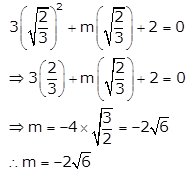
Question 4.
23 and 1 are the solutions of equation mx2 + nx + 6 = 0. Find the values of m and n.
Solution:
For x = 23 and x = 1 to be solutions of the given quadratic equation it should satisfy the equation
So, substituting x = 23 and x = 1 in the given equation, we get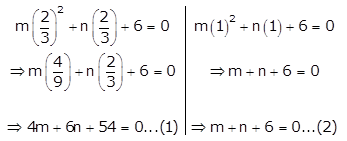
Solving equations (1) and (2) simultaneously,
4m + 6n + 54 = 0 …..(1)
m + n + 6 = 0 ….(2)
(1) – (2) × 6
⇒ -2m + 18 = 0
⇒ m = 9
Substitute in (2)
⇒ n = -15
Question 5.
If 3 and -3 are the solutions of equation ax2 + bx – 9 = 0. Find the values of a and b.
Solution:
For x = 3 and x = -3 to be solutions of the given quadratic equation it should satisfy the equation
So, substituting x = 3 and x = -3 in the given equation, we get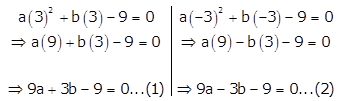
Solving equations (1) and (2) simultaneously,
9a + 3b – 9 = 0 …(1)
9a – 3b – 9 = 0 …(2)
(1) + (2)
⇒ 18a – 18 = 0
⇒ a = 1
Substitute in (2)
⇒ b = 0
Exercise 5B
Question 1.
Without solving, comment upon the nature of roots of each of the following equations :
(i) 7x2 – 9x +2 =0
(ii) 6x2 – 13x +4 =0
(iii) 25x2 – 10x +1=0
(iv) x2 + 2√3x – 9=0
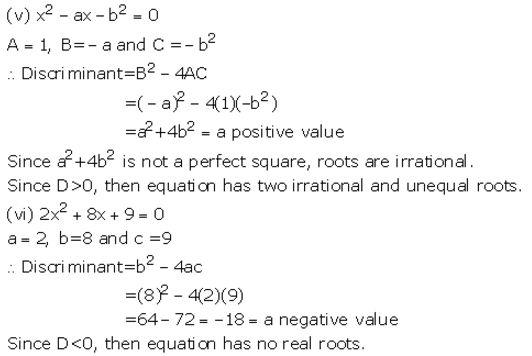
(v) x2 – ax – b2 =0
(vi) 2x2 +8x +9=0
Solution: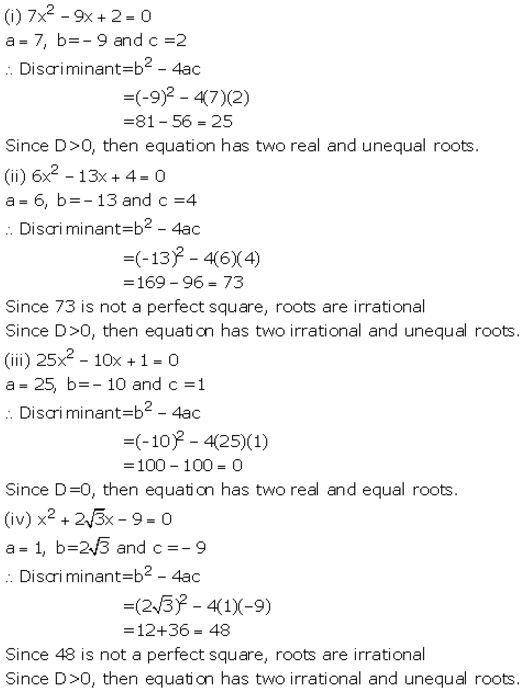
Question 2.
Find the value of p, if the following quadratic equation has equal roots : 4x2 – (p – 2)x + 1 = 0
Solution: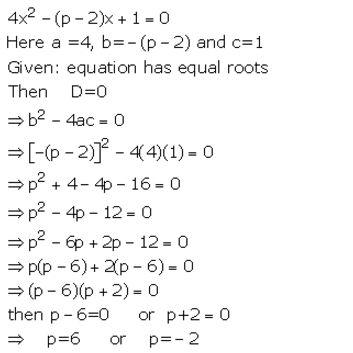
Question 3.
Find the value of ‘p’, if the following quadratic equations have equal roots : x2 + (p – 3)x + p = 0
Solution:
x2 + (p – 3)x + p = 0
Here, a = 1, b = (p – 3), c = p
Since, the roots are equal,
⇒ b2– 4ac = 0
⇒ (p – 3)2– 4(1)(p) = 0
⇒p2 + 9 – 6p – 4p = 0
⇒ p2– 10p + 9 = 0
⇒p2-9p – p + 9 = 0
⇒p(p – 9) – 1(p – 9) = 0
⇒ (p -9)(p – 1) = 0
⇒ p – 9 = 0 or p – 1 = 0
⇒ p = 9 or p = 1
Question 4.
The equation 3x2 – 12x + (n – 5)=0 has equal roots. Find the value of n.
Solution: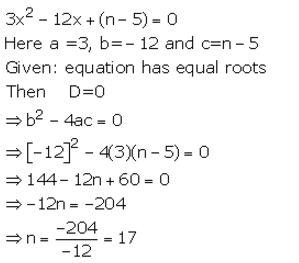
Question 5.
Find the value of m, if the following equation has equal roots : (m – 2)x2 – (5+m)x +16 =0
Solution: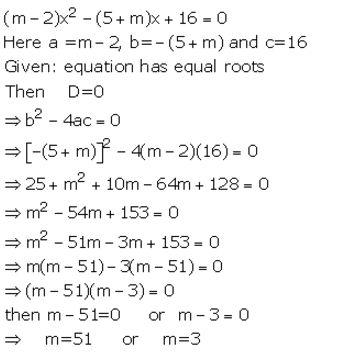
Question 6.
Find the value of p for which the equation 3x2– 6x + k = 0 has distinct and real roots.
Solution: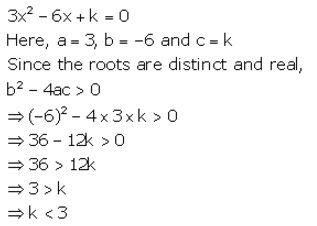
Exercise 5C
Question 1.
Solve : x² – 10x – 24 = 0
Solution: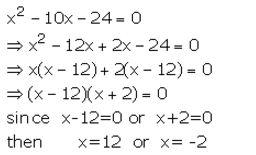
Question 2.
Solve : x² – 16 = 0
Solution:
Question 3.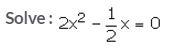
Solution: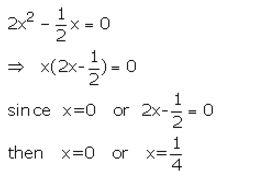
Question 4.
Solve : x(x – 5) = 24
Solution: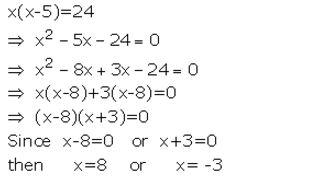
Question 5.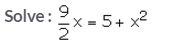
Solution: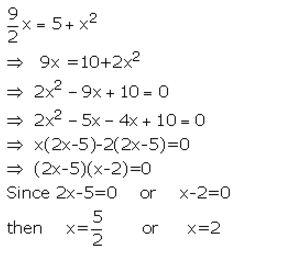
Question 6.
Solution: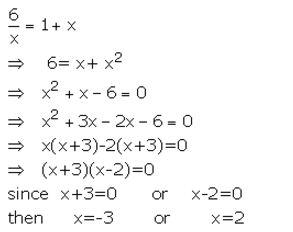
Question 7.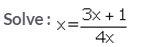
Solution: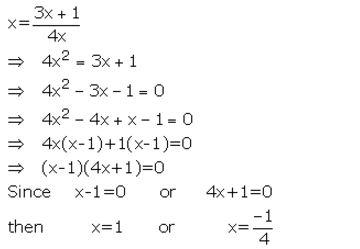
Question 8.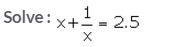
Solution: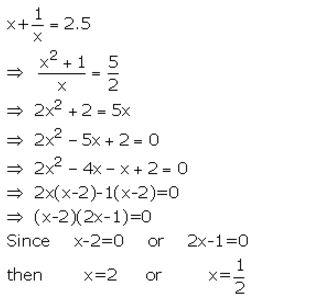
Question 9.
Solve : (2x – 3)² = 49
Solution: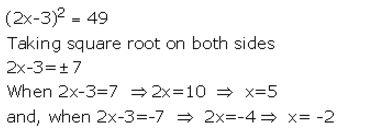
Question 10.
Solve : 2(x² – 6) = 3(x – 4)
Solution: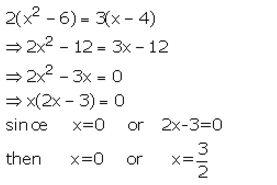
Question 11.
Solve : (x + 1)(2x + 8) = (x + 7)(x + 3)
Solution: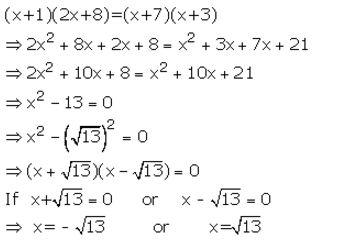
Question 12.
Solve : x² – (a + b)x + ab = 0
Solution: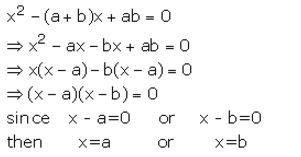
Question 13.
(x + 3)² – 4(x + 3) – 5 = 0
Solution: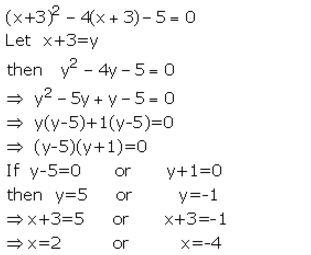
Question 14.
4(2x – 3)² – (2x – 3) – 14 = 0
Solution:
Question 15.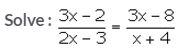
Solution: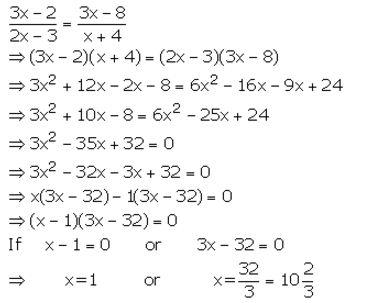
Question 16.
2x2 – 9x + 10 = 0, When
(i) x∈ N
(ii) x∈ Q
Solution: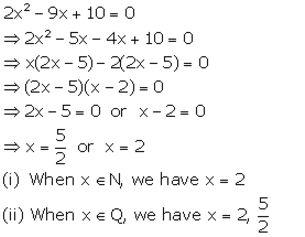
Question 17.
Solution:
Question 18.
Solution: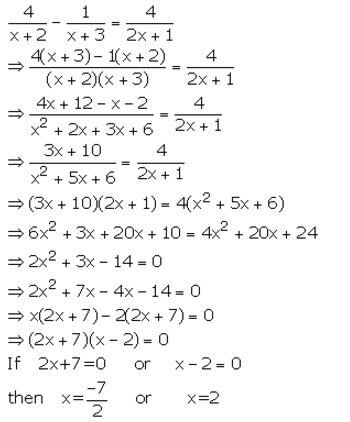
Question 19.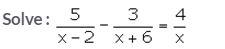
Solution: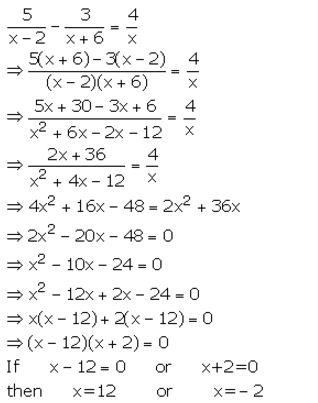
Question 20.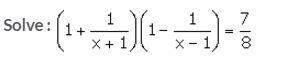
Solution: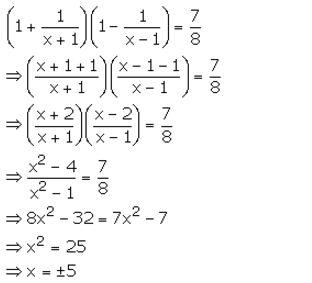
Question 21.
Find the quadratic equation, whose solution set is :
(i) {3, 5} (ii) {-2, 3}
Solution: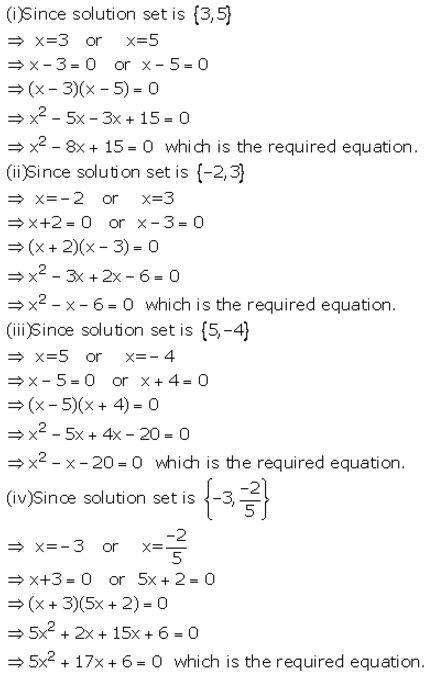
Question 22.
Solution: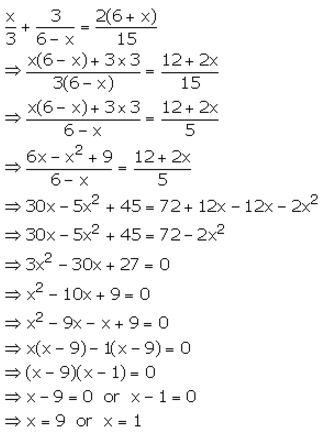
Question 23.
Solution: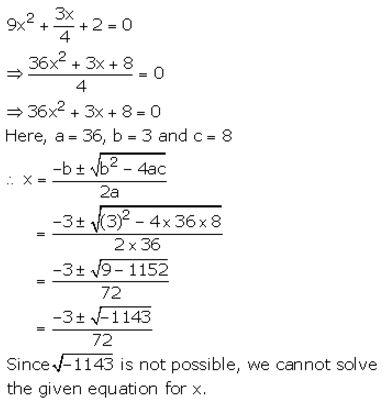
Question 24.
Find the value of x, if a + 1=0 and x2 + ax – 6 =0.
Solution: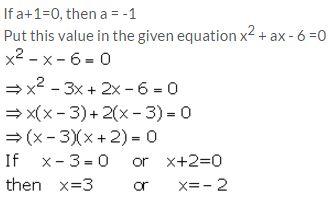
Question 25.
Find the value of x, if a + 7=0; b + 10=0 and 12x2 = ax – b.
Solution:
If a + 7 =0, then a = -7
and b + 10 =0, then b = – 10
Put these values of a and b in the given equation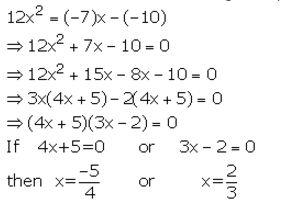
Question 26.
Use the substitution y= 2x +3 to solve for x, if 4(2x+3)2 – (2x+3) – 14 =0.
Solution: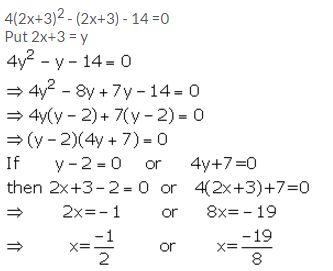
Question 27.
Without solving the quadratic equation 6x2 – x – 2=0, find whether x = 2/3 is a solution of this equation or not.
Solution:
Question 28.
Determine whether x = -1 is a root of the equation x2 – 3x +2=0 or not.
Solution:
x2 – 3x +2=0
Put x = -1 in L.H.S.
L.H.S. = (-1)2 – 3(-1) +2
= 1 +3 +2=6 ≠ R.H.S
Then x = -1 is not the solution of the given equation.
Question 29.
If x = 2/3 is a solution of the quadratic equation 7x2+mx – 3=0; Find the value of m.
Solution: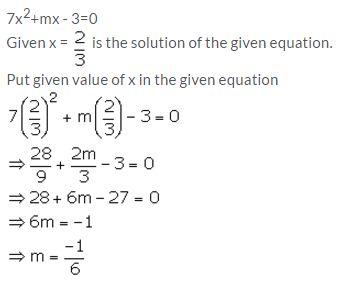
Question 30.
If x = -3 and x = 2/3 are solutions of quadratic equation mx2 + 7x + n = 0, find the values of m and n.
Solution: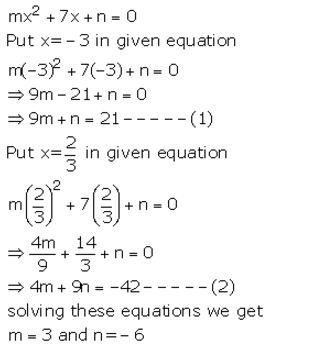
Question 31.
If quadratic equation x2 – (m + 1) x + 6=0 has one root as x =3; find the value of m and the root of the equation.
Solution: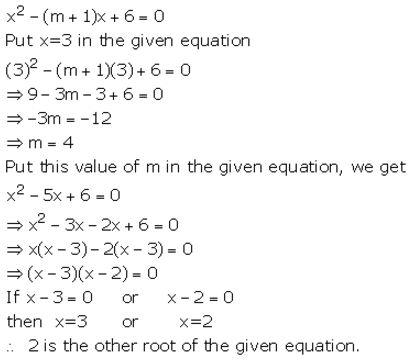
Question 32.
Given that 2 is a root of the equation 3x² – p(x + 1) = 0 and that the equation px² – qx + 9 = 0 has equal roots, find the values of p and q.
Solution: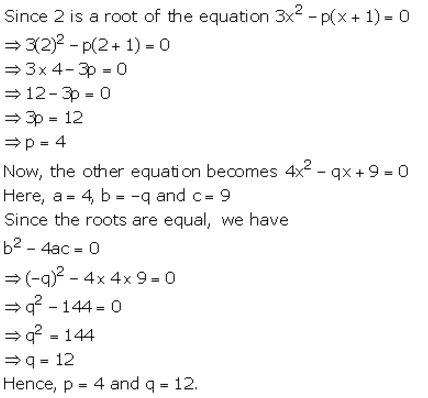
Question 33.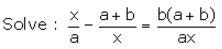
Solution: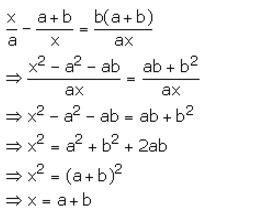
Question 34.
Solution: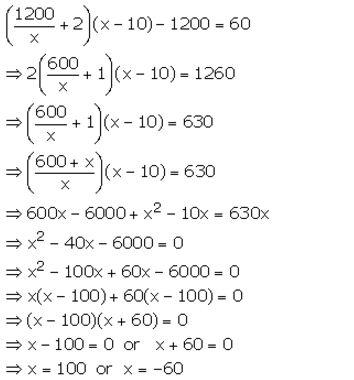
Question 35.
If -1 and 3 are the roots of x2 + px + q = 0, find the values of p and q.
Solution: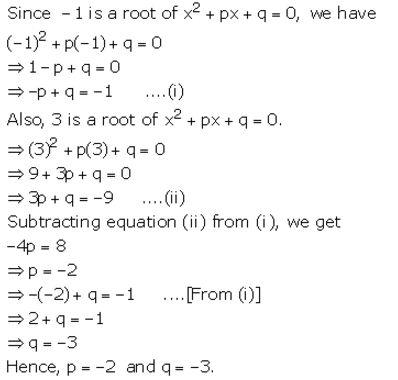
Exercise 5D
Question 1.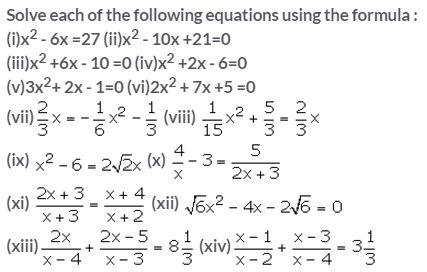
Solution: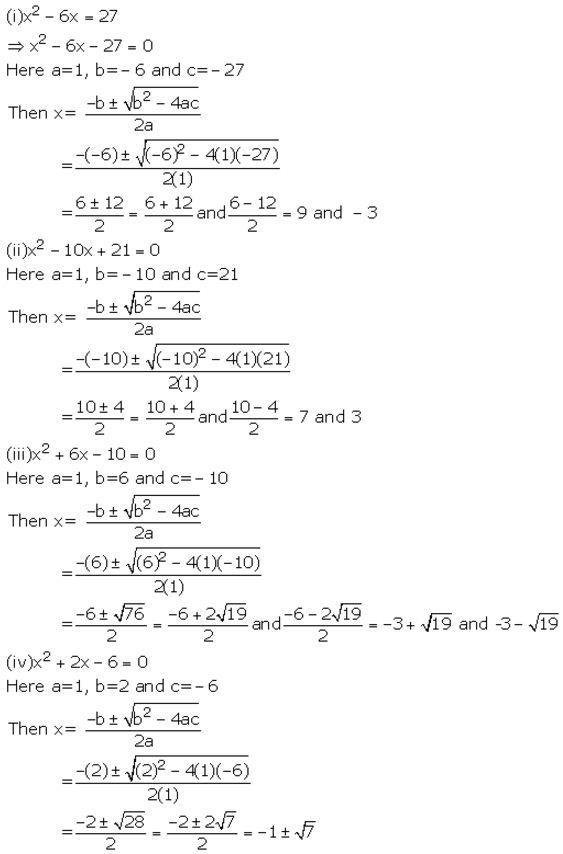
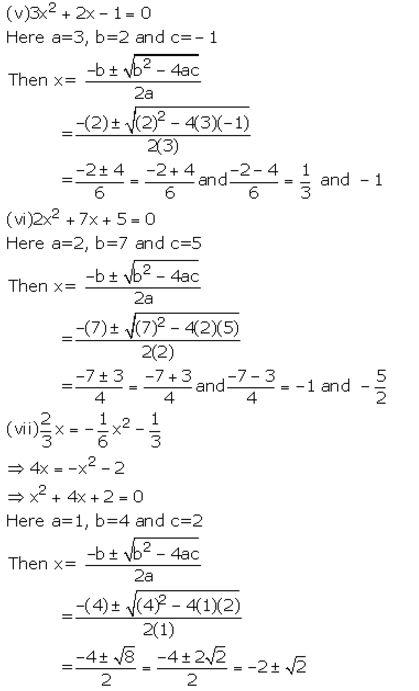
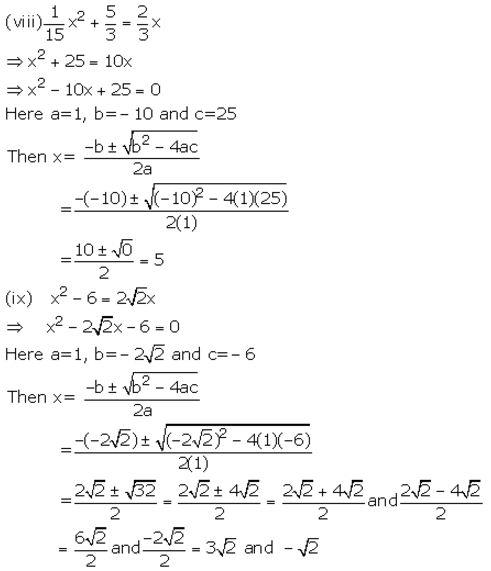
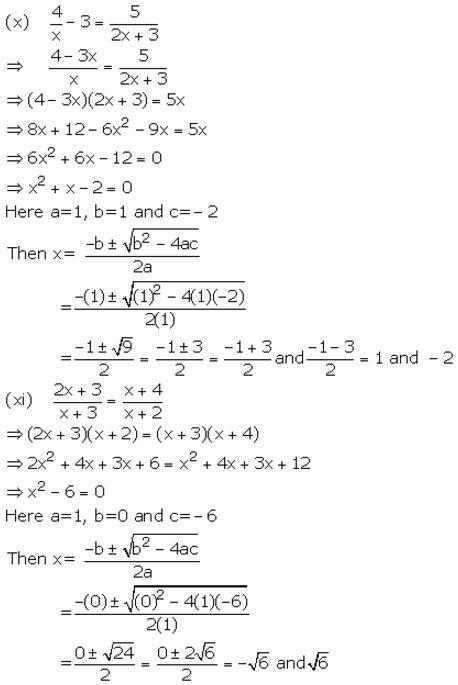
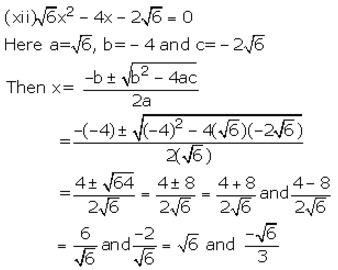
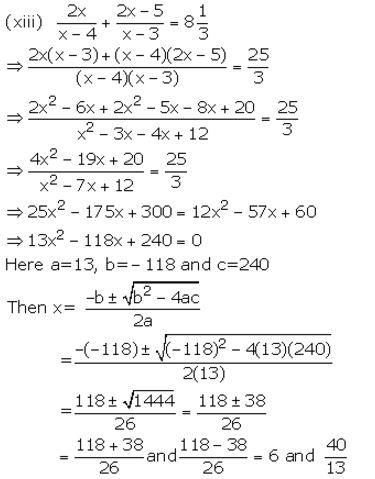
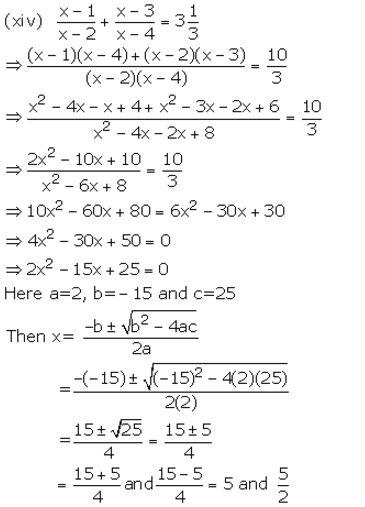
Question 2.
Solve each of the following equations for x and give, in each case, your answer correct to one decimal place :
(i) x2 – 8x+5=0
(ii) 5x2 +10x – 3 =0
Solution: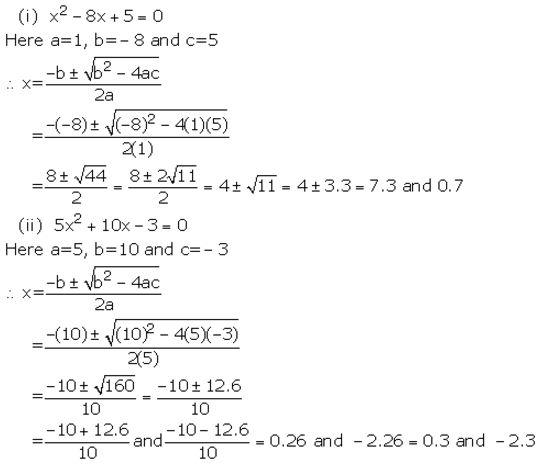
Question 3(i).
Solve each of the following equations for x and give, in each case, your answer correct to two decimal places :
(i) 2x2 – 10x +5=0
Solution: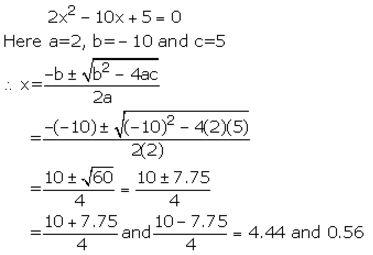
Question 3(ii).
Solve each of the following equations for x and give, in each case, your answer correct to two decimal places :
4x + 6/x + 13 = 0
Solution: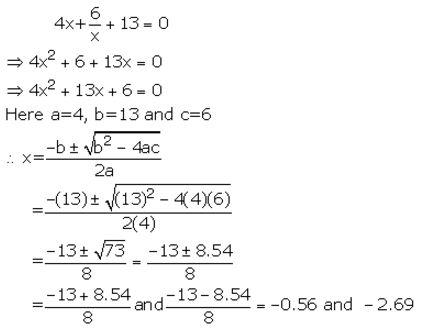
Question 3(iii).
Solve each of the following equations for x and give, in each case, your answer correct to two decimal places :
x2 – 3x – 9 =0
Solution: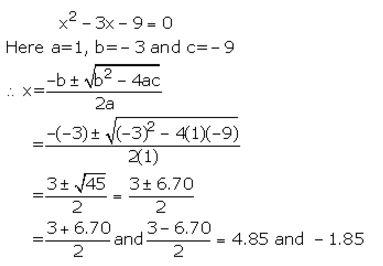
Question 3(iv).
Solve each of the following equations for x and give, in each case, your answer correct to two decimal places :
x2 – 5x – 10 = 0
Solution: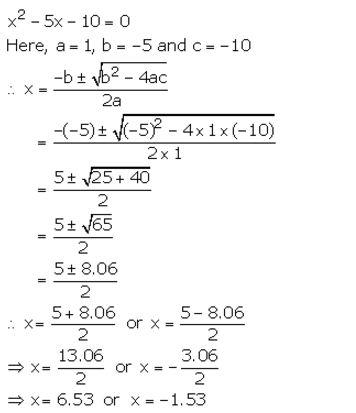
Question 4.
Solve each of the following equations for x and give, in each case, your answer correct to 3 decimal places :
(i) 3x2 – 12x – 1 =0
(ii) x2 – 16 x +6= 0
(iii) 2x2 + 11x + 4= 0
Solution: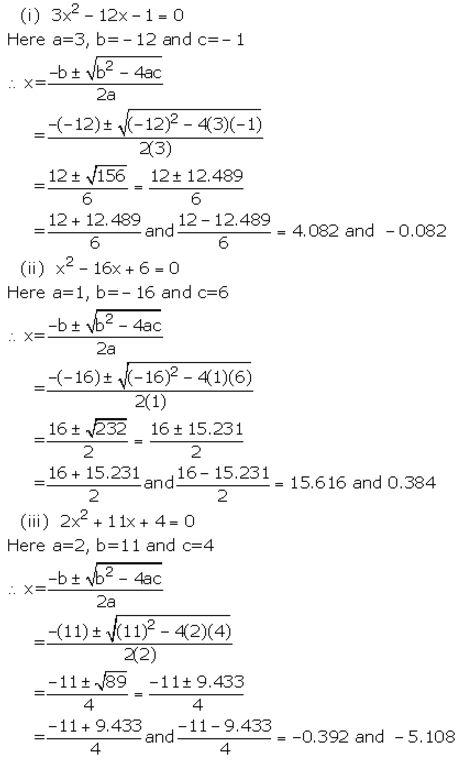
Question 5.
Solve:
(i) x4 – 2x2 – 3 =0
(ii) x4 – 10x2 +9 =0
Solution: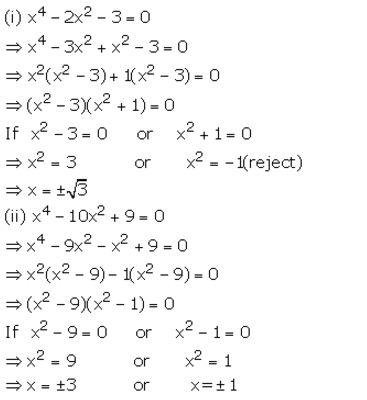
Question 6.
Solve :
(i) (x2 – x)2 + 5(x2 – x)+ 4=0
(ii) (x2 – 3x)2 – 16(x2 – 3x) – 36 =0
Solution: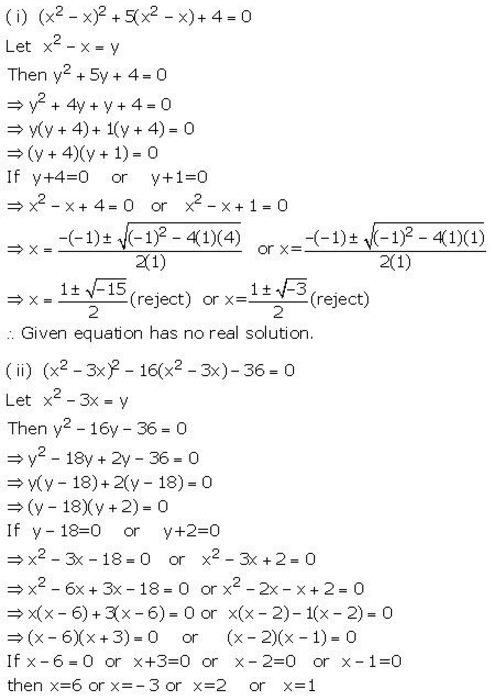
Question 7.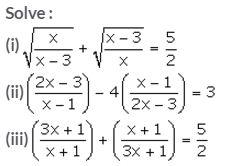
Solution: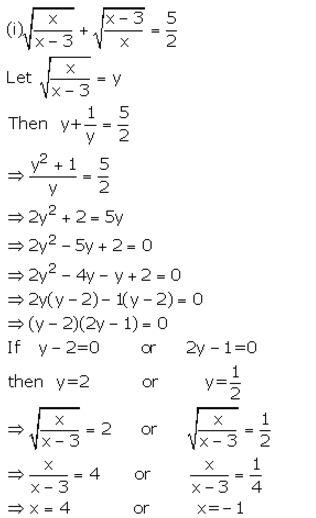

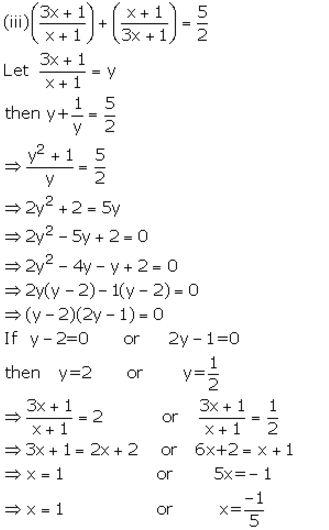
Question 8.
Solution: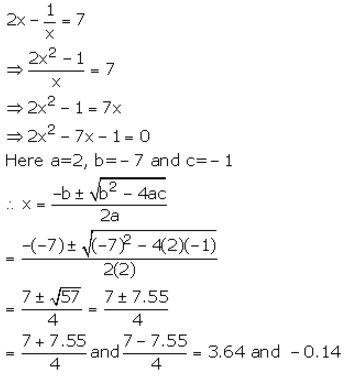
Question 9.
Solve the following equation and give your answer correct to 3 significant figures:
5x² – 3x – 4 = 0
Solution: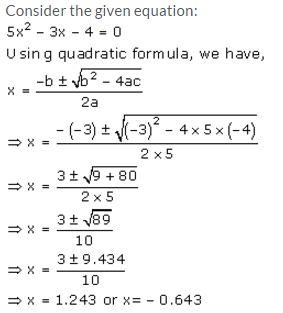
Question 10.
Solve for x using the quadratic formula. Write your answer correct to two significant figures.
(x – 1)2 – 3x + 4 = 0
Solution: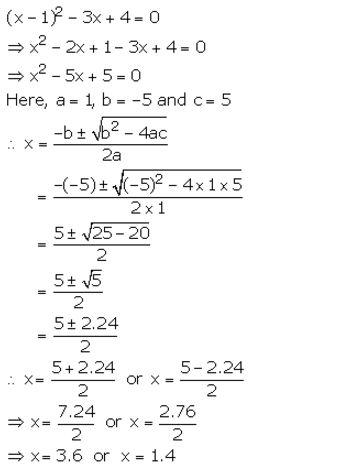
Question 11.
Solve the quadratic equation x² – 3 (x+3) = 0; Give your answer correct to two significant figures.
Solution:
Exercise 5E
Question 1.
Solution: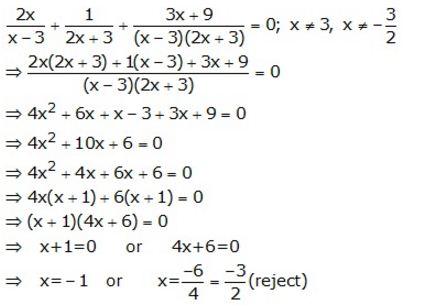
Question 2.
Solve: (2x+3)2=81
Solution: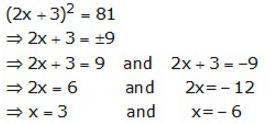
Question 3.
Solve: a²x² – b² = 0
Solution: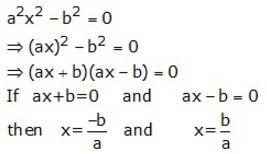
Question 4.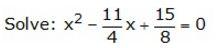
Solution: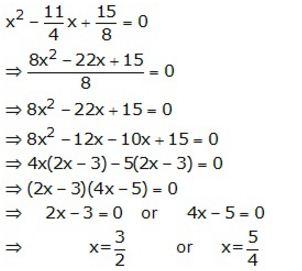
Question 5.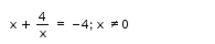
Solution:
Question 6.
Solve: 2x4 – 5x² + 3 = 0
Solution: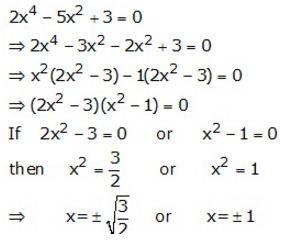
Question 7.
Solve: x4 – 2x² – 3 = 0.
Solution: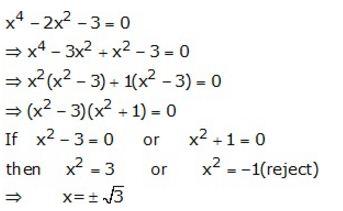
Question 8.
Solution:
Question 9.
Solution:
Question 10.
Solution: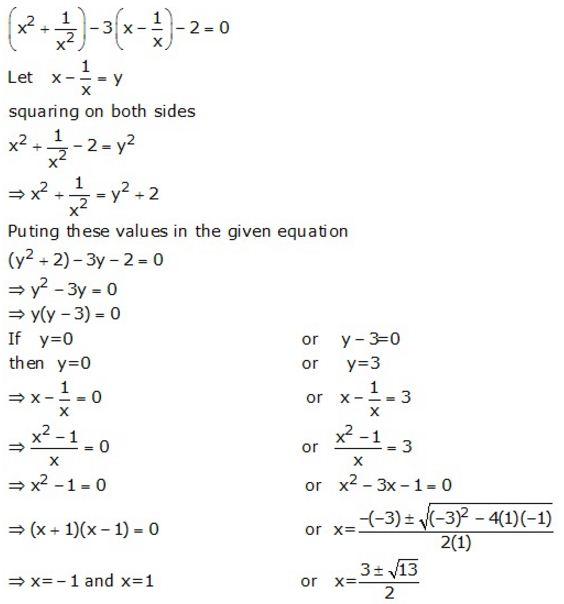
Question 11.
Solve : (x² + 5x + 4)(x² + 5x + 6) = 120
Solution:
Question 12.
Solve each of the following equations, giving answer upto two decimal places.
(i) x2 – 5x -10=0 (ii) 3x2 – x – 7 =0
Solution: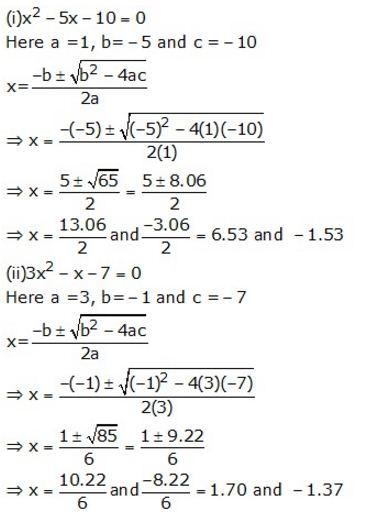
Question 13.
Solution: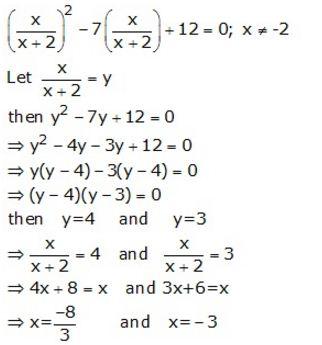
Question 14.
Solve :
(i) x2 – 11x – 12 =0; when x ∈ N
(ii) x2 – 4x – 12 =0; when x ∈ I
(iii) 2x2 – 9x + 10 =0; when x ∈ Q
Solution: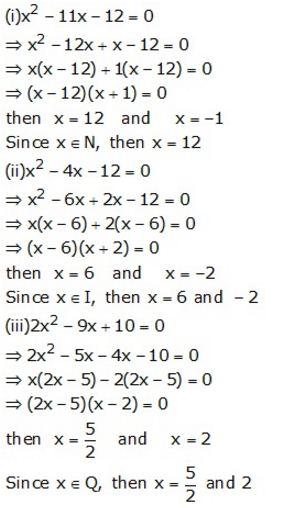
Question 15.
Solve : (a + b)²x² – (a + b)x – 6 = 0; a + b ≠ 0
Solution: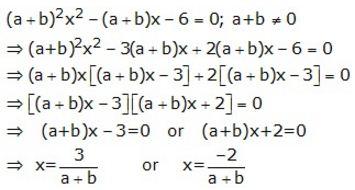
Question 16.
Solution: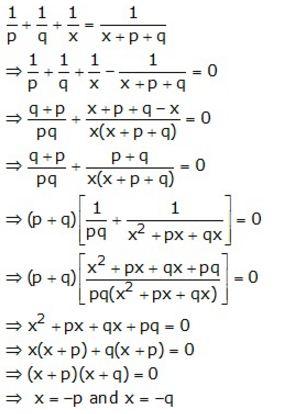
Question 17.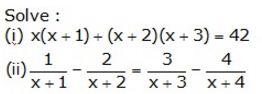
Solution: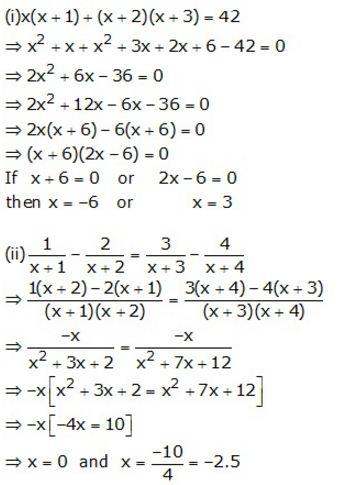
Question 18.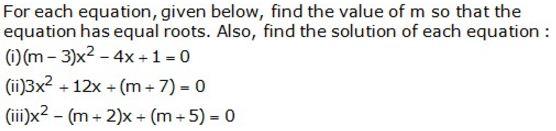
Solution: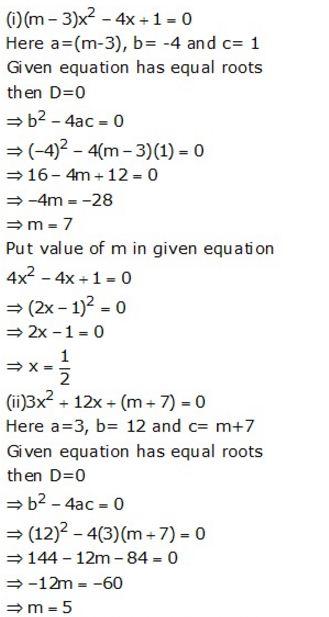
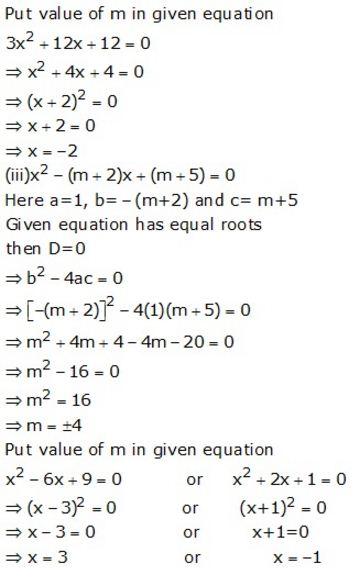
Question 19.
Solution: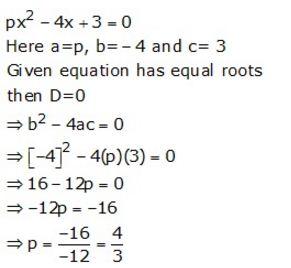
Question 20.
Without solving the following quadratic equation, find the value of ‘m’ for which the given equation has real and equal roots.
x² + 2(m – 1)x + (m + 5) = 0
Solution: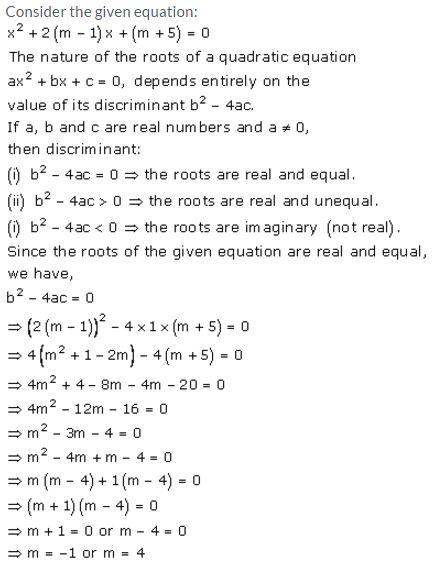
Exercise 5F
Solution 1(i)
Given: (x + 5)(x – 5)=24
⇒ x2 – 52 = 24 …. since (a – b)(a + b) = a2 – b2
⇒ x2 – 25 = 24
⇒ x2 = 49
⇒ x = ± 7
Solution 1(ii)
Given: 3x2 – 26–√x + 2 = 0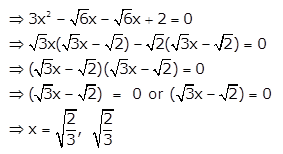
Solution 1(iii)
Given: 32–√x2 – 5x – 26−−√ = 0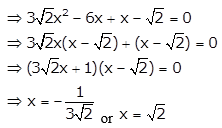
Question 2.
One root of the quadratic equation 8x2 + mx + 15 is 3/4. Find the value of m. Also, find the other root of the equation.
Solution:
Given quadratic equation is 8x2 + mx + 15 = 0 …. (i)
One of the roots of (i) is 34, so it satisfies (i)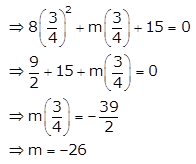
So, the equation (i) becomes 8x2 – 26x + 15 = 0
⇒ 8x2 – 20x – 6x + 15 = 0
⇒ 4x(2x – 5) -3(2x – 5) = 0
⇒ (4x – 3)(2x – 5) = 0
⇒ x = 34 or x = 52
⇒ x = 34,52
Hence, the other root is 52
Question 3.
One root of the quadratic equation x2 – 3x – 2ax – 6a = 0 is -3, find its other root.
Solution:
Given quadratic equation is …. (i)
One of the roots of (i) is -3, so it satisfies (i)
⇒ x2 – 3x – 2ax – 6a = 0
⇒ x(x + 3) – 2a(x + 3) = 0
⇒ (x – 2a)(x + 3) = 0
⇒ x = -3, 2a
Hence, the other root is 2a.
Question 4.
If p – 15 = 0 and 2x2 + 15x + 15 = 0;find the values of x.
Solution:
Given i.e p – 15 = 0 i.e. p = 15
So, the given quadratic equation becomes
2x2 + 15x + 15 = 0
⇒ 2x + 10x + 5x + 15 = 0
⇒ 2x(x + 5) + 5(x + 5)
⇒ (2x + 5)(x + 5) = 0
⇒ x = -5, −52
Hence, the values of x are -5 and −52
Question 5.
Find the solution of the equation 2x2 -mx – 25n = 0; if m + 5 = 0 and n – 1 = 0.
Solution:
Given quadratic equation is 2x2 -mx – 25n = 0 ….. (i)
Also, given and m + 5 = 0 and n – 1 = 0
⇒ m = -5 and n = 1
So, the equation (i) becomes
2x2 + 5x + 25 = 0
⇒ 2x + 10x – 5x – 25 = 0
⇒ 2x(x + 5) -5(x + 5) = 0
⇒ (x + 5)(2x – 5) = 0
⇒ x = -5, 52
Hence, the solution of given quadratic equation are x and 52
Question 6.
If m and n are roots of the equation 1x−1x−2=3 where x ≠ 0 and x ≠ 2; find m × n.
Solution:
Given quadratic equation is 1x−1x−2=3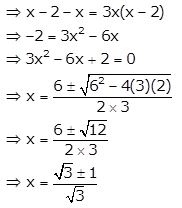
Since, m and n are roots of the equation, we have
Question 7.
Solve, using formula :
x2 + x – (a + 2)(a + 1) = 0
Solution:
Given quadratic equation is x2 + x – (a + 2)(a + 1) = 0
Using quadratic formula,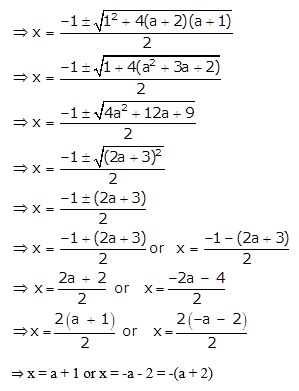
Question 8.
Solve the quadratic equation 8x2 – 14x + 3 = 0
(i) When x ∈ I (integers)
(ii) When x ∈ Q (rational numbers)
Solution:
Given quadratic equation is 8x2 – 14x + 3 = 0
⇒ 8x2 – 12x – 2x + 3 = 0
⇒ 4x(2x – 3) – (2x – 3) = 0
⇒ (4x – 1)(2x – 3) = 0
⇒ x = 32 or x = 14
(i) When x ϵ I, the equation 8x2 – 14x + 3 = 0 has no roots
(ii) When x ϵ Q the roots of 8x2 – 14x + 3 = 0 are
x = 32 x = 14
Question 9.
Find the value of m for which the equation (m + 4 )2 + (m + 1)x + 1 = 0 has real and equal roots.
Solution:
Given quadratic equation is (m + 4 )2 + (m + 1)x + 1 = 0
The quadratic equation has real and equal roots if its discriminant is zero.
⇒ D = b2 – 4ac = 0
⇒ (m + 1)2 -4(m + 4)(1) = 0
⇒ m2 + 2m + 1 – 4m – 16 = 0
⇒ m2 – 2m – 15 = 0
⇒ m2 – 5m + 3m – 15 = 0
⇒ m(m – 5) +3(m =5) = 0
⇒ (m – 5)(m + 3) = 0
⇒ m = 5 or m = -3
Question 10.
Find the values of m for which equation 3x2 + mx + 2 = 0 has equal roots. Also, find the roots of the given equation.
Solution:
Given quadratic equation is 3x2 + mx + 2 = 0 …. (i)
The quadratic equation has equal roots if its discriminant is zero
⇒ D = b2 – 4ac = 0
⇒ m2 – 4(2)(3) = 0
⇒ m2 = 24
⇒ m = ±26–√
When m = 26–√, equation (i) becomes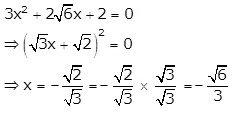
When m = −26–√, equation (i) becomes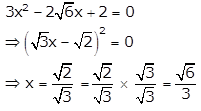
∴ x= −6√3,6√3
Question 11.
Find the value of k for which equation 4x2 + 8x – k = 0 has real roots.
Solution:
Given quadratic equation is 4x2 + 8x – k = 0 …. (i)
The quadratic equation has real roots if its discriminant is greater than or equal to zero
⇒ D = b2 – 4ac ≥ 0
⇒ 82 – 4(4)(-k) ≥ 0
⇒ 64 + 16k ≥ 0
⇒ 16k ≥ -64
⇒ k ≥ -4
Hence, the given quadratic equation has real roots for k ≥ -4
Question 12.
Find, using quadratic formula, the roots of the following quadratic equations, if they exist
(i) 3x2 – 5x + 2 = 0
(ii) x2 + 4x + 5 = 0
Solution:
(i) Given quadratic equation is 3x2 – 5x + 2 = 0
D = b2 – 4ac = (-5)2 – 4(3)(2) = 25 – 24 = 1
Since D > 0, the roots of the given quadratic equation are real and distinct.
Using quadratic formula, we have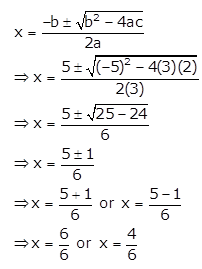
⇒ x = 1 or x = 23
(ii) Given quadratic equation is x2 + 4x + 5 = 0
D = b2 – 4ac = (4)2 – 4(1)(5) = 16 – 20 = – 4
Since D < 0, the roots of the given quadratic equation does not exist.
Solution 13:
(i) Given quadratic equation is 118−x−118+x=124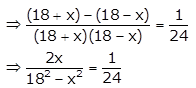
⇒ 48x = 324 – x2
⇒ x2 + 48x – 324 = 0
⇒ x2 + 54x – 6x – 324 = 0
⇒ x(x + 54) -6(x + 54) = 0
⇒ (x + 54)(x – 6) = 0
⇒ x = -54 or x = 6
But as x > 0, so x can’t be negative.
Hence, x = 6.
(ii) Given quadratic equation is (x−10)(1200x+2)=1260
⇒ (x – 10)(1200+2xx) = 1260
⇒ (x – 10)(1200 + 2x) = 1260x
⇒ 1200x + 2x2 – 12000 – 20x = 1260x
⇒ 2x2 – 12000 – 80x = 0
⇒ x2 – 40x – 6000 = 0
⇒ x2 – 100x + 60x – 6000 = 0
⇒ (x – 100)(x – 60) = 0
⇒ x = 100 or x = -60
But as x < 0, so x can’t be positive.
Hence, x = -60.
Download PDF
Selina Class 10 ICSE Solutions Mathematics : Chapter 5 – Quadratic Equations
Download PDF: Selina Class 10 ICSE Solutions Mathematics : Chapter 5 – Quadratic Equations PDF
Chapterwise Selina Publishers ICSE Solutions for Class 10 Maths :
- Chapter 1 – GST (Goods and Services Tax)
- Chapter 2 – Banking (Recurring Deposit Accounts)
- Chapter 3 -Shares and Dividends
- Chapter 4 – Linear Inequations (in one variable)
- Chapter 5 – Quadratic Equations
- Chapter 6 – Solving Simple Problems (Based on Quadratic Equations)
- Chapter 7 – Ratio and Proportion (Including Properties and Uses)
- Chapter 8 – Remainder and Factor Theorems
- Chapter 9 – Matrices
- Chapter 10- Arithmetic Progression
- Chapter 11- Geometric Progression
- Chapter 12- Reflection
- Chapter 13 – Section and Mid-Point Formula
- Chapter 14- Equation of a Line
- Chapter 15- Similarity
- Chapter 16- Loci (Locus and Its Constructions)
- Chapter 17- Circles
- Chapter 18- Tangents and Intersecting Chords
- Chapter 19- Constructions (Circles)
- Chapter 20- Cylinder, Cone and Sphere
- Chapter 21- Trigonometrical Identities
- Chapter 22- Heights and Distances
- Chapter 23- Graphical Representation
- Chapter 24- Measures of Central Tendency
- Chapter 25- Probability
About Selina Publishers ICSE
Selina Publishers has been serving the students since 1976 and is one of the quality ICSE school textbooks publication houses. Mathematics and Science books for classes 6-10 form the core of our business, apart from certain English and Hindi literature as well as a few primary books. All these books are based upon the syllabus published by the Council for the I.C.S.E. Examinations, New Delhi. The textbooks are composed by a panel of subject experts and vetted by teachers practising in ICSE schools all over the country. Continuous efforts are made in complying with the standards and ensuring lucidity and clarity in content, which makes them stand tall in the industry.