Curriculum & Exam Preparation Note: Regular practice of NCERT textbook exercises and chapter-end questions establishes strong conceptual clarity for primary and secondary examinations.
NCERT Exemplar Class 8 Maths Chapter 5: Understanding Quadrilaterals and Practical Geometry. NCERT Exemplar Solutions for Class 8 Maths Chapter 5 Understanding Quadrilaterals and Practical Geometry prepare students for their Class 8 exams thoroughly.
Maths problems and solutions for the Class 8 pdf are provided here which are similar to the questions being asked in the previous year's board.
NCERT Exemplar Class 8 Maths Chapter 5: Understanding Quadrilaterals and Practical Geometry
Class 8: Maths Chapter 5 solutions. Complete Class 8 Maths Chapter 5 Notes.
Main Concepts and Results
- A simple closed curve made up of only line segments is called a polygon.
- A diagonal of a polygon is a line segment connecting two nonconsecutive vertices.
- A convex polygon is a polygon in which no portion of its any diagonal is in its exterior
- A regular polygon is a polygon whose all sides are equal and also all angles are equal.
- The sum of interior angles of a polygon of n sides is (n-2) straight angles
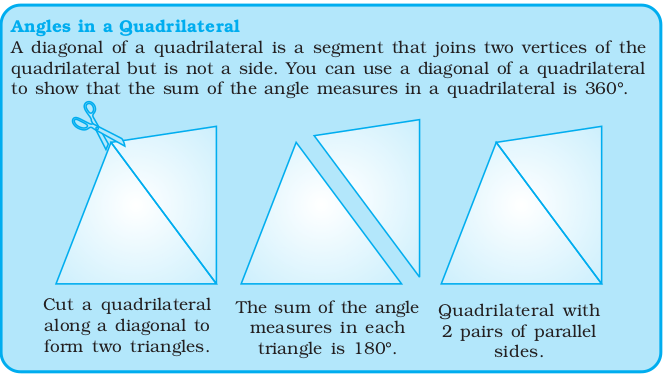
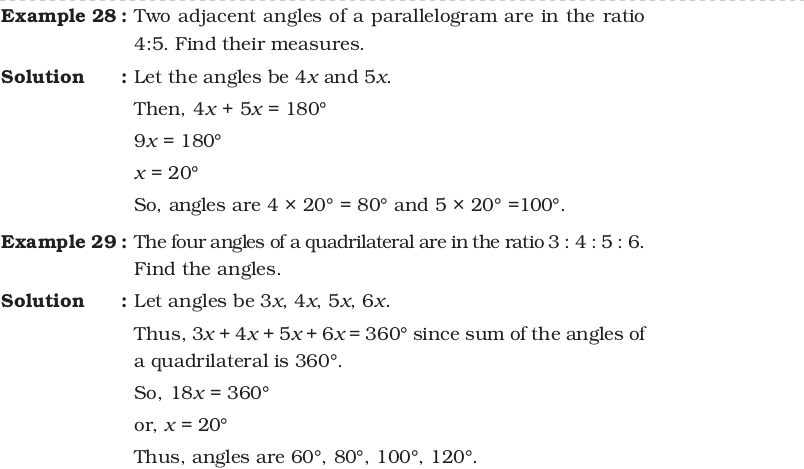
- The sum of interior angles of a quadrilateral is 360°.
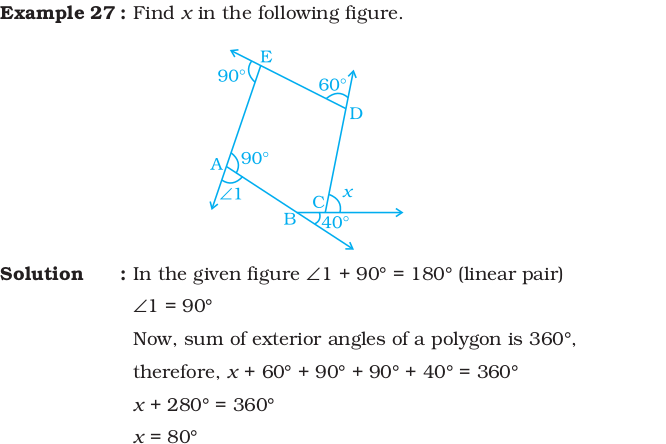
- The sum of exterior angles, taken in an order, of a polygon is 360°.
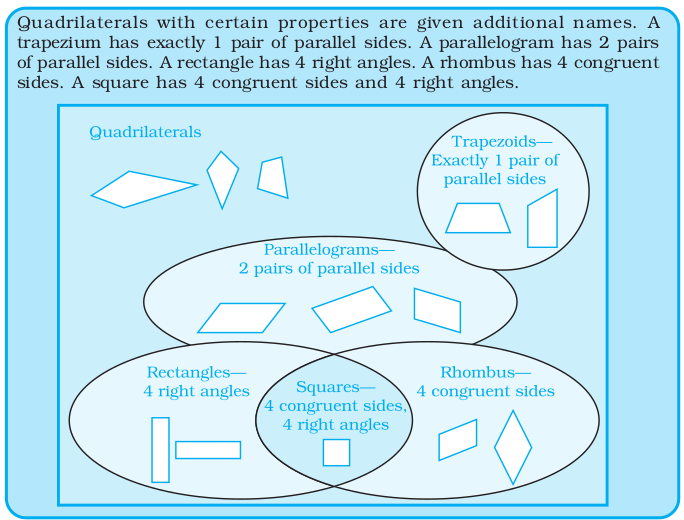
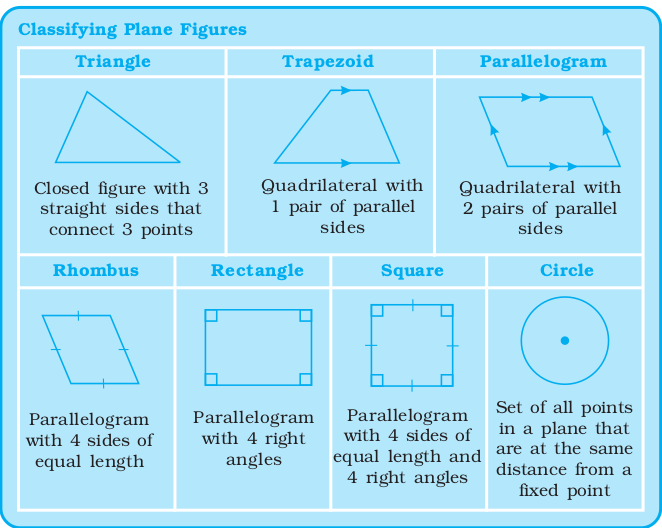
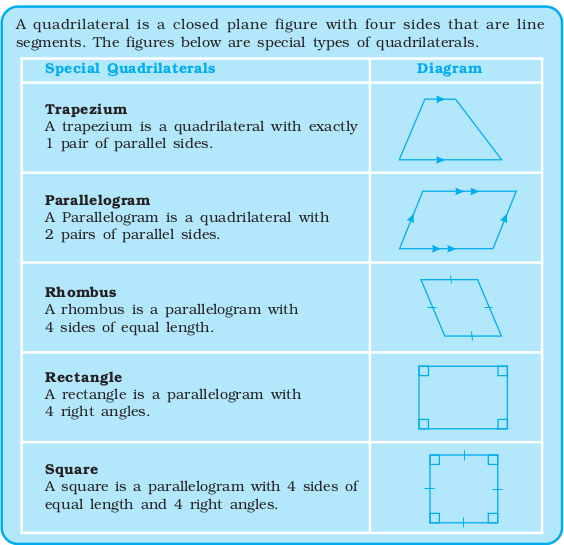
- Trapezium is a quadrilateral in which a pair of opposite sides is parallel.
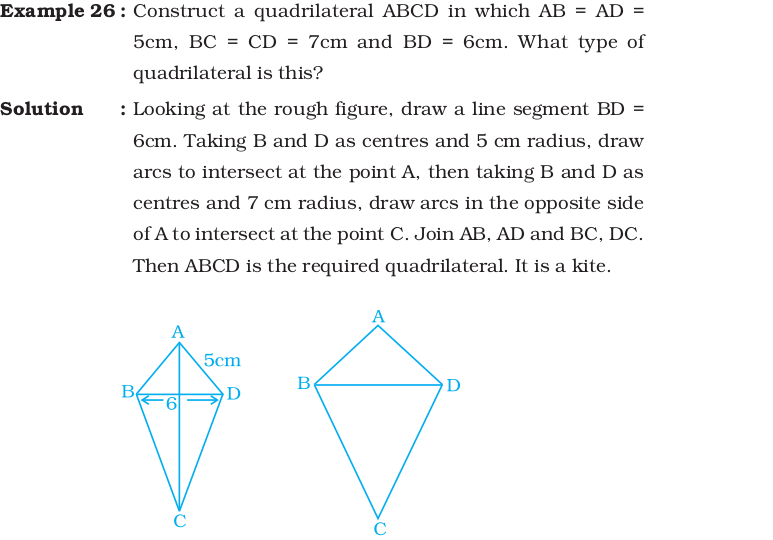
- Kite is a quadrilateral which has two pairs of equal consecutive sides
- A parallelogram is a quadrilateral in which each pair of opposite sides is parallel.
- A rhombus is a parallelogram in which adjacent sides are equal
- A rectangle is a parallelogram in which one angle is of 90°
- A square is a parallelogram in which adjacent sides are equal and one angle is of 90°
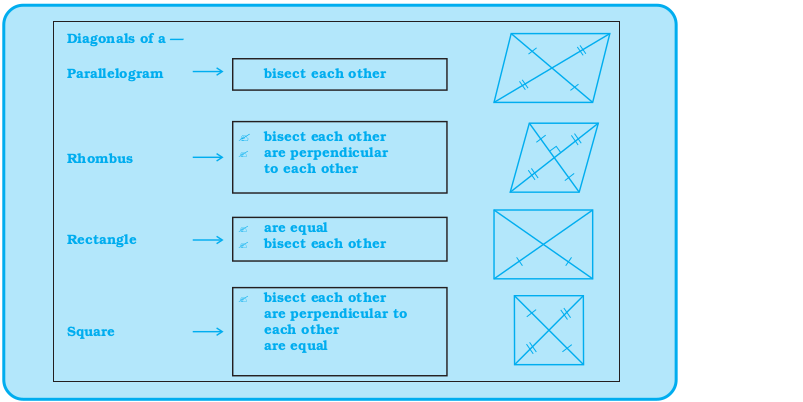
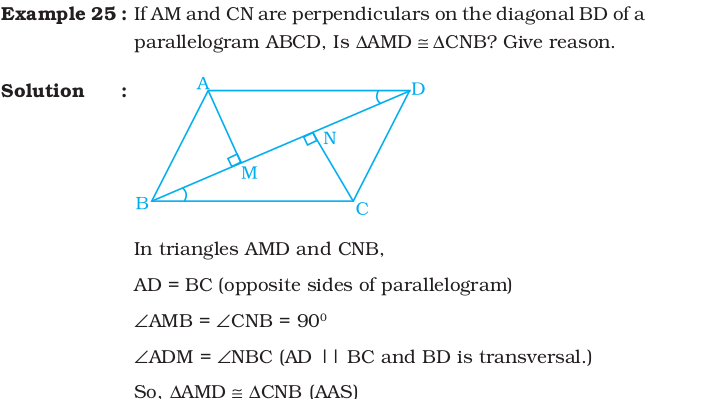
- In a parallelogram, opposite sides are equal, opposite angles are equal and diagonals bisect each other.
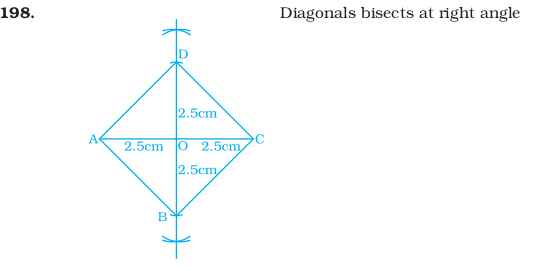
- In a rhombus diagonals intersect at right angles.
- In a rectangle diagonals are equal.
- Five measurements can determine a quadrilateral uniquely.
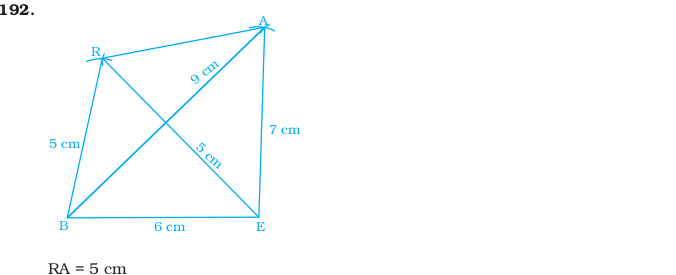
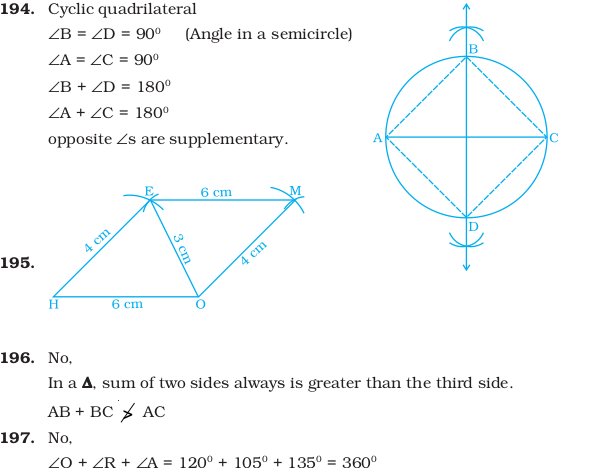
- A quadrilateral can be constructed uniquely if the lengths of its four sides and a diagonal are given.
- A quadrilateral can be constructed uniquely if the lengths of its three sides and two diagonals are given.
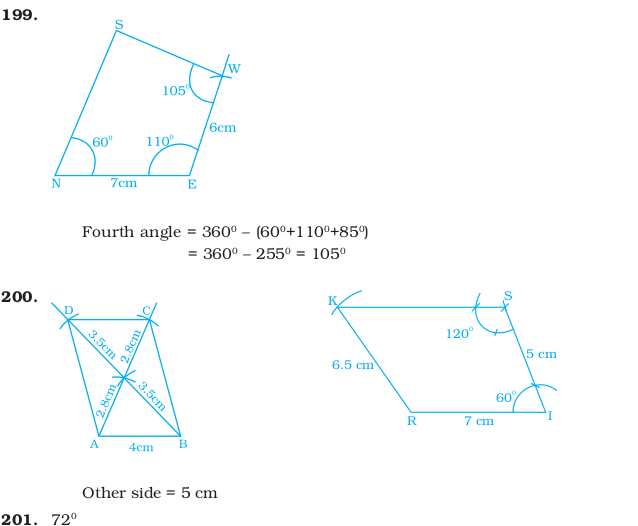
- A quadrilateral can be constructed uniquely if its two adjacent sides and three angles are given.
- A quadrilateral can be constructed uniquely if its three sides and two included angles are given
Solved Examples
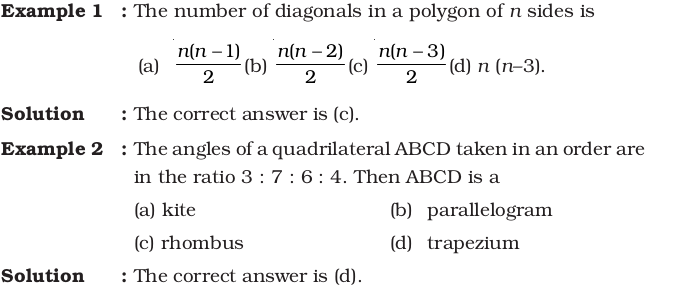
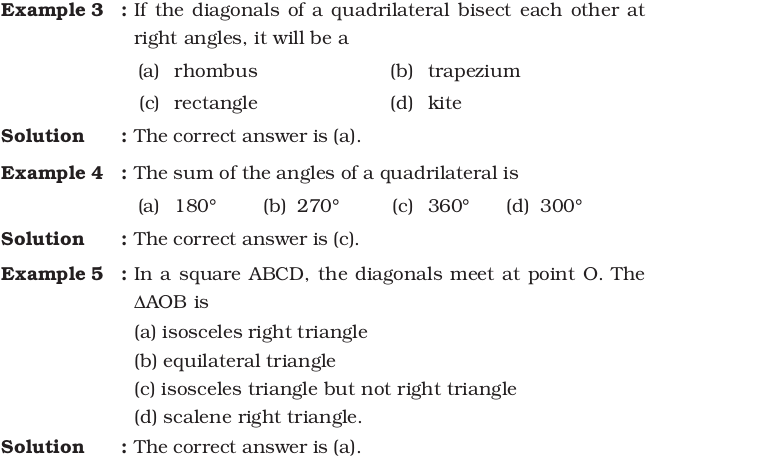
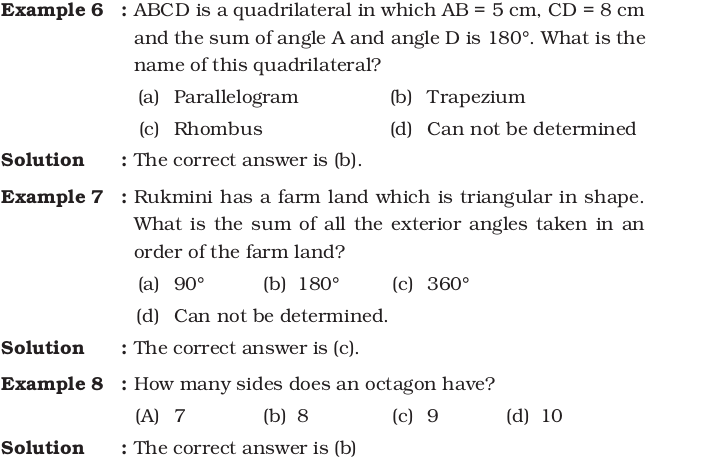
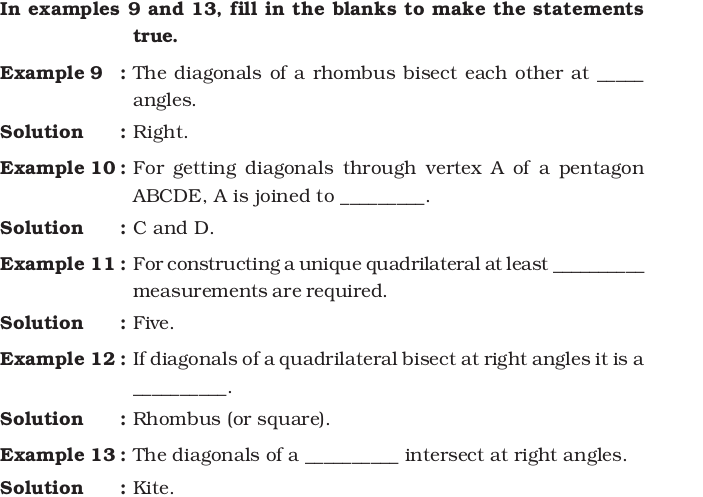
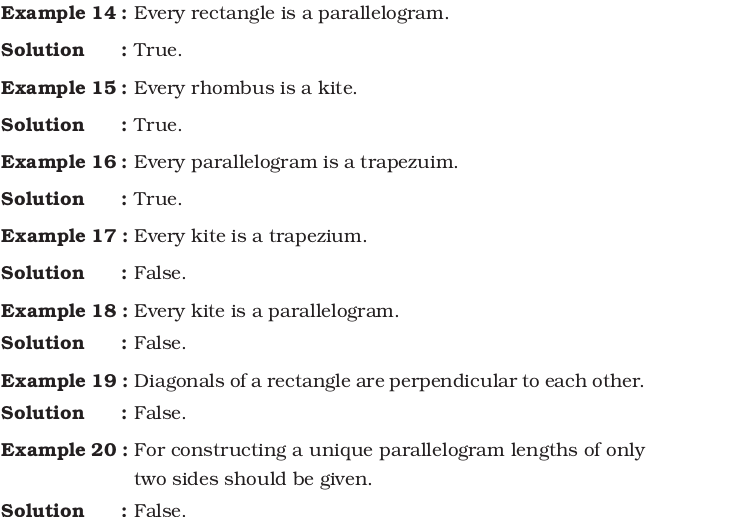
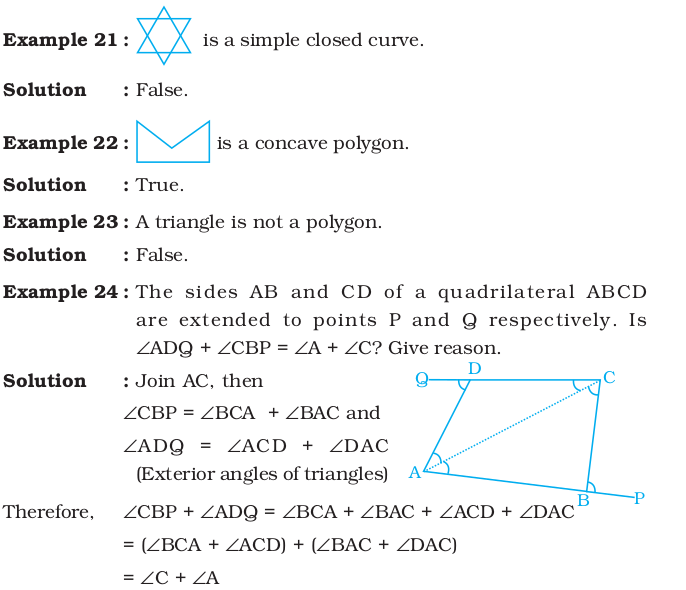
In examples 14 to 23, state whether the statements are true (T) or
false (F).
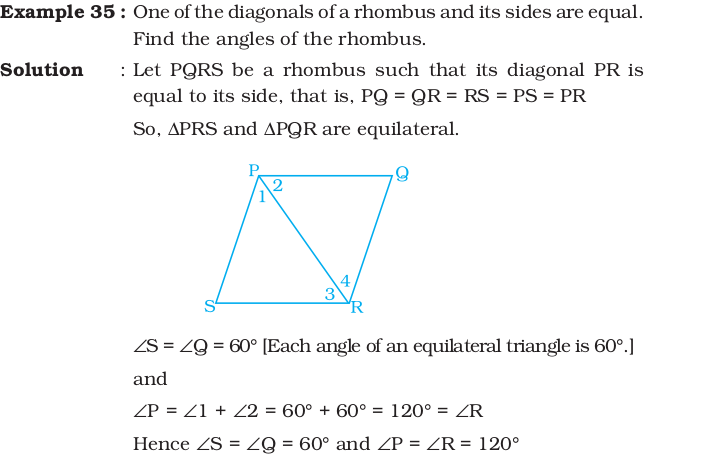
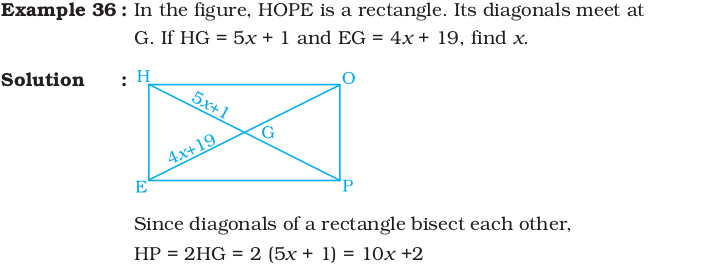
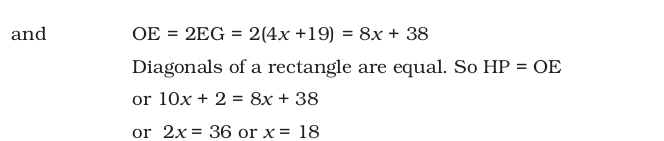
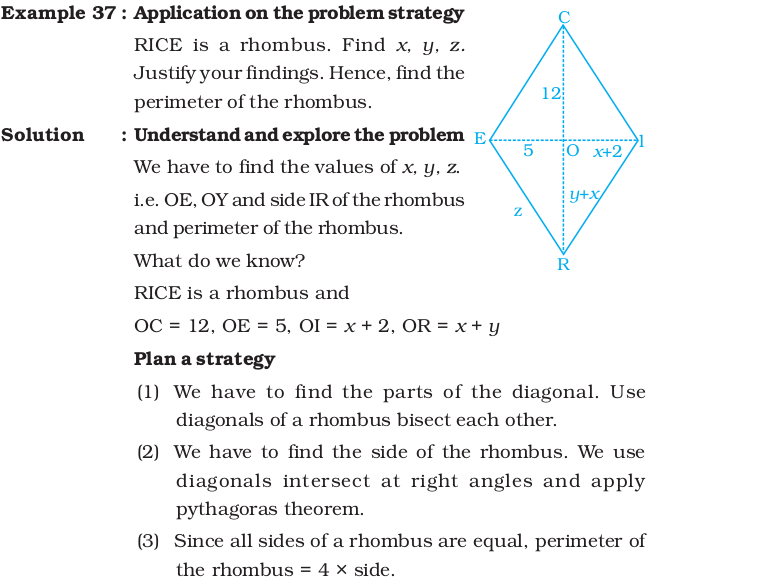
Think and Discuss
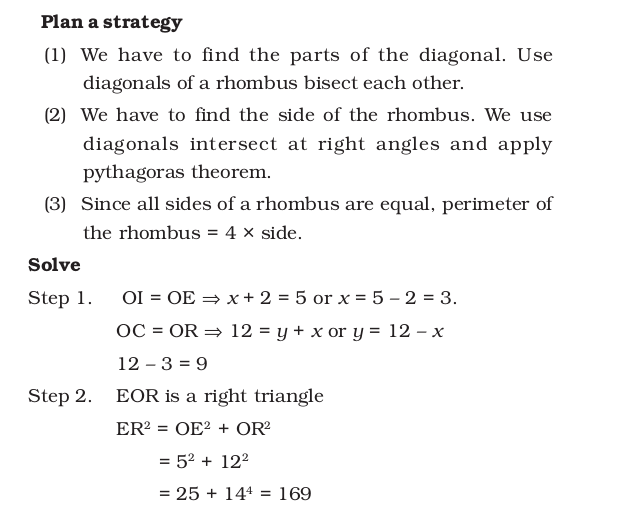
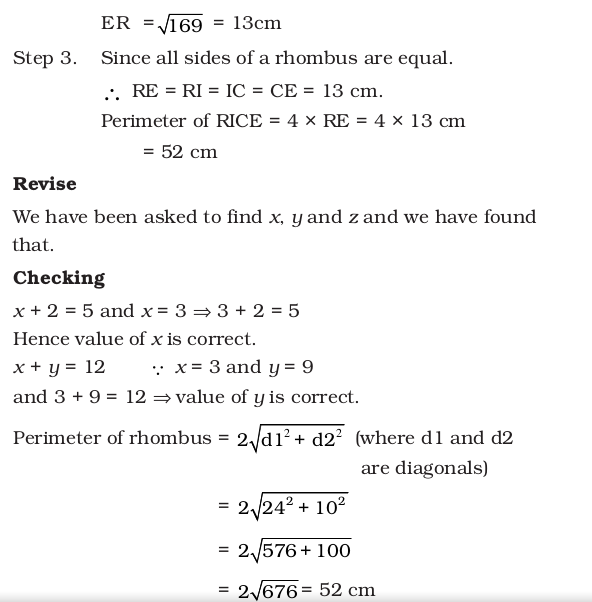
- If RICE is a parallelogram, not a rhombus can you find x, y and z ?
- If RICE is a rhombus with EC = 20 cm and OC = 12 cm, can you find x, y, z ?
Think and Discuss
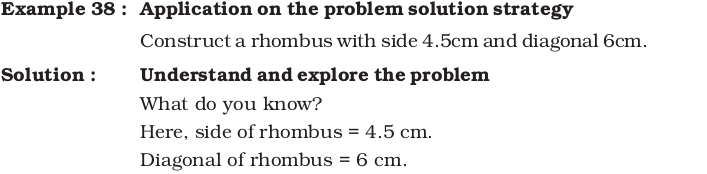
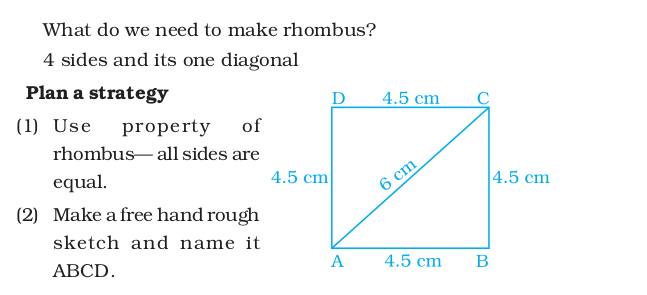
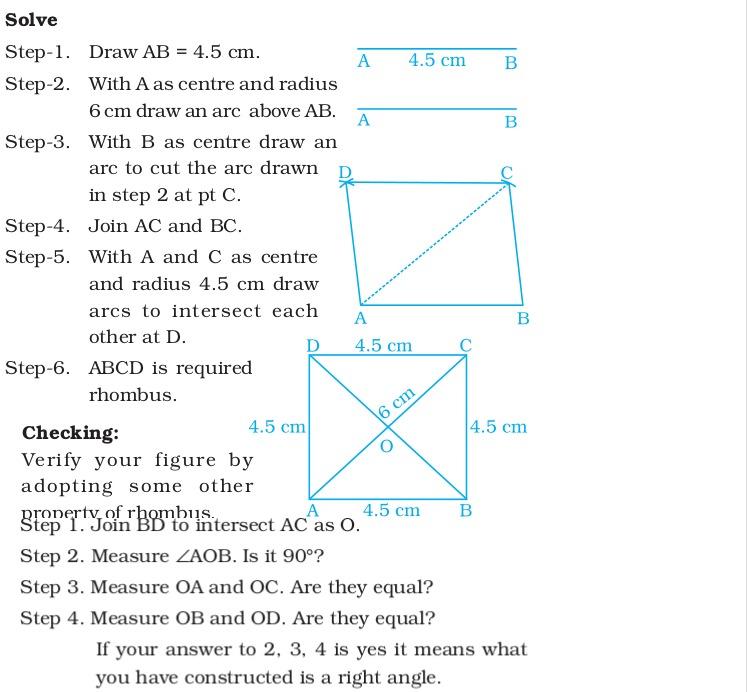
- Can you draw this rhombus by using some other property?
- Can you draw a parallelogram with given measurement?
- How will you construct this rhombus if instead of side 4.5 cm diagonal 4.5 cm is given?
Multiple Choice Questions

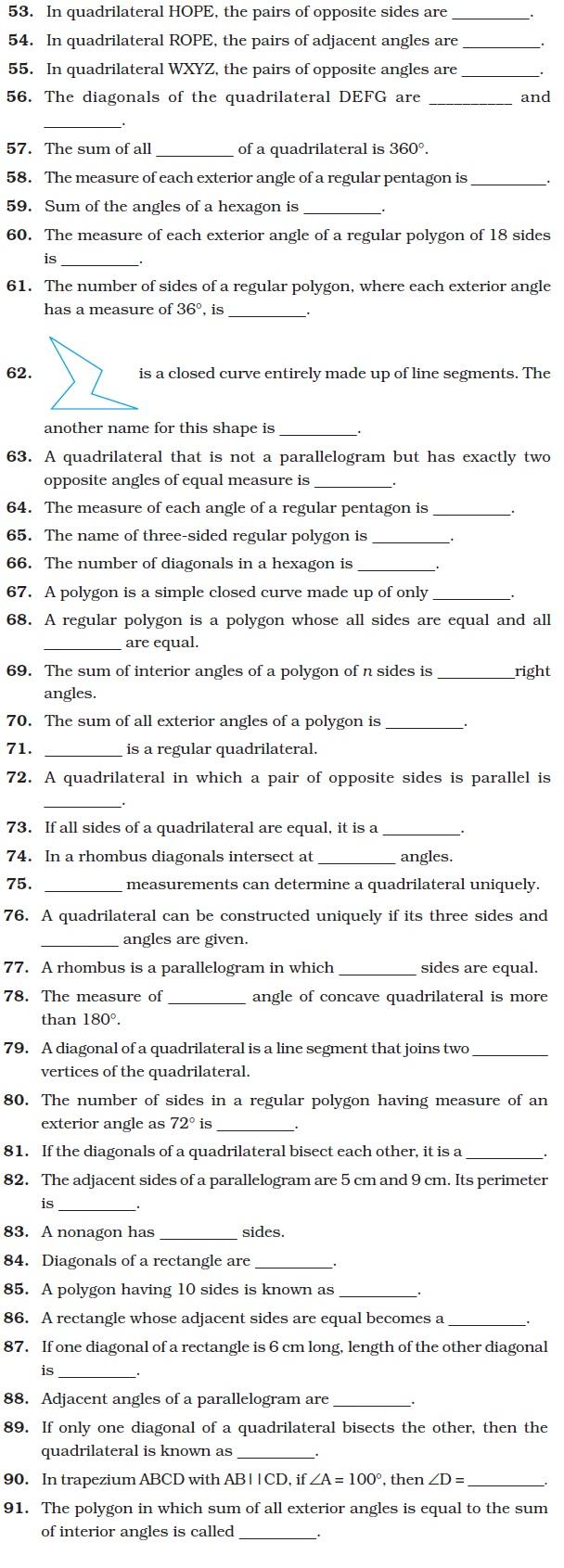
Fill in the Blanks Type Questions
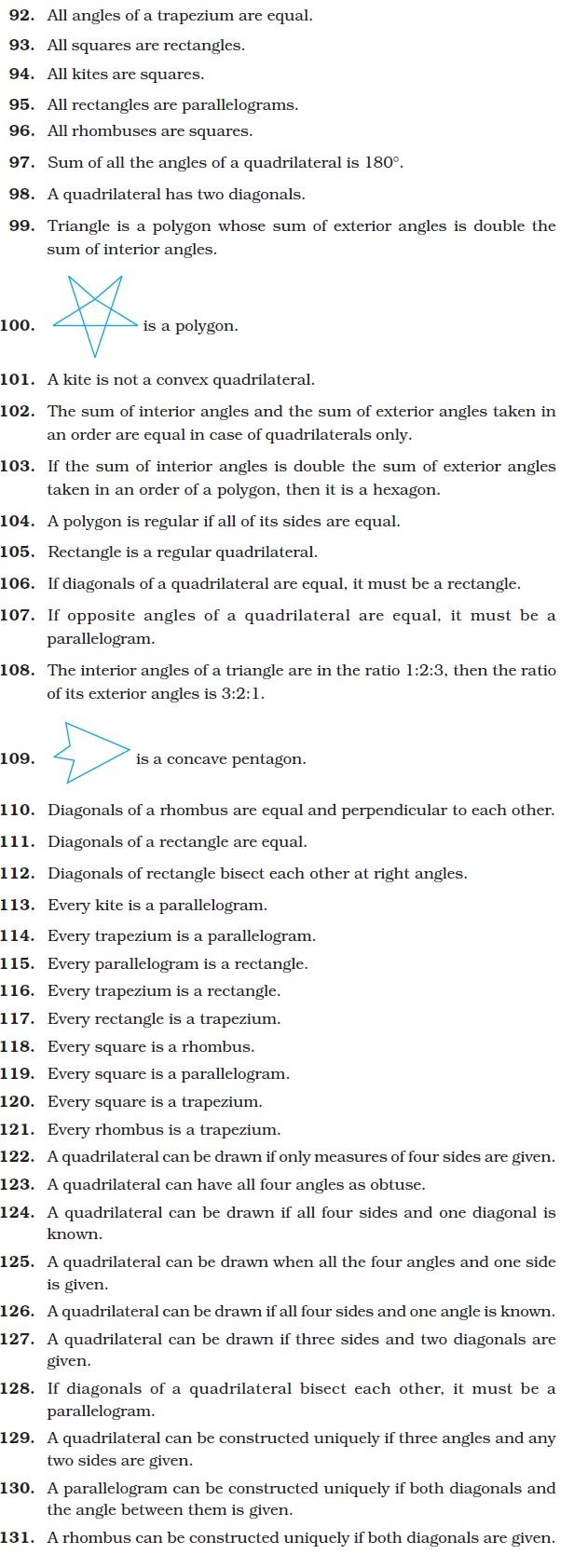
True False Type Questions
Short Answer Type Questions

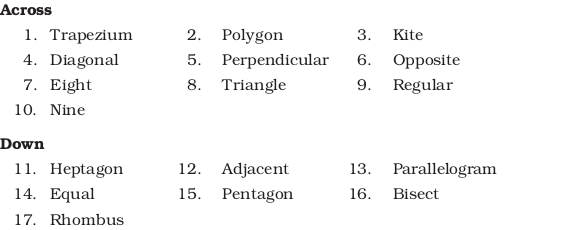
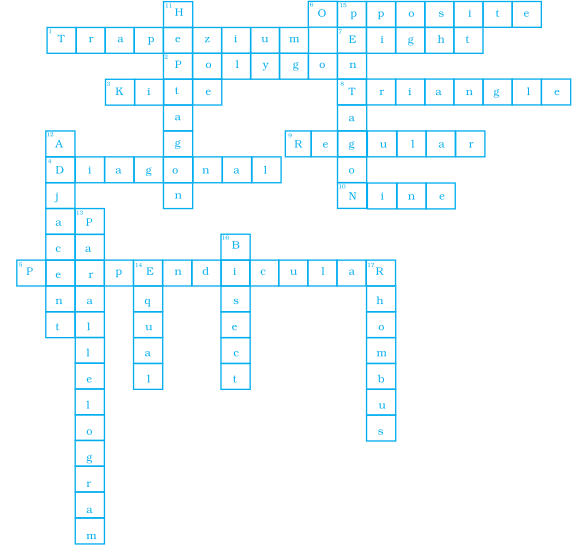
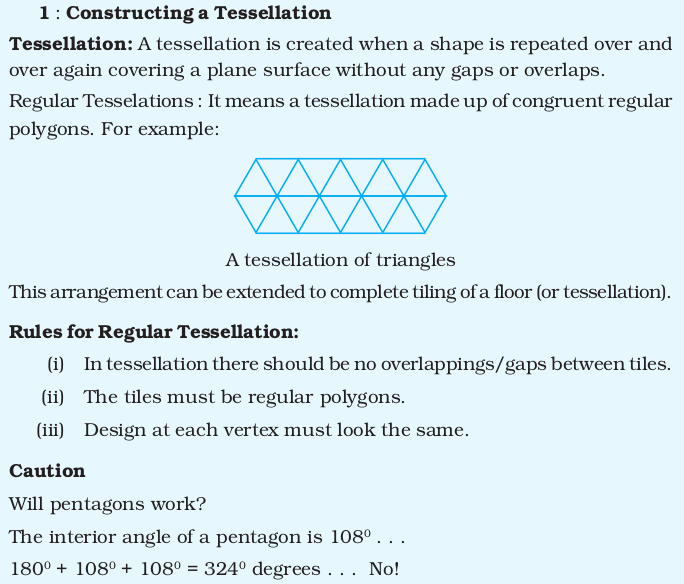
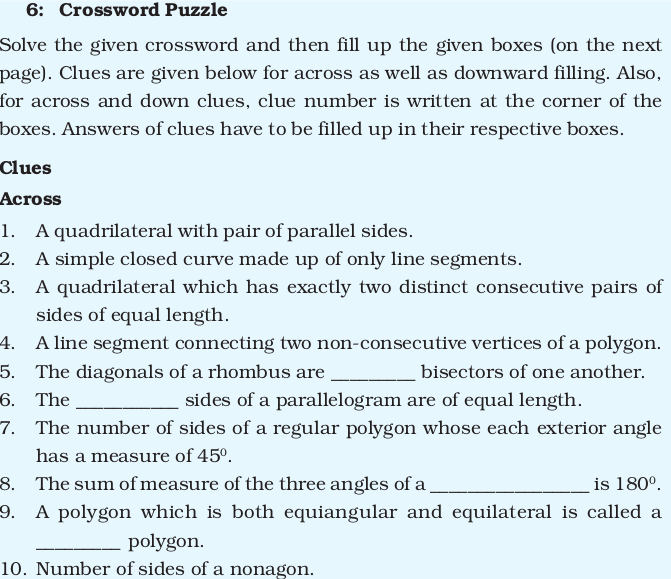
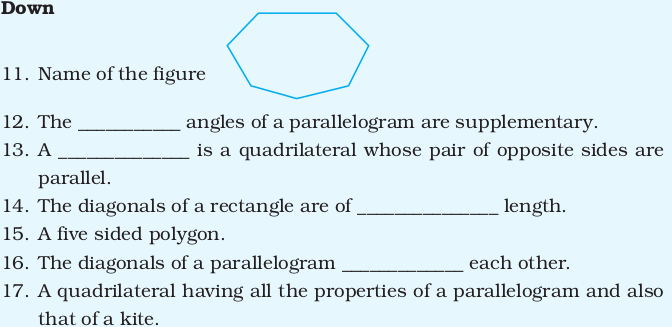
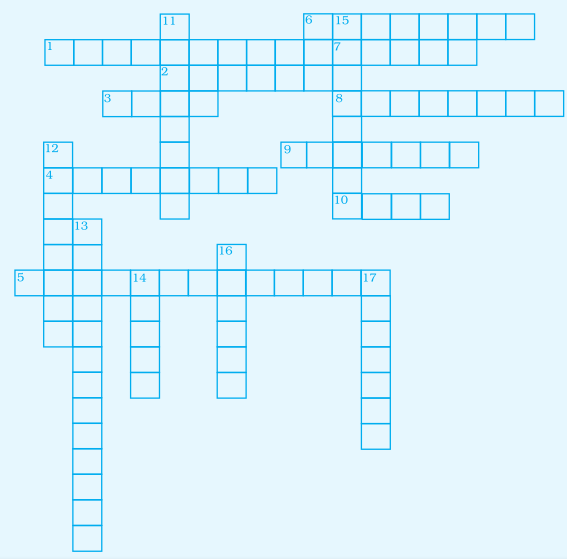
Applications, Games and Puzzles
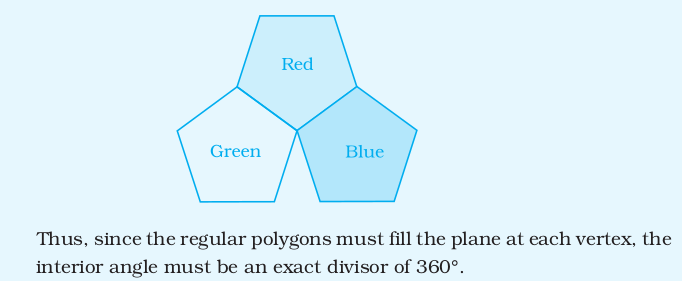
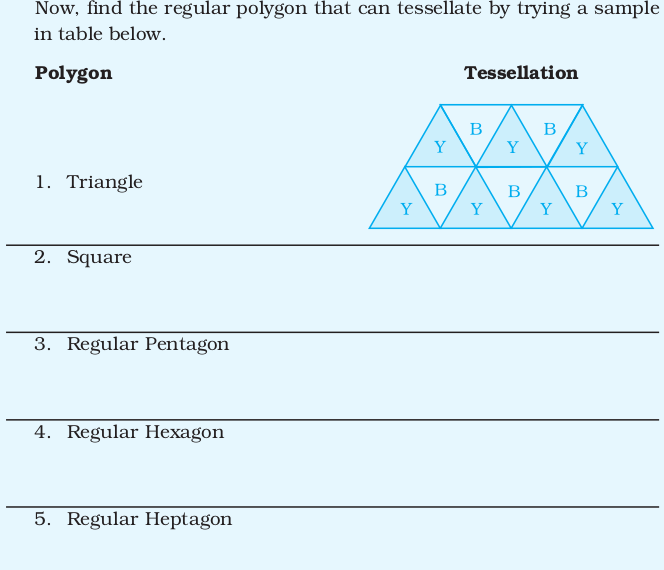
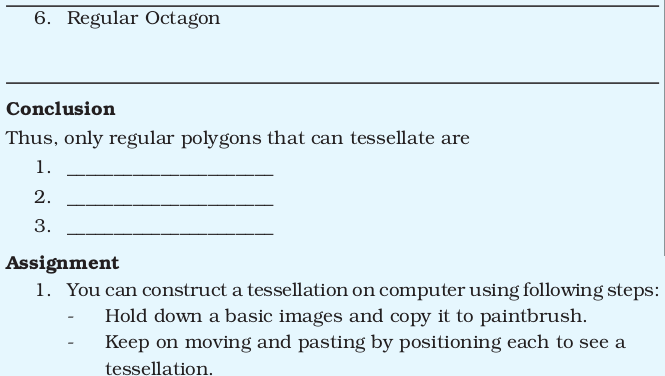
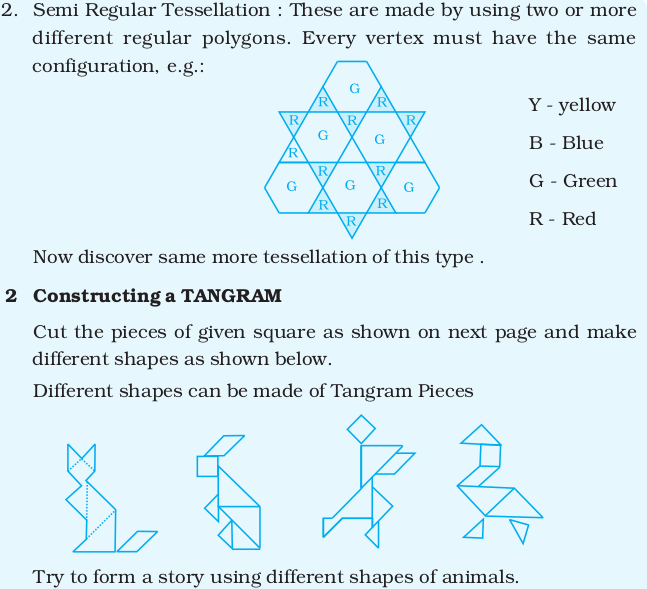
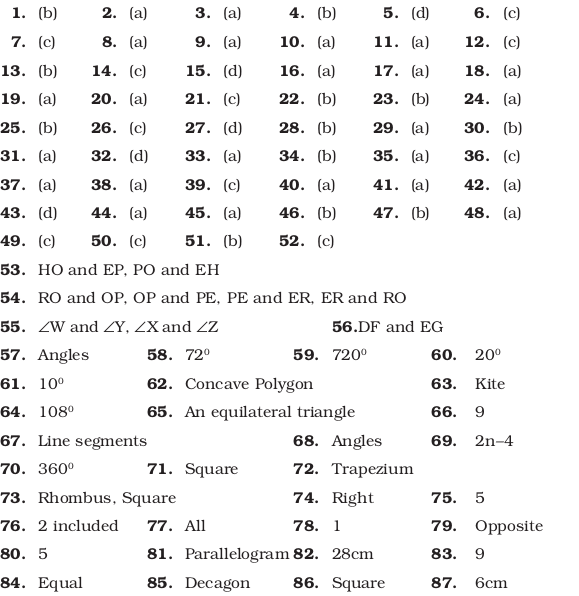
Answers to Multiple Choice Questions
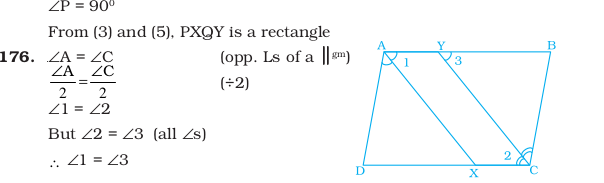
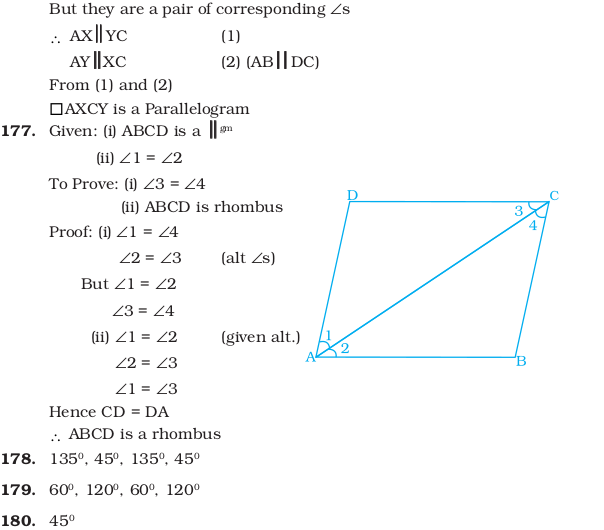
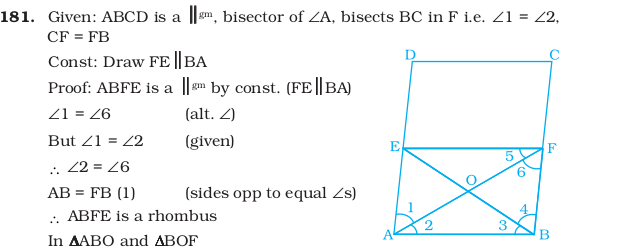
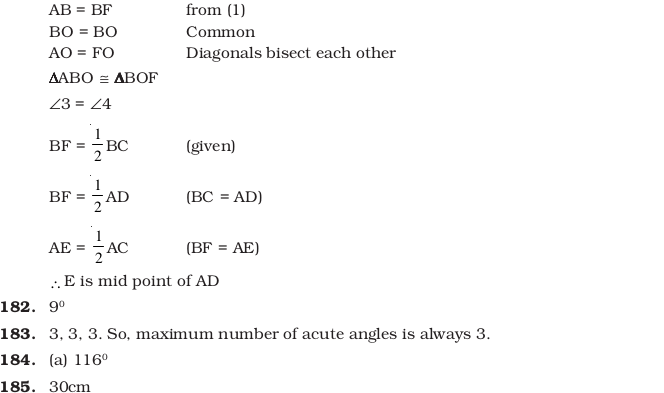
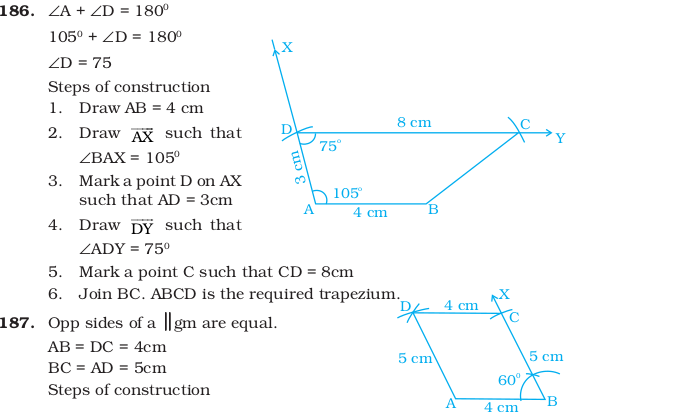
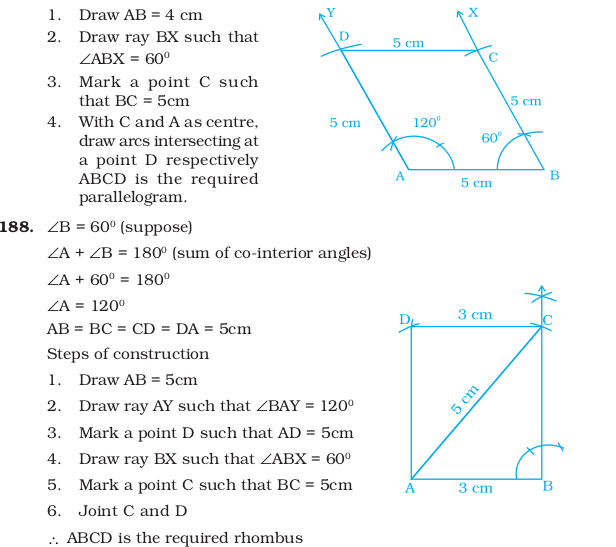
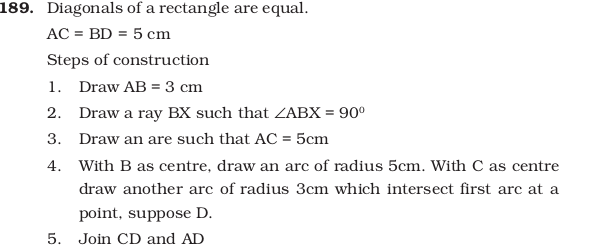
ABCD is the required rectangle.
ABCD is the required rectangle.
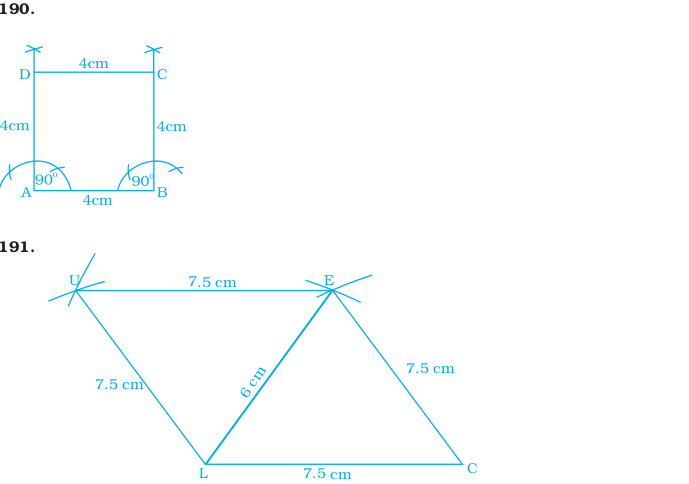
Applications, Games and Puzzles