
Frank ICSE Solutions for Class 10 Biology Chapter 3-Principles Of Genetics
PAGE NO:35
Solution 1:
Gregor Johann Mendel.
Solution 2:
Genetics is the branch of biology that deals with the study of transmission of characters from parents to offspring.
Solution 3:
The term heredity may be defined as the transmission of genetically based characteristics from parents to offspring.
Solution 4:
Monohybrid cross.
Solution 5:
Dihybrid cross ratio is 9:3:3:1.
Solution 6: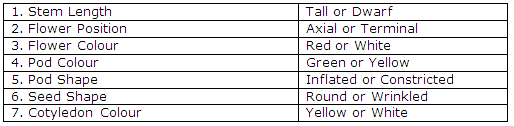
Solution 7:
- Genotype – The genetic expression of a character in terms of alleles written in symbols is called genotype.
- Phenotype – The physical or external and observable expression of a character is called phenotype.
- Homozygous – Diploid condition where both the alleles are identical is called homozygous.
- Heterozygous – Diploid condition where both the alleles are different is called heterozygous.
- Allele – Alternative forms of the same gene which determine contrasting characters is called an allele.
- Dominant – An allele which expresses itself externally when present in homozygous or heterozygous conditions.
- Recessive – An allele which expresses itself externally when present in homozygous condition but remains suppressed in heterozygous condition.
Solution 8:
Gregor Johann Mendel was a biologist who carried out experiments on garden pea and derived a few fundamental principles in genetics. He is called the ‘Father of Genetics’.
Solution 9:
Mendel’s laws are:
- Law of Dominance
- Law of Segregation
- Law of Independent Assortment
Solution 10:
Monohybrid cross is one where the parents used for hybridization differ in only one pair of contrasting characters or alleles.
Solution 11: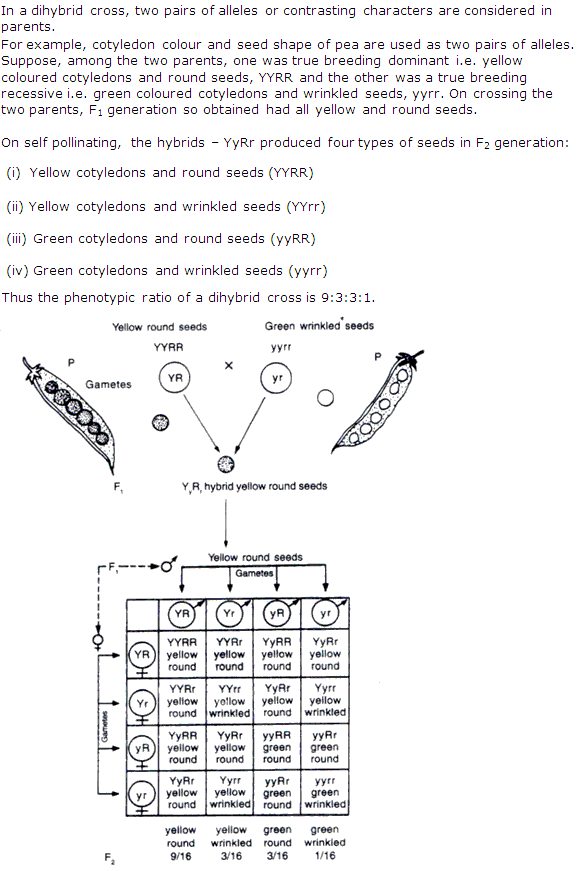
Solution 12:
The law of segregation explains that the characteristics of an organism are determined by internal alleles that occur in pairs. These allele pairs separate during meiosis in gamete formation and the pair gets restored upon random fusion in zygote.
Solution 13:
Law of segregation is also called the law of purity of gametes because the two members of a pair of factors do not blend but segregate or separate into different gametes.
Solution 14:
According to the law of independent assortment when there are two pairs of contrasting characters, the distribution of the members of one pair into the gametes is independent of the distribution of the other pair.
Based on dihybrid ratio of 9:3:3:1 in F2 generation, Mendel observed that when a plant with two dominant alleles was crossed with another having the corresponding recessive alleles it was possible to obtain new combinations of characters where a plant had one dominant and the other recessive allele. These were new recombinations were not present in either parent or F1 generation.
PAGE NO :36
Solution 15:
Importance of Mendel’s Laws:
- Dominant and recessive characters can be found.
- A hybrid with desired characters can be produced easily.
- Crops can be improved.
- Pure recessive characters can be used where needed.
- Genotypes and phenotypes of next generation can be predicted even before cross is made.
Solution 16:
Exceptions to Mendel’s Laws:
- Incomplete Dominance – In few cases, F1 generation has an intermediate phenotype between dominant and recessive alleles.
- Linkage – Genes on the same chromosomes are said to be linked and are inherited together.
- Multiple Allelism – Each character may have more than two alleles which can’t be explained by Mendel’s laws.
Solution 17:
Mendel performed his experiments on the garden pea plant or Pisum sativum.
Solution 18:
Sex chromosomes determine the sex of a child in humans.
Solution 19: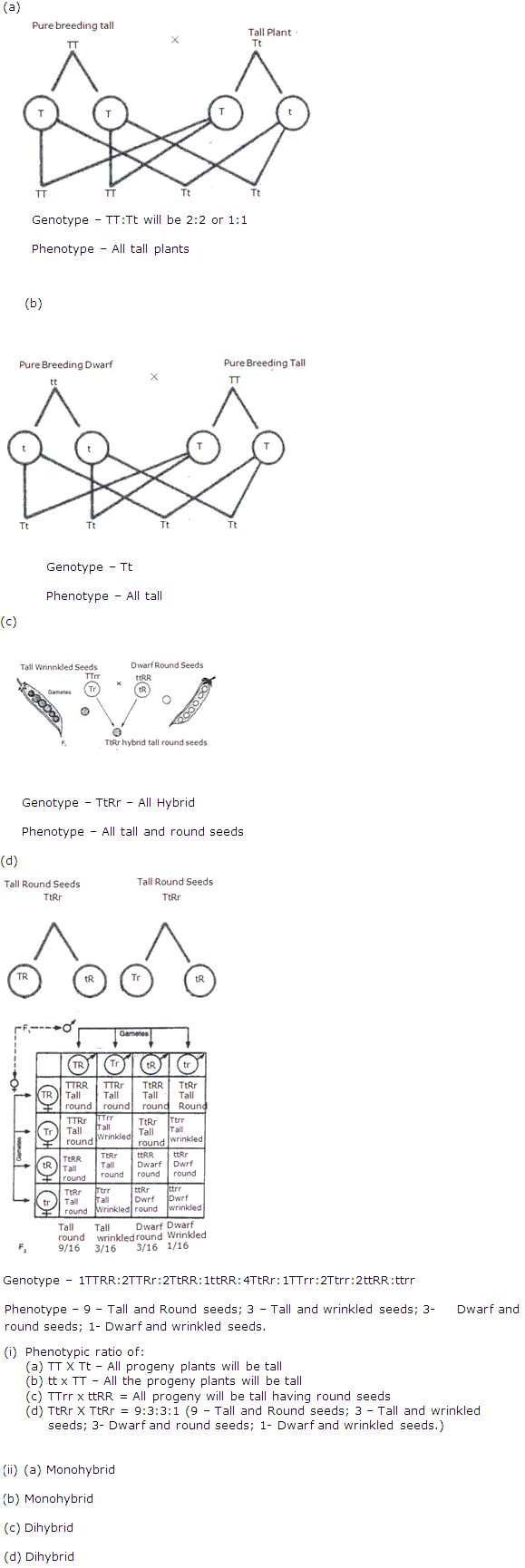
Solution 20: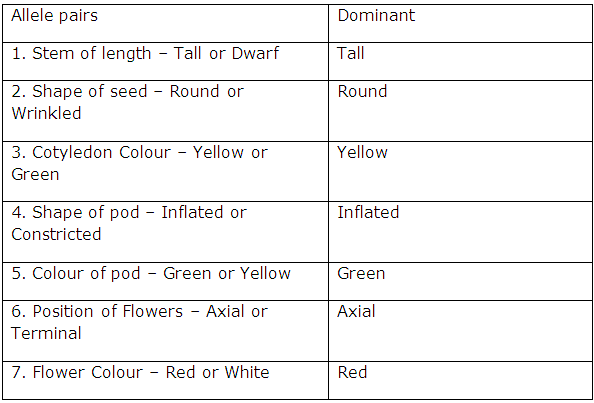
Solution 21:
Mendel’s work did not receive much notice till 1900. Then three scientists: Hugo de Vries, Carl Correns and Erich von Tschermak working independently rediscovered his work and brought Mendel’s experiment to limelight.
Solution 22:
- Autosomes – The chromosomes other than sex chromosomes present in the body are called autosomes.
- Sex chromosomes – The chromosomes which determine the sex of an individual are called sex chromosomes.
- Sex-linked characters – Such characters or traits that are controlled by genes occurring on sex chromosomes are called sex linked characters.
Solution 23:
The sex of the zygote is determined by the sperm which fertilizes the ovum. If an X bearing sperm fuses with an ovum in man, the offspring would be female and if a Y chromosome bearing sperm fuses with an ovum the offspring will be a boy.
Solution 24:
The inheritance of sex linked genes controlling sex linked characters is called sex linkage or sex linked inheritance.
Solution 25:
Haemophilia is X-linked inherited disease in which the diseased person is unable to synthesize a normal blood protein called Antihaemophilic globulin that helps in clotting. Haemophilia is also called Bleeder’s disease as the haemophilic person bleeds for a long time even from a minor cut.
Solution 26:
Colour blindness is a sex-linked inherited disease in which the diseased person is not able to distinguish between red and green colour.
Solution 27:
Cause of Haemophilia – Haemophilia is an X-linked inherited disease. Homozygosity for recessive haemophilia gene is must to be seen in a female while a single affected X chromosome makes the male a haemophilia victim.
Cause of Colour Blindness – Colour blindness is the effect of a recessive gene. In case of female, both the X chromosomes must have the recessive gene but as males have only one X chromosome, just a single affected chromosome causes colour blindness.
Solution 28:
More males are affected by sex linked diseases because they have a single X chromosome and the sex linked diseases occur due recessive gene on X chromosome.
Solution 29:
A man can never transfer a sex-linked gene directly to his son because the son inherits only the Y chromosome from his father and the sex linked diseases are present on the X chromosome.
Solution 30:
The progeny of the woman and the haemophilic man will have one son and one daughter as colorblind, one daughter as a carrier and one son will be normal.
Solution 31:
Haemophilia
Solution 32:
The inheritance of sex linked genes controlling sex linked characters is called sex linkage or sex linked inheritance.
Solution 33: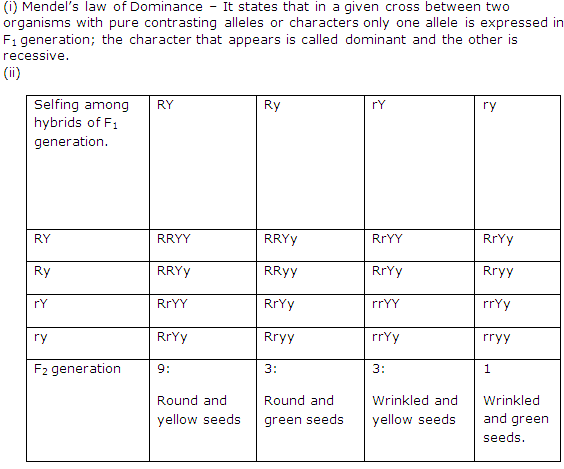
Solution 34: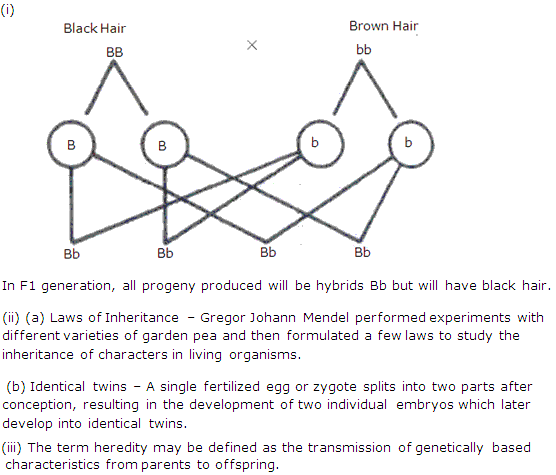
PAGE NO :37
Solution 35:
- Father is color blind.
- 3 daughters and two sons.
- Child 1 is color blind.
- All daughters from 2-5 are carriers while all the sons are normal.
- X chromosome.
- Haemophilia.
Solution 36:
- (b) garden pea
- (d) 100%
- (c) 7
- (d) Mendel
- (a) dominant
- (c) Law of Independent Assortment
- (a) alleles
- (b) heterozygous
- (a) dihybrid cross
- (a) Czechoslovakia
- (c) X and Y
- (a) X chromosome
- (b) autosomes
- (b) one X chromosome
- (b) X chromosomes in male
- (c) 50%
- (c) sons are colour blind and daughters are carriers
- (b) daughter