
Table of Contents
- Introduction
- Atoms and Elements
- Atomic number and atomic mass
- Periodic Table and Chemical Bonds
- Isotopes
- Radioisotopes
- Periodic Table and Chemical Bonds
- Electronegativity
- Chemical Bond
- Compound, substance, Molecule
- Acidity and Basicity
- Redox Reaction
Learning Outcomes
After studying this lesson, you shall be able to:
a. Compound
b. Substance
c. Molecule
Compound
- A compound is a substance with a particular ratio of atoms of particular chemical elements whichdetermines its composition, and a particular organization which determines chemical properties.
- For example, water is a compound containing hydrogen and oxygen in the ratio of two to one, withthe oxygen atom between the two hydrogen atoms, and an angle of 104.5° between them.Compounds are formed and converted by chemical reactions.
Substance
- A chemical substance is a kind of matter with a definite composition and set of properties.
- Strictly speaking, a mixture of compounds, elements with compounds and elements is not achemical substance, but it may be called chemical.
- Most of the substances we encounter in our daily life are some kind of mixture; for example: air,alloys, biomass, etc.
- Nomenclature of substances is a critical part of the language of chemistry.
- Generally, it refers to a system for naming chemical compounds.
6. Earlier in the history of chemistry substances were given name by their discoverer, which often ledto some confusion and difficulty.
7. The standard nomenclature of chemical substances is set by the International Union of Pure and Applied Chemistry (IUPAC) .
8.There are well-defined systems in place for naming chemical species.
9. Organic compounds are named according to the organic nomenclature system.
10. Inorganic compounds are named according to the inorganic nomenclature system.
11. In addition, the Chemical Abstracts Service has devised a method to index chemical substances.
12. In this scheme each chemical substance is identifiable by a number known as CAS registry number.
Molecule
- A molecule is the smallest indivisible portion of a pure chemical substance that has its unique set of chemical properties, i.e.. its potential to undergo a certain set of chemical reactions with other substances.
- However, this definition only works well for substances that are composed of molecules and not the others.
- Molecules are typically a set of atoms bound together by covalent bonds, such that the structure is electrically neutral, and all valence electrons are paired with other electrons either in bonds or in lone pairs.
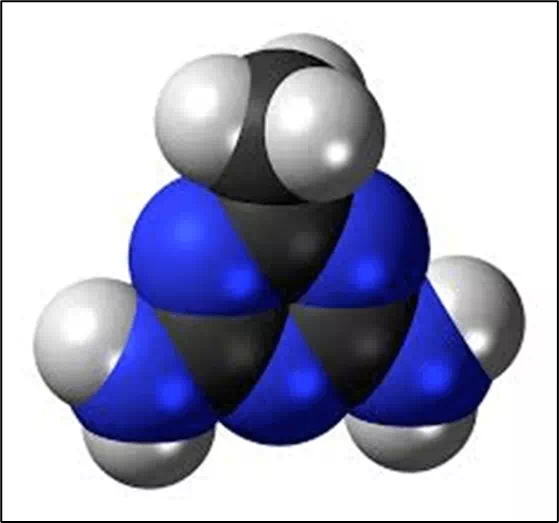
4. Thus, molecules exist as electrically neutral units, unlike ions.
5. When this rule is broken, giving the “molecule” a charge, the result is sometimes named a molecularion or a polyatomic ion.
6. However, the discrete and separate nature of the molecular concept usually requires that molecularions be present only in well-separated form.
7. Charged polyatomic collections residing in solids (for example, common sulphate or nitrate ions)are generally not considered “molecules” in chemistry.
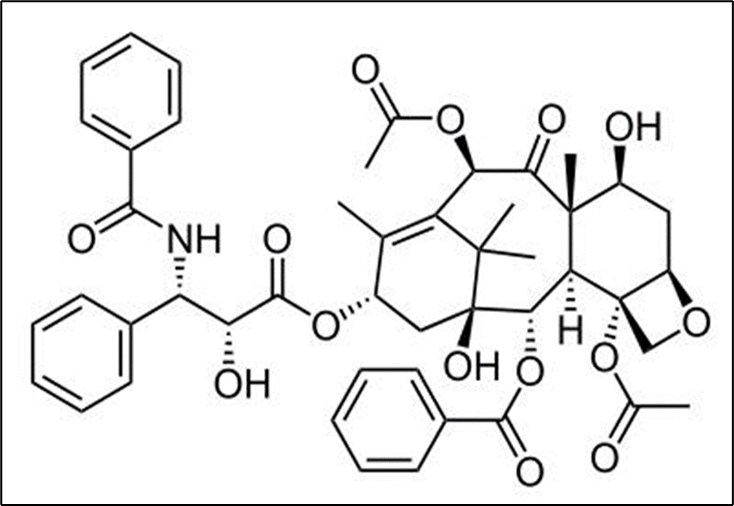
8. A molecular structure depicts the bonds and relative positions of atoms in a molecule such as that in Paclitaxel shown here.
9. The “inert” or noble chemical elements (helium, neon, argon, krypton, xenon and radon) are composed of lone atoms as their smallest discrete unit, but the other isolated chemical elements consist of either molecules or networks of atoms bonded to each other in some way.
10. One of the main characteristics of a molecule is its geometry often called its structure.
11. While the structure of diatomic, triatomic or tetra atomic molecules may be trivial, (linear, angular pyramidal etc.) the structure of polyatomic molecules, that are constituted of more than six atoms (of several elements) can be crucial for its chemical nature.
MCQs
1. What is the correct angle in water molecule, with the oxygen atom between the two hydrogen atoms?
1. 104.5o
2. 109o
3. 105o
4. 108.5o
Answer: A. 104.5o
2. Which of the following is not an inert chemical element:
1. Neon
2. Argon
3. Krypton
4. Chlorine
Answer: D. Chlorine
#Compound
#Substance
#Molecule