
Learning Outcomes
After studying this lesson, you shall be able to:
- Reactions
- Redox reactions
Reaction
- During chemical reactions, bonds between atoms break and form resulting in different substances with different properties.
- In a blast furnace, iron oxide, a compound, reacts with carbon monoxide to form iron, one of the chemical elements, and carbon dioxide.
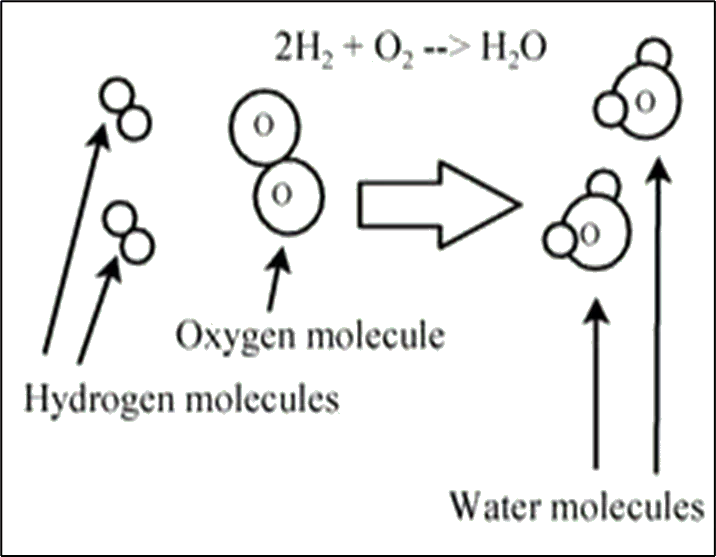
3. When a chemical substance is transformed as a result of its interaction with another substance or energy, a chemical reaction is said to have occurred.
4. Chemical reaction is therefore a concept related to the ‘reaction’ of a substance when it comes in close contact with another, whether as a mixture or a solution; exposure to some form of energy, or both.
5. It results in some energy exchange between the constituents of the reaction as well as with the system environment which may be designed vessels which are often laboratory glassware.
6. Chemical reactions can result in the formation or dissociation of molecules, that is, molecules breaking apart to form two or smaller molecules, or rearrangement of atoms within or across molecules.
7. Chemical reactions usually involve the making or breaking of chemical bonds.
8. Oxidation, reduction, dissociation, acid-base neutralization and molecular rearrangement are some of the commonly used kinds of chemical reactions.
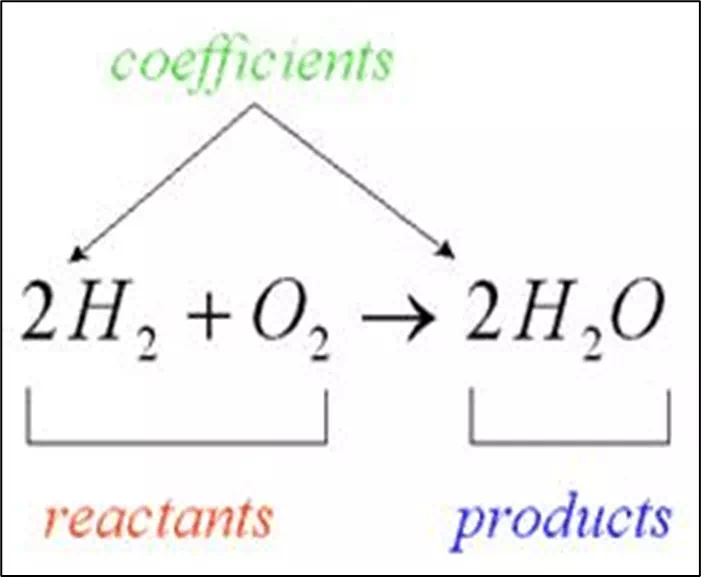
9. A chemical reaction can be symbolically depicted through a chemical equation.
10. While in a non-nuclear chemical reaction the number and kind of atoms on both sides of the equation are equal, for a nuclear reaction this holds true only for the nuclear particles viz. protons and neutrons.
Reaction Mechanism
- The sequence of steps in which the reorganization of chemical bonds may be taking place in the course of a chemical reaction is called its mechanism.
- A chemical reaction can be envisioned to take place in a number of steps, each of which may have a different speed.
- Many reaction intermediates with variable stability can thus be envisaged during the course of a reaction.
- Reaction mechanisms are proposed to explain the kinetics and the relative product mix of a reaction.
Reaction
- Many physical chemists specialize in exploring and proposing the mechanisms of various chemical reactions.
- Several empirical rules, like the Woodward-Hoffmann rules often come handy while proposing a mechanism for a chemical reaction.
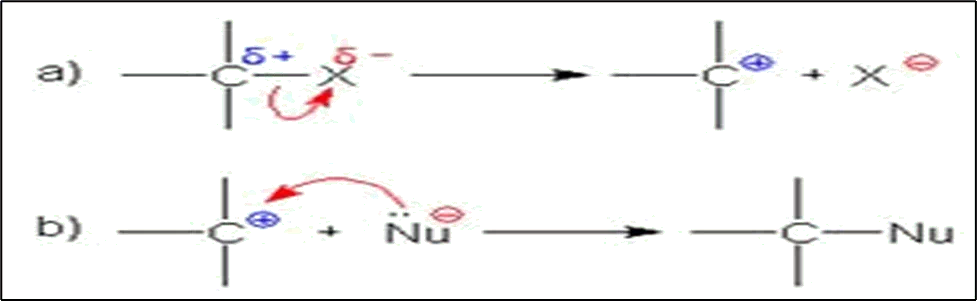
- Given below is the mechanism of SN1 reaction.
4. According to the IUPAC gold book a chemical reaction is a process that results in the interconversion of chemical species ′′ .
5. Accordingly, a chemical reaction may be an elementary reaction or a stepwise reaction.
Redox
- It is a concept related to the ability of atoms of various substances to lose or gain electrons.
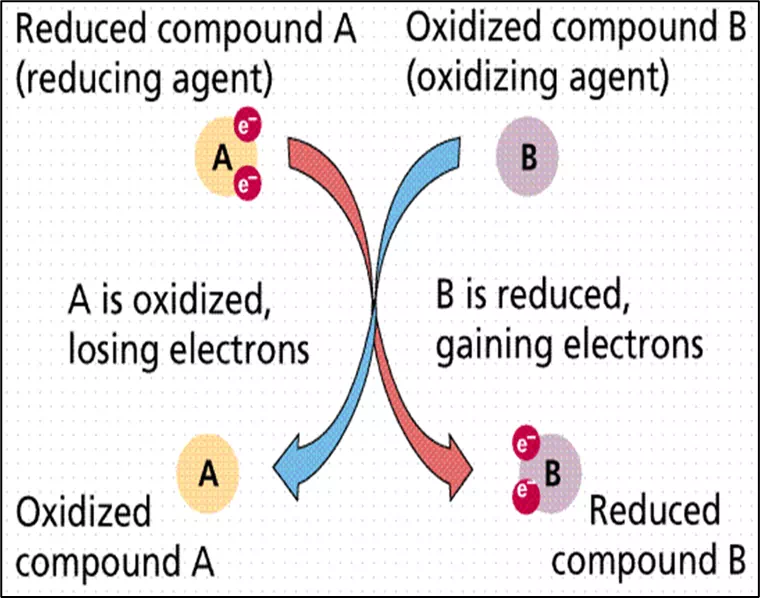
- Substances that have the ability to oxidize other substances are said to be oxidative and are known as oxidizing agents, oxidants or oxidizers.
- An oxidant removes electrons from another substance. Similarly, substances that have the ability to reduce other substances are said to be reductive and are known as reducing agents, reductants, or reducers.
- A reductant transfers electron to another substance and is thus oxidized itself.
- And because it “donates” electrons it is also called an electron donor.
- Oxidation and reduction properly refer to a change in oxidation number-the actual transfer of electrons may never occur.
- Thus, oxidation is better defined as an increase in oxidation number, and reduction as a decrease in oxidation number.
MCQs
1. Which among these are the kinds of chemical reactions:
1. Dissociation
2. Acid-base neutralization
3. Molecular rearrangement
4. All of the above
Answer: All of the above
2. Substances that have the ability to oxidize other substances are called:
1. Oxidants
2. Oxidiser
3. Both
4. none
Answer: Both
#Reactions
#Redox reactions