NCERT Exemplar Class 11 Maths Chapter 16: Probability. NCERT Exemplar Solutions for Class 11 Maths Chapter 16 Probability prepare students for their Class 11 exams thoroughly.
Maths problems and solutions for the Class 11 pdf are provided here which are similar to the questions being asked in the previous year's board.
NCERT Exemplar Class 11 Maths Chapter 16: Probability
Class 11: Maths Chapter 16 solutions. Complete Class 11 Maths Chapter 16 Notes.
Maths Important Questions Class 11 are given below.



16.1 Overview
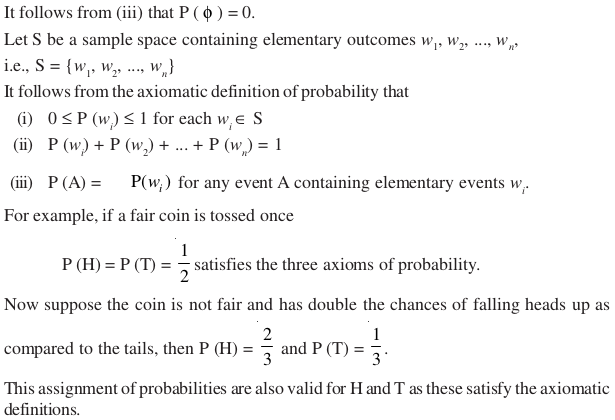
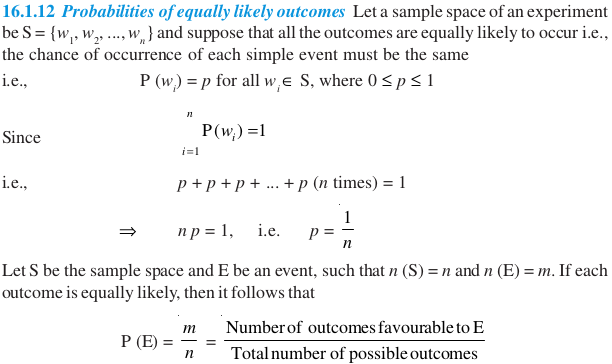
Probability is defined as a quantitative measure of uncertainty – a numerical value that conveys the strength of our belief in the occurrence of an event. The probability of an event is always a number between 0 and 1 both 0 and 1 inclusive. If an event’s probability is nearer to 1, the higher is the likelihood that the event will occur; the closer the event’s probability to 0, the smaller is the likelihood that the event will occur. If the event cannot occur, its probability is 0. If it must occur (i.e., its occurrence is certain), its
probability is 1.
16.1.1 Random experiment An experiment is random means that the experiment has more than one possible outcome and it is not possible to predict with certainty which outcome that will be. For instance, in an experiment of tossing an ordinary coin, it can be predicted with certainty that the coin will land either heads up or tails up, but it is not known for sure whether heads or tails will occur. If a die is thrown once, any of the six numbers, i.e., 1, 2, 3, 4, 5, 6 may turn up, not sure which number will come up.
(i) Outcome A possible result of a random experiment is called its outcome for example if the experiment consists of tossing a coin twice, some of the outcomes are HH, HT etc.
(ii) Sample Space A sample space is the set of all possible outcomes of an experiment. In fact, it is the universal set S pertinent to a given experiment. The sample space for the experiment of tossing a coin twice is given by S = {HH, HT, TH, TT}
The sample space for the experiment of drawing a card out of a deck is the set of all cards in the deck.
16.1.2 Event An event is a subset of a sample space S. For example, the event of drawing an ace from a deck is A = {Ace of Heart, Ace of Club, Ace of Diamond, Ace of Spade}.
16.1.3 Types of events
(i) Impossible and Sure Events The empty set φ and the sample space S describe events. In fact φ is called an impossible event and S, i.e., the whole sample space is called a sure event.
ii) Simple or Elementary Event If an event E has only one sample point of a sample space, i.e., a single outcome of an experiment, it is called a simple or elementary event. The sample space of the experiment of tossing two coins is given by S = {HH, HT, TH, TT}
The event containing a single outcome HH of the sample space S is a simple or elementary event. If one card is drawn from a well shuffled deck, any particular card drawn like ‘queen of Hearts’ is an elementary event.
(iii) Compound Event If an event has more than one sample point it is called a compound event, for example, S = {HH, HT} is a compound event.
(iv) Complementary event Given an event A, the complement of A is the event consisting of all sample space outcomes that do not correspond to the occurrence of A.
Short Answer Type Questions (Solved Examples)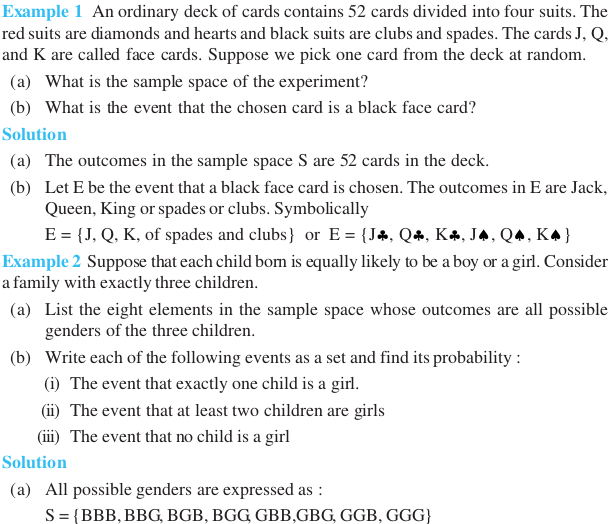

Long Answer Type Questions (Solved Examples)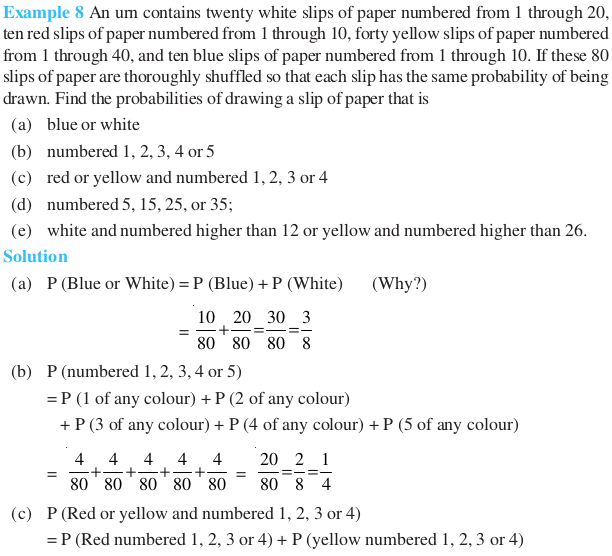
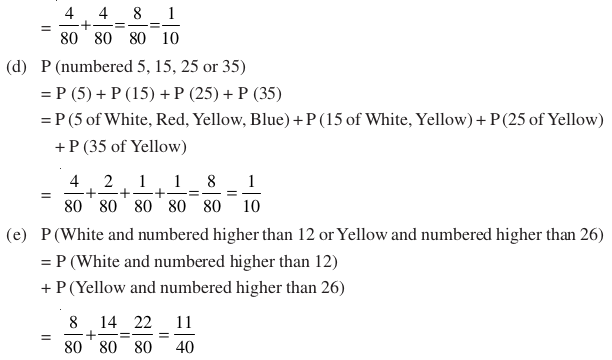
Objective Type Questions (Solved Examples)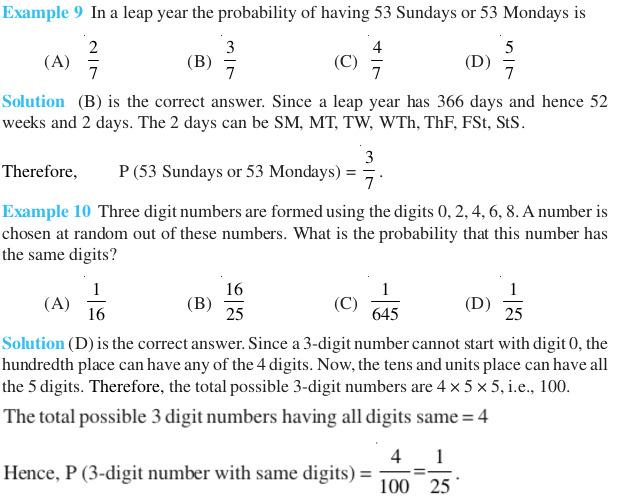
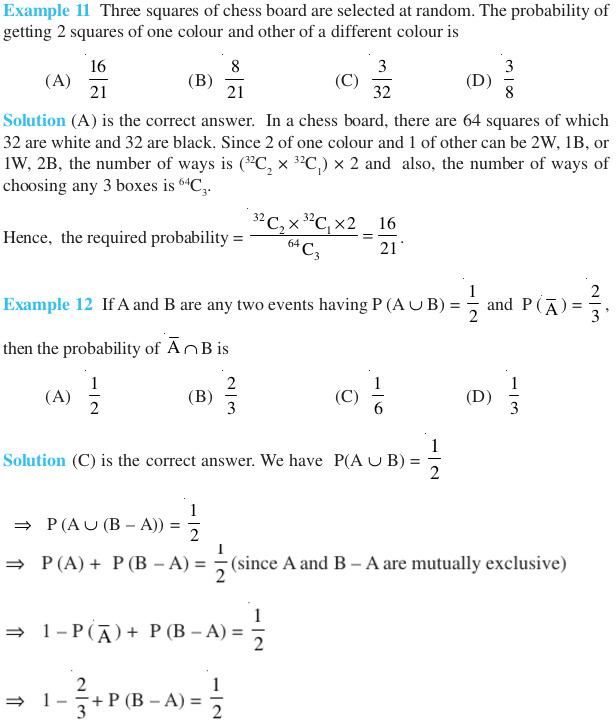

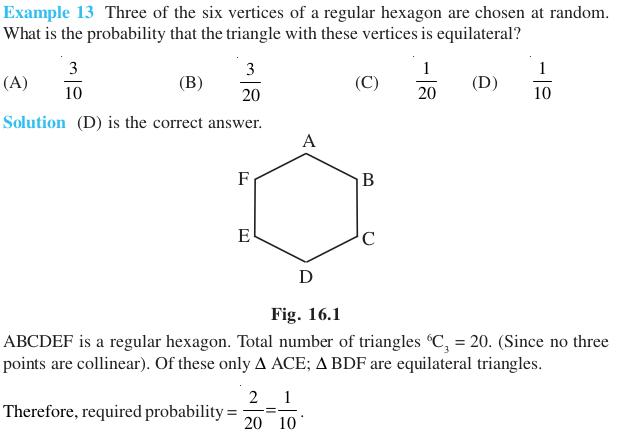
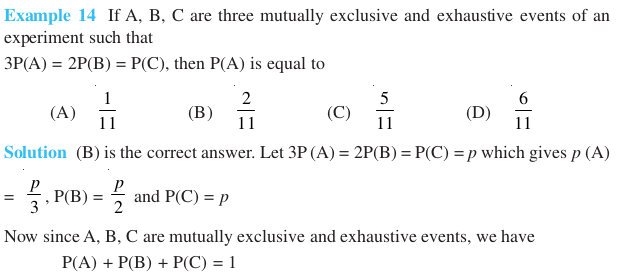
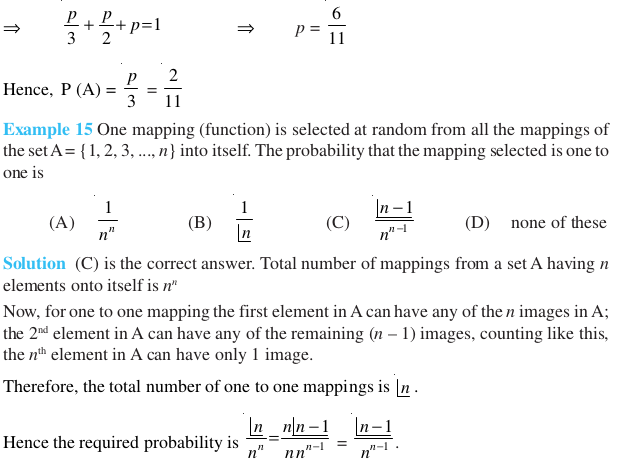
Short Answer Type Questions (Exercise)
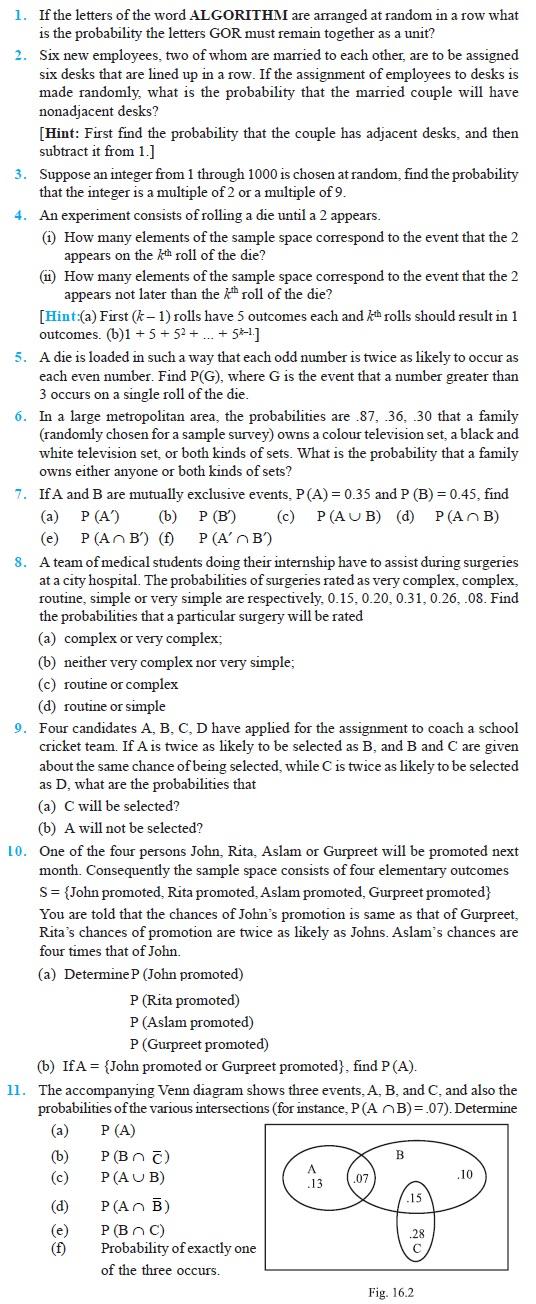
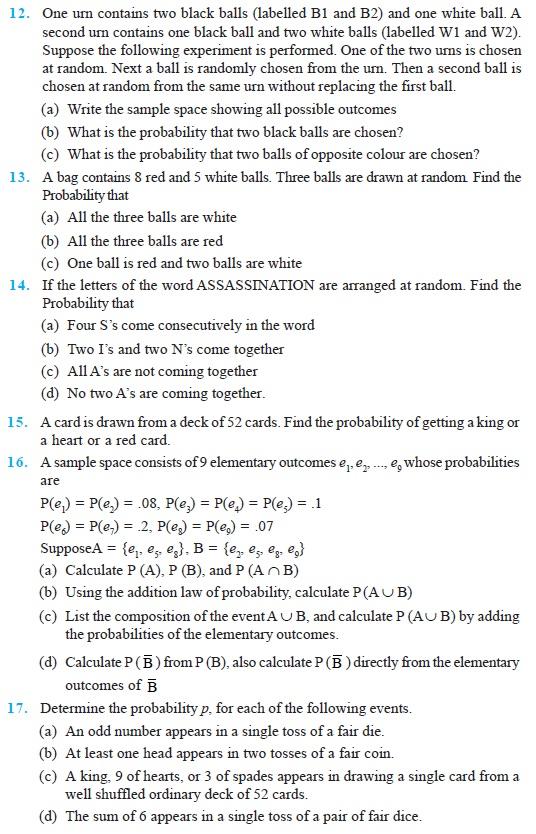
Long Answer Type Questions (Exercise)
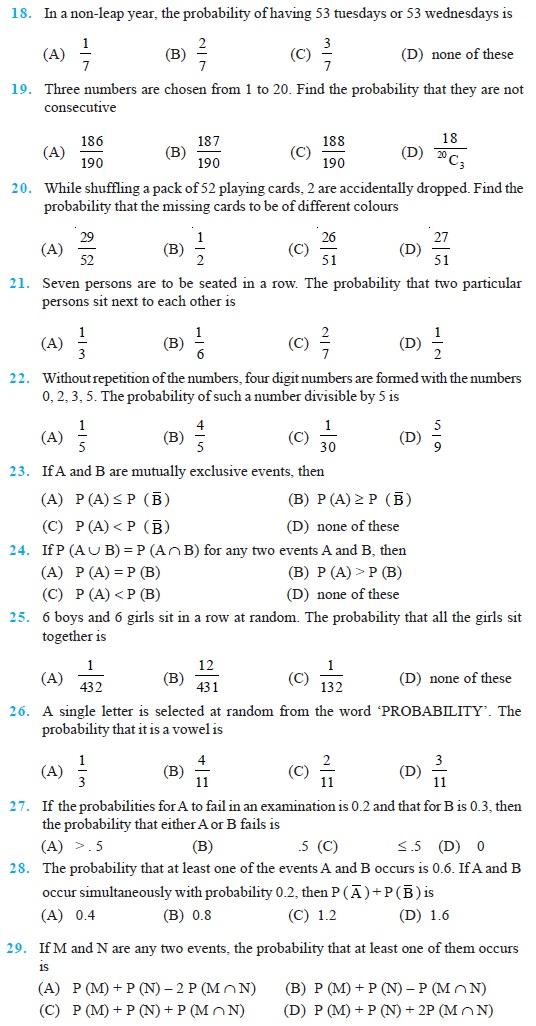
Objective Type Questions (Exercise)
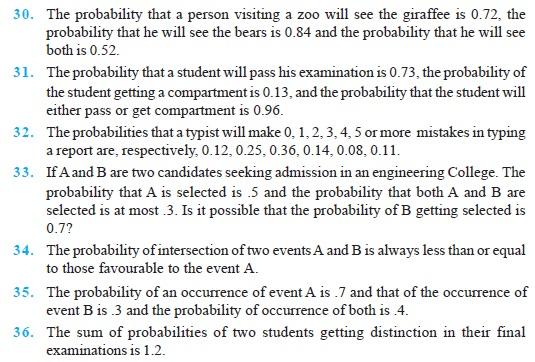
True or False Type Questions
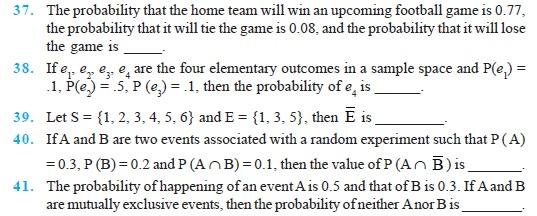
Fill In Blanks Type Questions (Exercise)
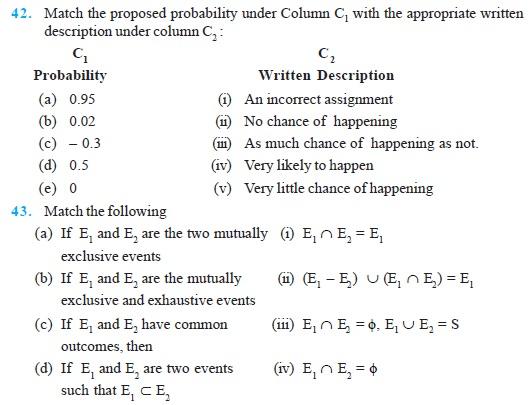
Match Type Questions (Exercise)