

The AP Intermediate 2nd Year Chemistry Syllabus encompasses all the topics covered in the Chemistry subject for 12th standard students. BIEAP (Andhra Pradesh Board of Intermediate Education) releases the AP Inter 2nd Year syllabus for Chemistry.
You can now access the Andhra Pradesh Board Class 12 Chemistry syllabus PDF from this page on IndCareer to understand the content recommended for study from AP SCERT textbooks.
Contents
AP Intermediate 2nd Year Chemistry Syllabus
AP Board Intermediate 2nd Year Chemistry Syllabus Download Link – Click Here to Download Syllabus PDF
AP Intermediate 2nd Year Chemistry Syllabus
| Chapters | Topics |
|---|---|
| Solid State | General characteristics of solid-state, Amorphous and crystalline solids, Classification of crystalline solids based on different binding forces (molecular, ionic, metallic and covalent solids) Imperfections in solids-types of point Stoichiometric and non-stoichiometric defects, Electrical properties-conduction of electricity in metals, etc. |
| Solution | Types of solutions Expressing concentration of solutions mass percentage volume percentage, mass by volume percentage, parts per million, Abnormal molar masses-Van ’t Hoff factor, etc. |
| Electrochemistry and Chemistry Kinetics | Electrochemical cells Galvanic cells: measurement of electrode potentials Nernst equation-equilibrium constant from Nernst equation- electrochemical cell and Gibbs energy of the cell reaction, Corrosion of metals-Hydrogen economy, etc. |
| Surface Chemistry | Adsorption and absorption Mechanism of adsorption-types of adsorption characteristics of physisorption – adsorption from solution phase applications of adsorption, Emulsions, etc. |
| General Principles of Metallurgy | The occurrence of metals magnetic separation, froth floatation, leaching Extraction of crude metal from concentrated ore-conversion to oxide, Uses of aluminium, copper, zinc and iron, etc. |
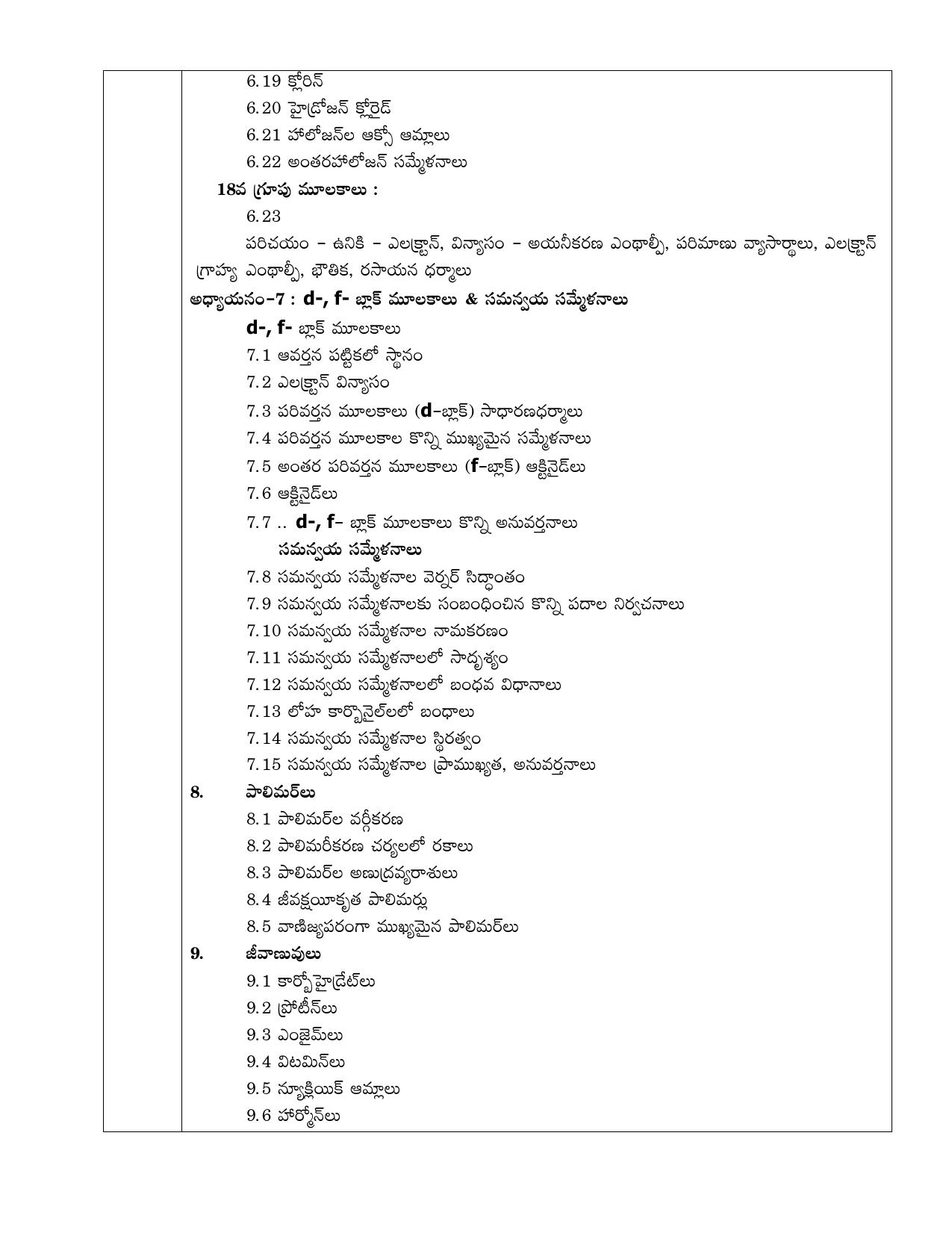
| p-Block Elements | Group-15 Elements Occurrence- electronic configuration, atomic and ionic radii, ionisation energy, electronegativity, physical and chemical properties, Phosphorus halides, etc. Group-16 Elements Occurrence- electronic configuration, atomic and ionic radii, ionisation enthalpy, electron gain enthalpy, electronegativity, physical and chemical properties, Dioxygen-preparation, etc. Group-17 Elements Occurrence, electronic configuration, atomic and ionic radii, ionisation enthalpy, electron gain enthalpy, electronegativity, physical and chemical properties, etc. Group-18 Elements Occurrence, electronic configuration, ionisation enthalpy, atomic radii electron gain enthalpy, Xenon-oxygen, compounds XeO3 and XeOF4 – their formation and structures, etc. |
| d and f Block Elements & Coordination Compounds | Actinides-electronic configuration atomic and ionic sizes Oxidation states General characteristics and comparison with lanthanide Some important compounds of transition elements-oxides and oxoanions of metals-preparation and properties of potassium dichromate and potassium permanganate-structures of chromate, dichromate, etc. Coordination Compounds: Structural isomerism linkage, coordination, ionisation and solvate isomerism, bonding in coordination compounds, etc. |
| Polymers | Types of polymerization reactions addition polymerization or chain growth polymerization-ionic polymerization, free radical mechanism preparation of addition polymers-polythene Teflon, Polymers of commercial importance polypropene, polystyrene, polyvinyl chloride(PVC), urea-formaldehyde resin, etc. |
| Biomolecules | Enzymes: Enzymes, mechanism of enzyme action, Hormones: Definition, different types of hormones, their production, biological activity, diseases due to their abnormal activities, etc. |
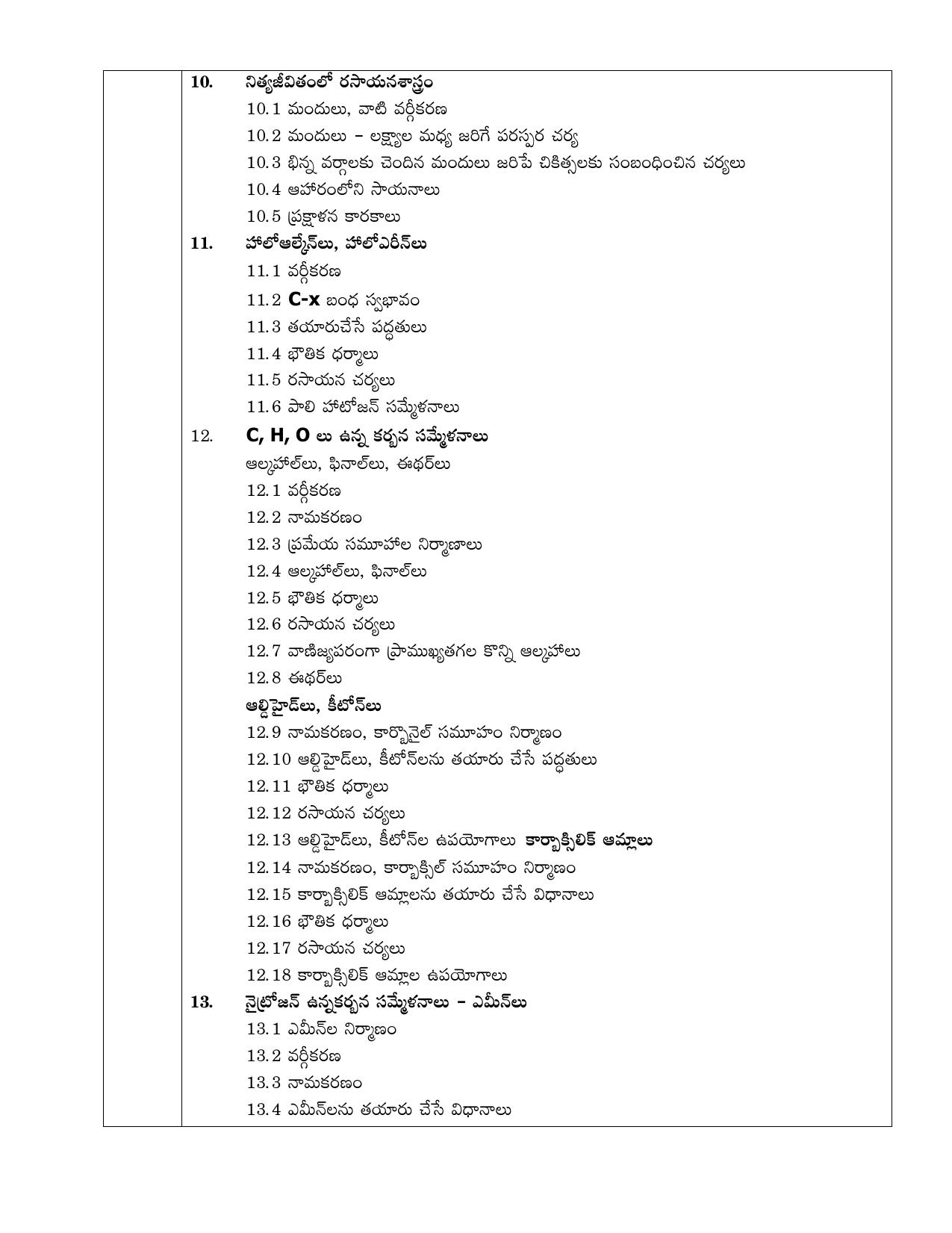
| Chemistry in Everyday Life | Chemicals in food artificial sweetening agents Food preservatives Drug-enzyme interaction Receptors as drug targets Cleansing agents-soaps and synthetic detergents, etc. |
| Haloalkanes and Haloarenes | Classification and nomenclature Nature of C-X bond, by the addition of hydrogen halides and halogens to alkenes-by halogen exchange, triiodomethane, tetrachloromethane, freons and DDT, etc. |
| Organic Compounds Containing C, H, and O (Alcohols, Phenols, Ethers, Aldehydes, Ketones and Carboxylic acids) | Alcohols, phenols and ethers: Alcohols, phenols and ethers -classification, Nomenclature: (a) Alcohols, (b) Phenols and (c) Ethers, Structures of hydroxy and ether functional groups, Methods of preparation, Cleavage of C-O bond and electrophilic substitution of aromatic ethers, etc. Aldehydes and Ketones Nomenclature and structure of carbonyl group, Preparation of aldehydes and ketones-(1) by oxidation of alcohol, etc. Carboxylic Acids: Nomenclature and structure of carboxyl group, Methods of preparation of carboxylic acids, Reactions involving -COOH group-reduction, decarboxylation, Uses of carboxylic acids, etc. |
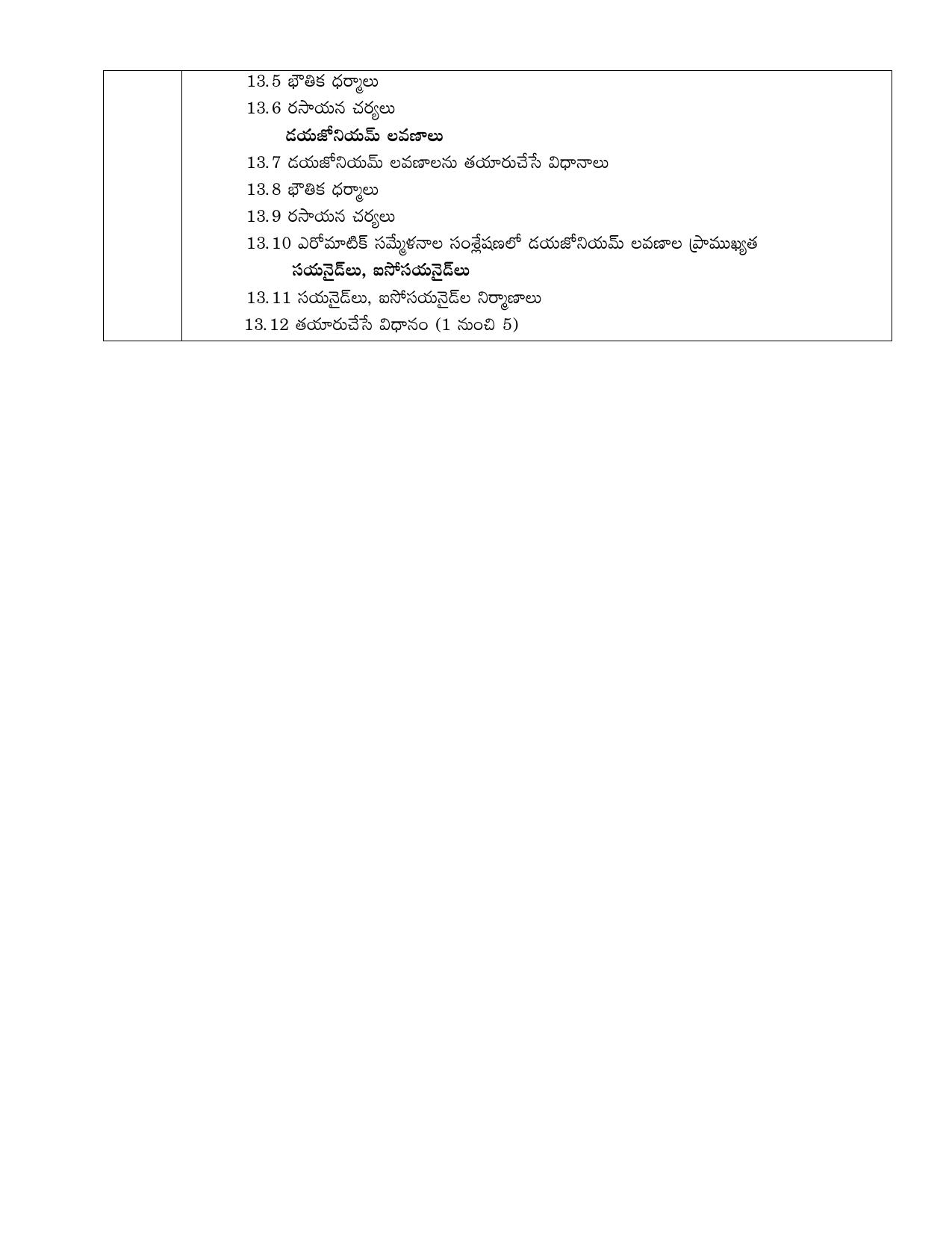
| Organic Compounds | Organic Compounds Containing Nitrogen Amines: Structure of amines, Classification, Nomenclature, Preparation of amines: reduction of nitro compounds, ammonolysis of alkyl halides, reduction of nitriles, reduction of amides, Gabriel phthalimide synthesis and Hoffmann bromamide degradation reaction, Physical properties. Diazonium Salts: Methods of preparation of diazonium salts (by diazotization), Physical properties, Chemical reactions: Reactions involving displacement of nitrogen, reactions involving retention of the diazo group Cyanides and Isocyanides Structure and nomenclature of cyanides and isocyanides, etc. |
AP Intermediate 2nd Year Chemistry Syllabus PDF
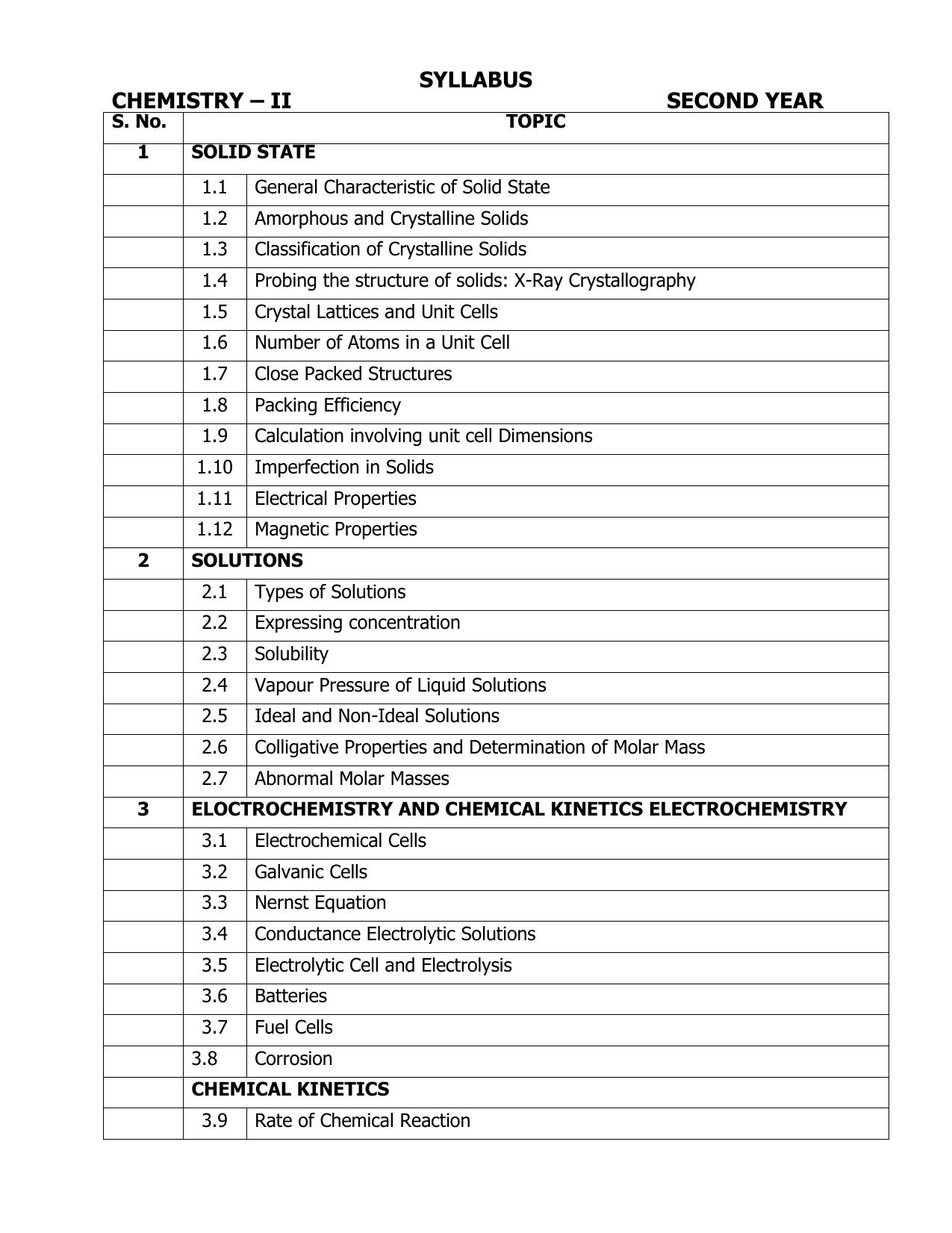
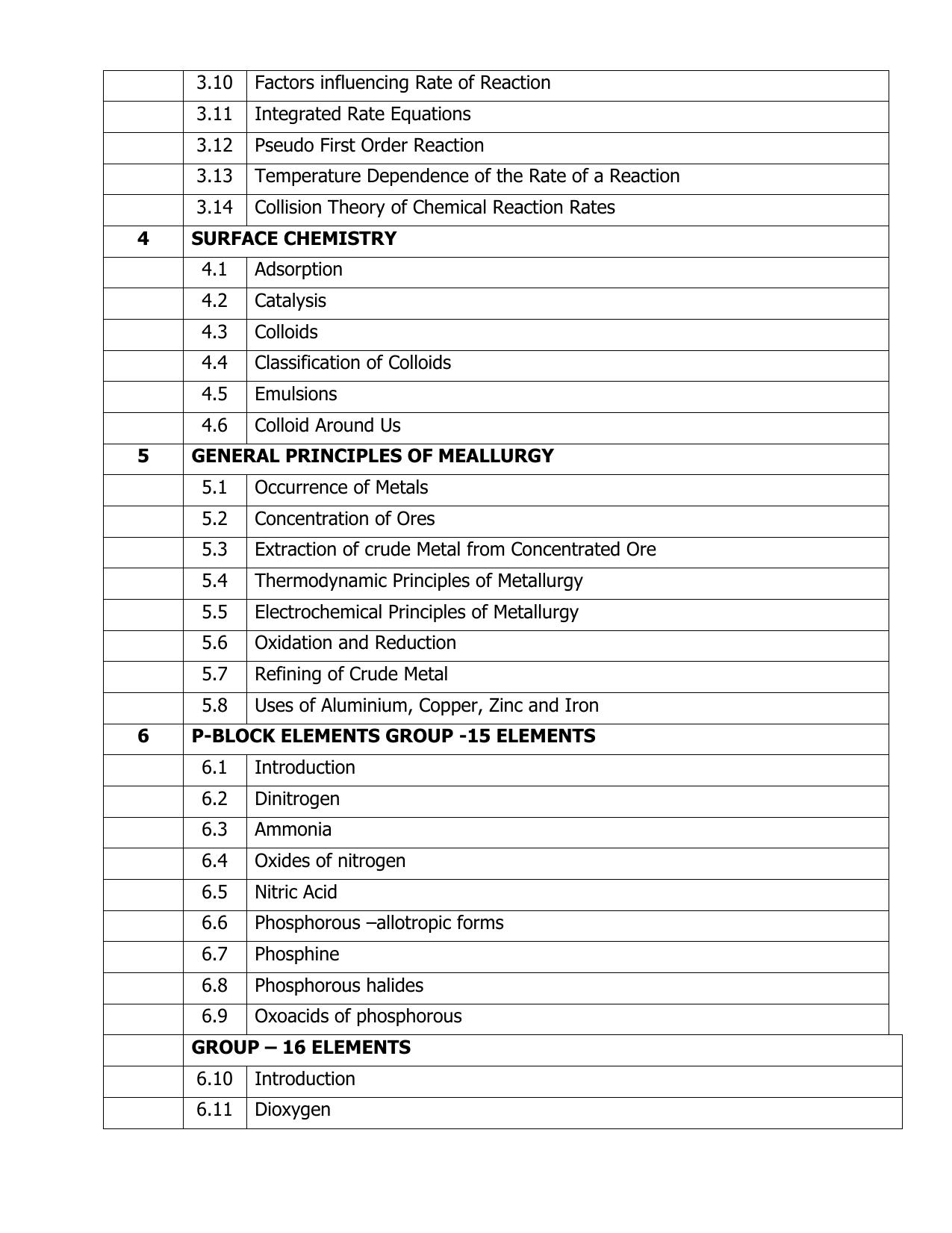
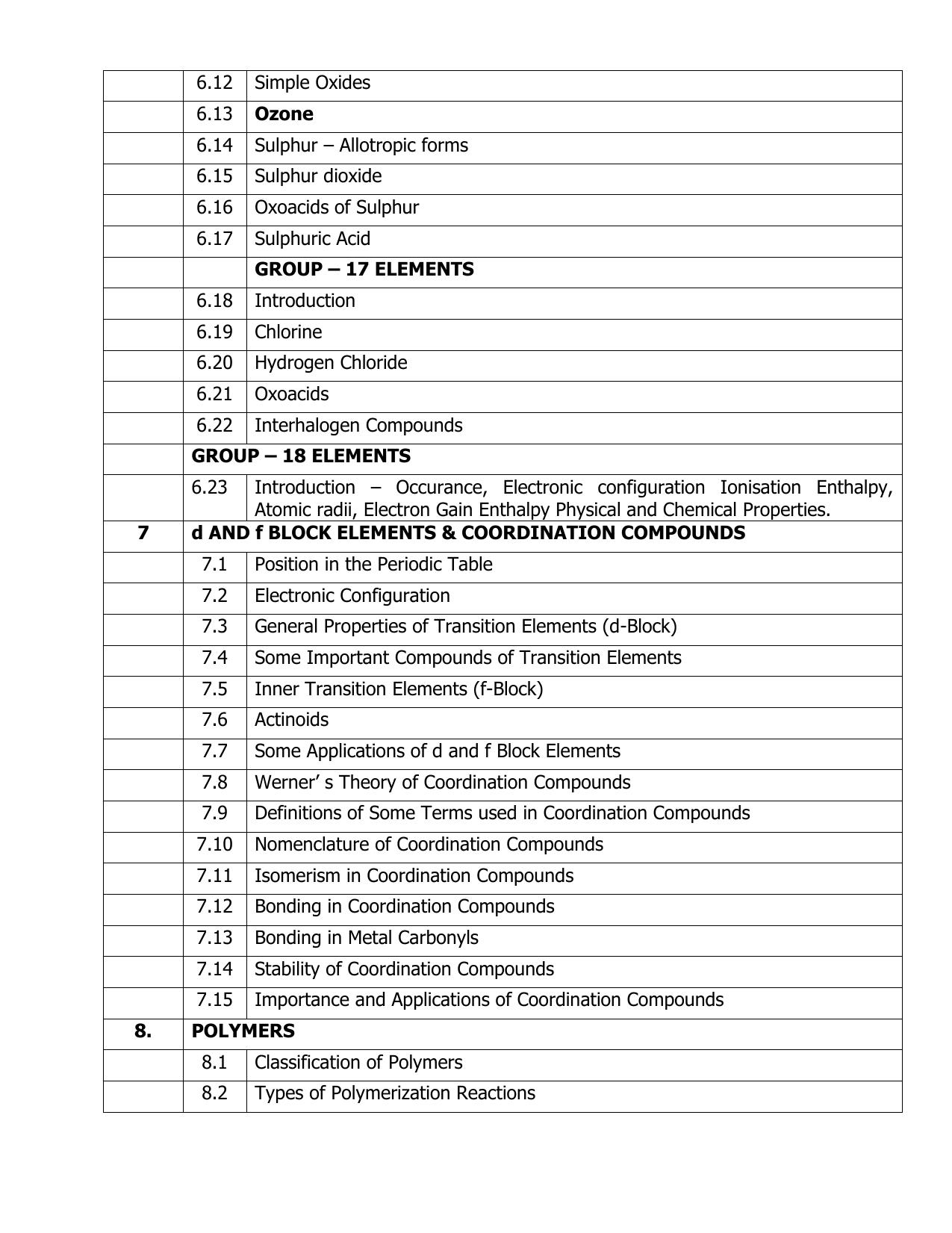
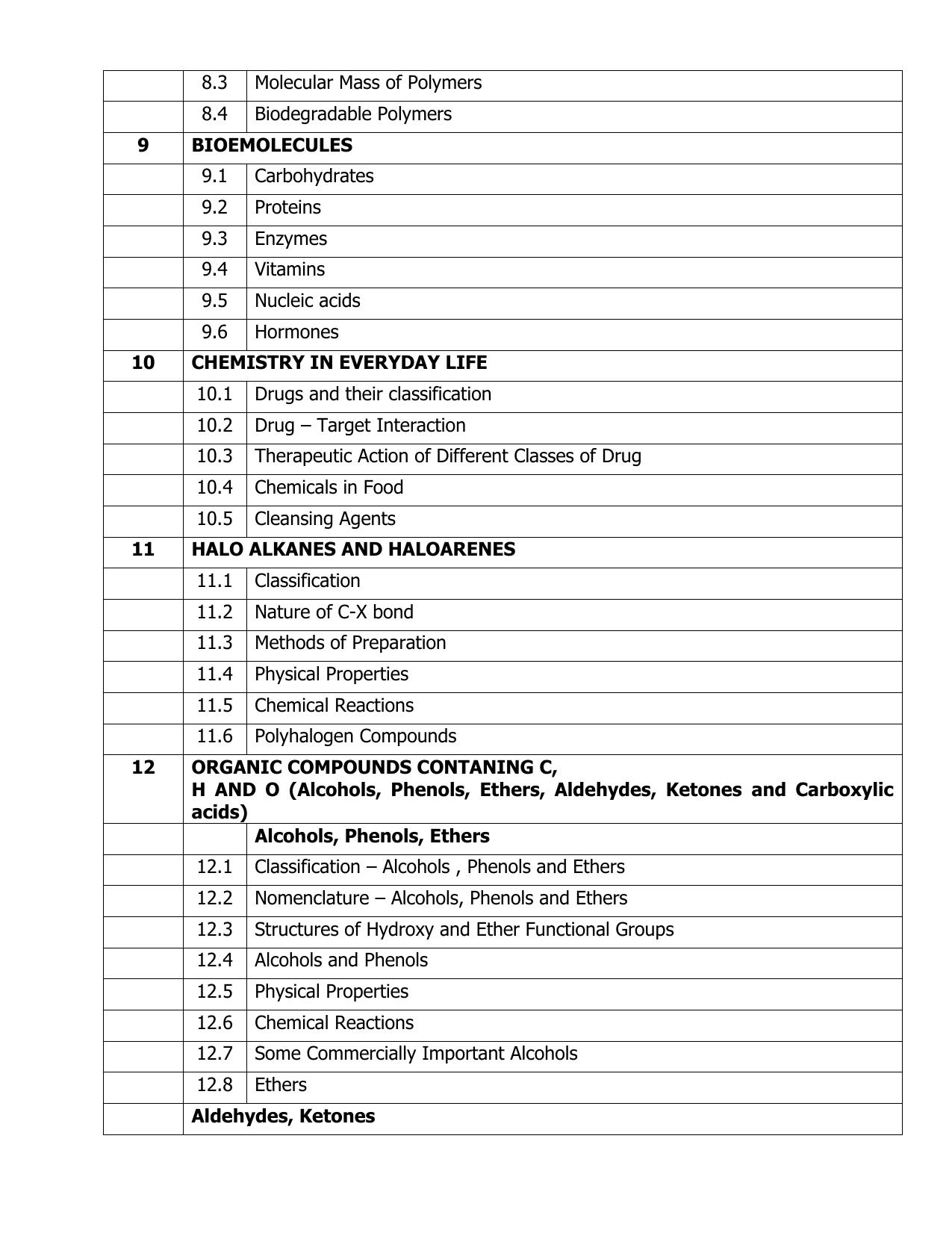
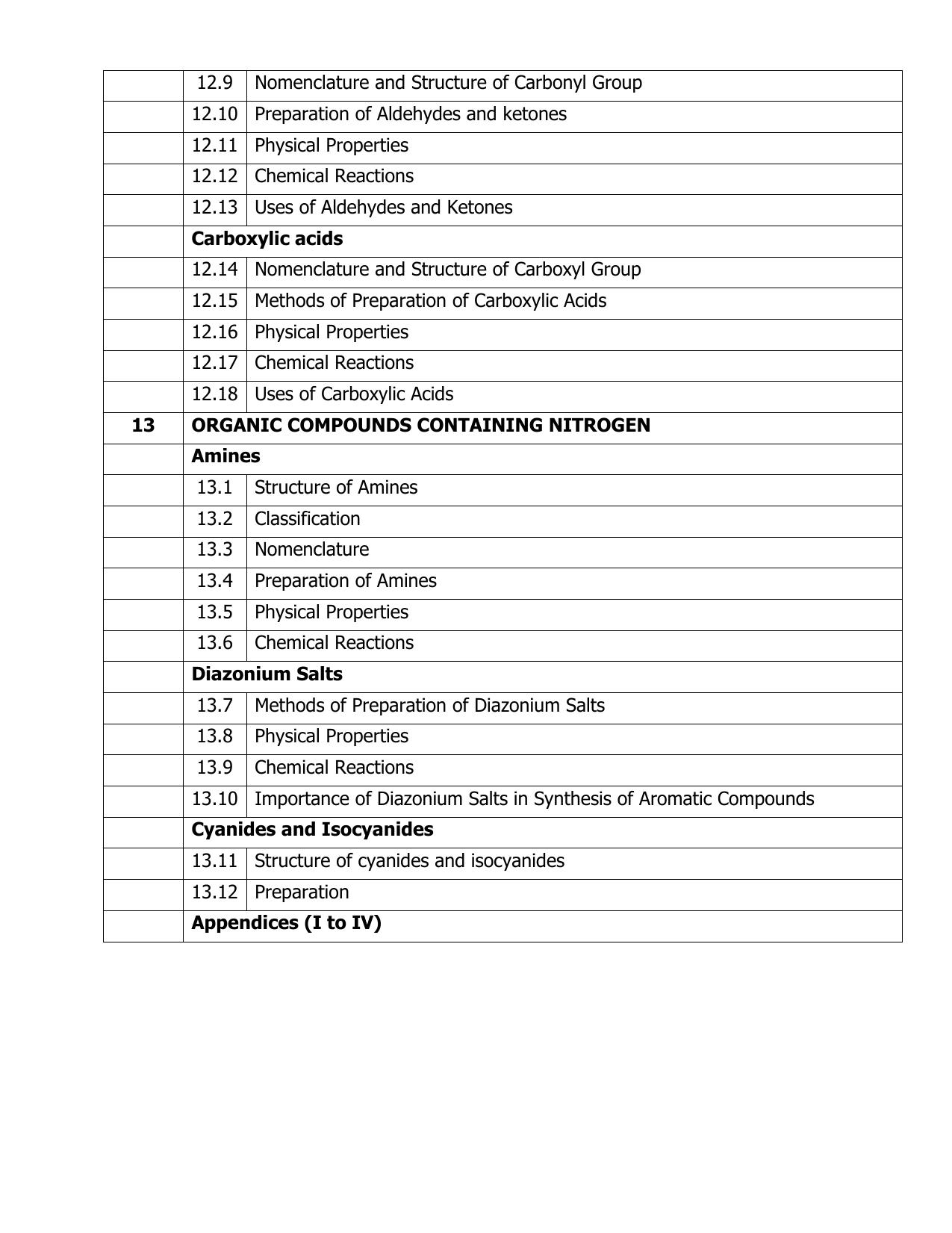
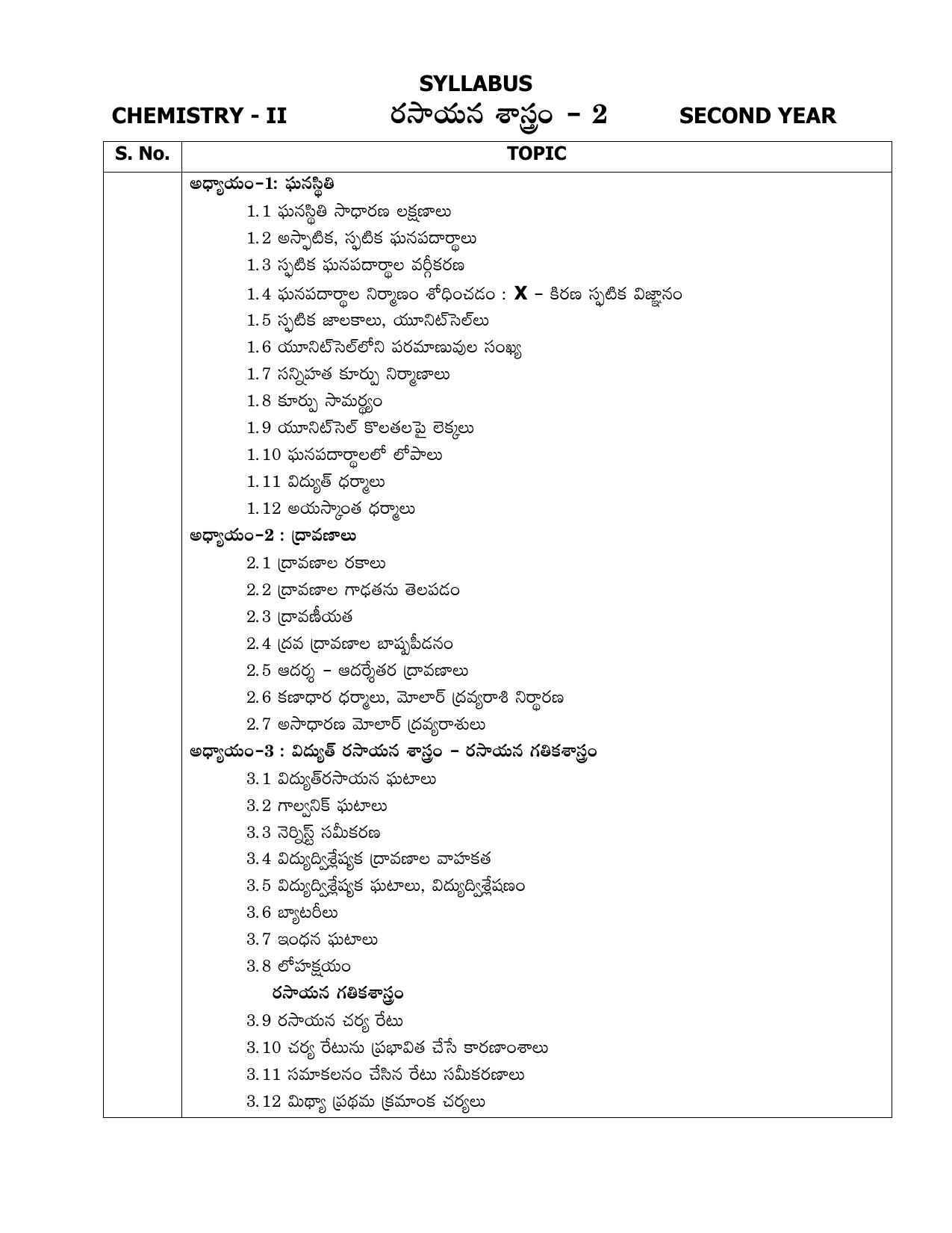
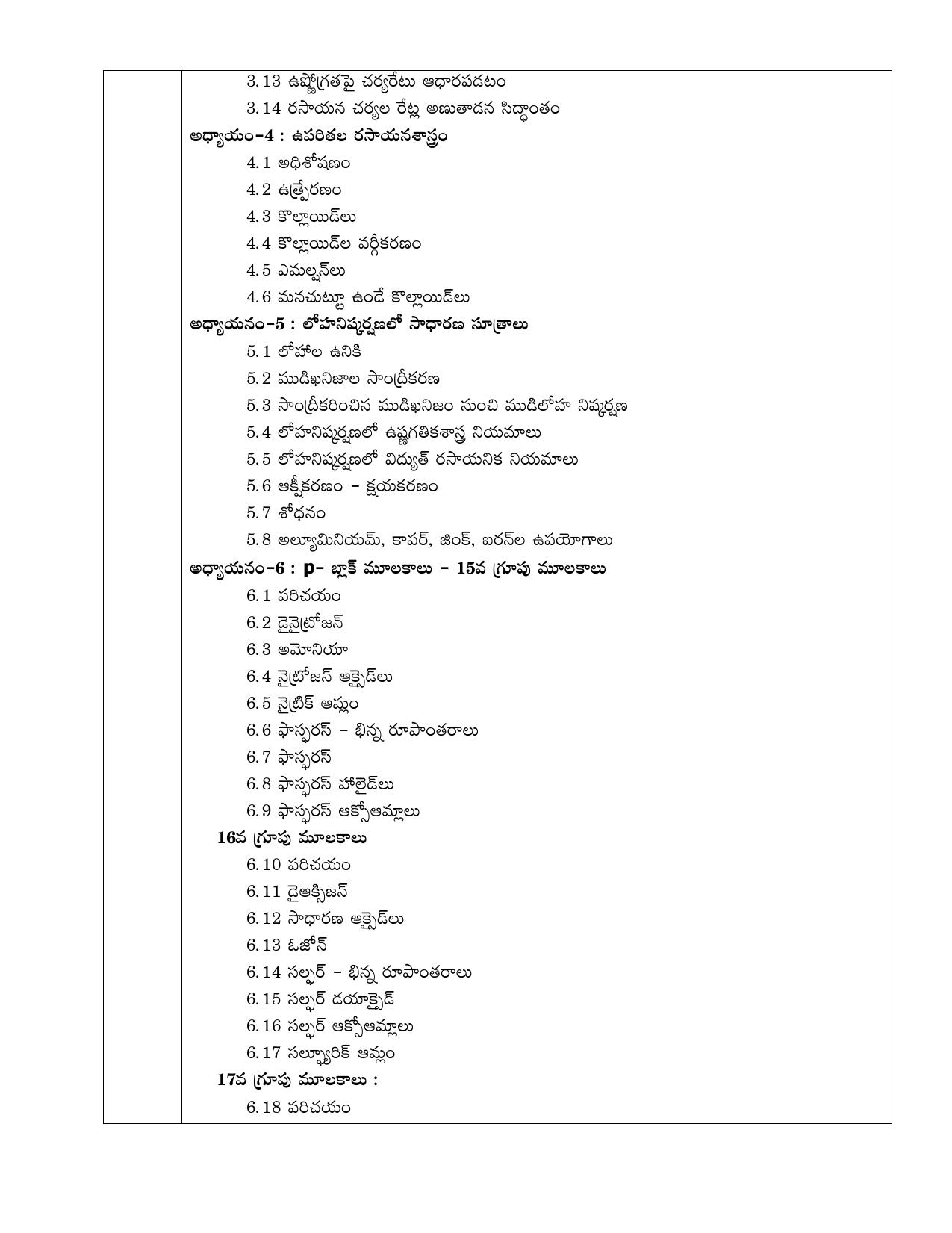
Andhra Pradesh Board Inter 2nd Year Syllabus
Arts Group:
Science Group
Languages
Andhra Pradesh Board Syllabus
If you’re seeking the curriculum for other classes in Andhra Pradesh, we’ve provided the Andhra Pradesh board syllabus for all classes as follows.
AP Board Inter 2nd Year Chemistry Syllabus – An Overview
| Aspects | Details |
|---|---|
| State | Andhra Pradesh |
| Class | Class 12 / Intermediate 2nd Year / Inter 2nd Year |
| Subject | Chemistry |
| Study Material Here | AP Board Syllabus for Class 12 Chemistry |
| More Syllabus of This Class | AP Board Syllabus for Class 12 |
| More Syllabus of This Board | AP Board Syllabus |
| Further Information on This Board | Andhra Pradesh Board |