Delhi School Survey 2026: High Court Orders Infrastructure Audit for RTE Compliance
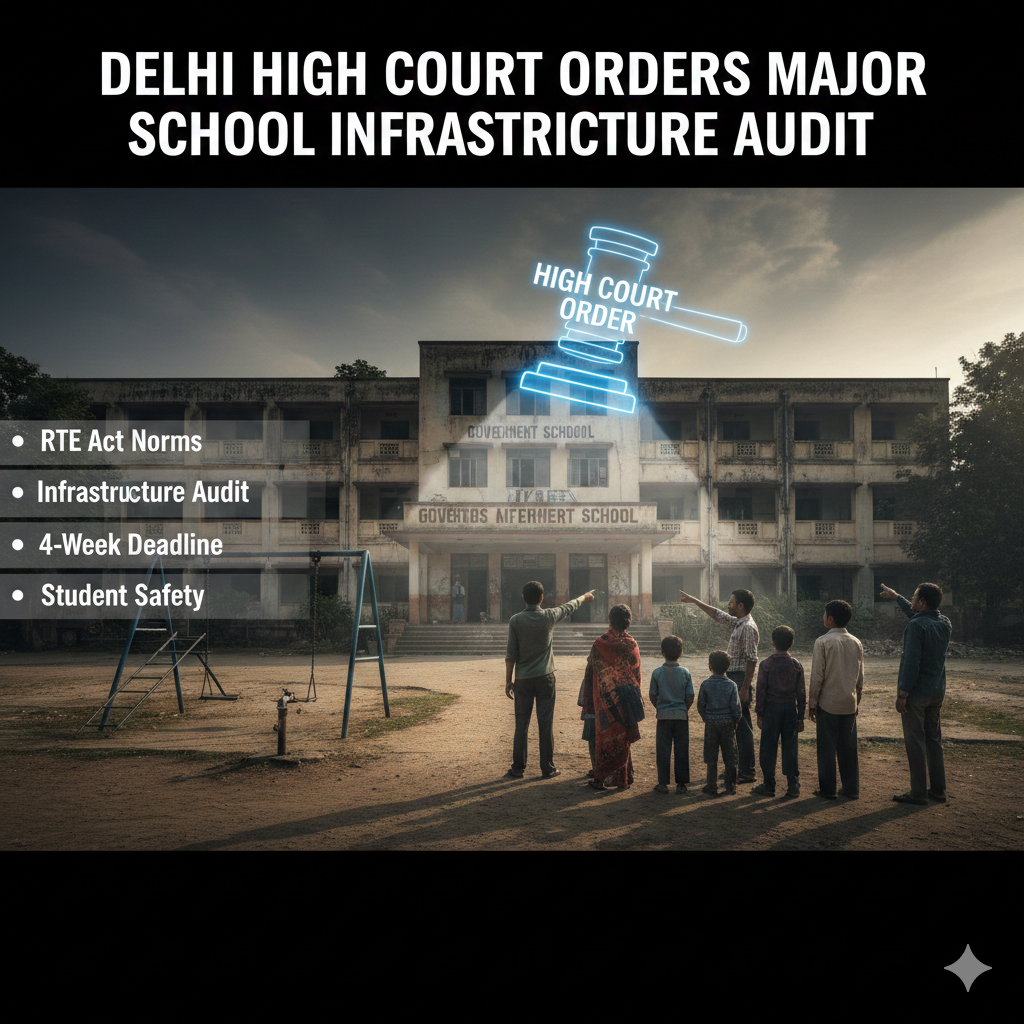
The Delhi High Court’s latest directive (passed on January 7, 2026) is a landmark move aimed at bridging the gap between legislative promises and ground reality. By ordering a comprehensive survey of all government-run schools—including those under the MCD and NDMC—the court is holding authorities accountable for the quality of elementary education. For students and parents, this means a potential surge in infrastructure upgrades, ranging from better sanitation to safer building structures.
This order is particularly significant because it expands the scope of an ongoing PIL (Public Interest Litigation) from just MCD schools to every government-managed institution in the capital. The court’s emphasis on Sections 11 and 19 of the RTE Act highlights that basic facilities like clean water, separate toilets, and adequate teacher-student ratios are not luxuries but legal mandates that cannot be ignored.
At a Glance: Delhi Govt School Survey 2026
| Organization | Event | Deadline for Survey | Official Portals |
| Delhi Govt, MCD, NDMC | RTE Compliance Infrastructure Survey | February 4, 2026 (4 weeks) | edudel.nic.in, mcdonline.nic.in |
In-Depth Eligibility & Requirements
The survey will specifically audit schools based on the Schedule of the RTE Act, 2009. Key infrastructure and academic standards include:
- Physical Infrastructure:
- All-weather buildings with at least one classroom for every teacher.
- Separate toilets for boys and girls (functional and hygienic).
- Safe and adequate drinking water facilities.
- A dedicated kitchen for preparing Mid-Day Meals.
- A playground and a boundary wall/fencing for safety.
- Academic & Staffing Norms:
- Adherence to the Pupil-Teacher Ratio (PTR) (typically $30:1$ for primary and $35:1$ for upper primary).
- Availability of a Full-time Head Teacher for schools with enrollment over 100.
- Availability of Library facilities including newspapers, magazines, and books.
- Documentation for Authorities:
- Schools must provide data on working days (200 for primary, 220 for upper primary).
- Records of instructional hours (800 hours per year for primary).
Historical Trends & Analysis
The roots of this order date back to a 2017 PIL filed by the NGO Justice For All. Historically, Delhi’s school system has faced “infrastructure lag.”
- 2024–2025 Trend: In previous hearings, the court expressed “strong displeasure” over students in North Delhi schools being forced to study in tin sheds or dilapidated buildings.
- Staffing Gaps: Audits from 2025 suggested that while enrollment in Delhi govt schools increased, the recruitment of specialized subject teachers (Math and Science) lagged by approximately 15% in certain districts.
- Fast-Track Reporting: Unlike previous years where reports were delayed, the 2026 order imposes a strict 4-week window, indicating the judiciary’s intent to see results before the new academic session begins in April.
Step-by-Step Guide for School Heads/Authorities
If you are a school administrator or official involved in the data collection, follow these steps:
- Form an Internal Audit Team: Assign a nodal officer to verify existing infrastructure against the RTE checklist.
- Conduct Physical Verification: Do not rely on old records. Physically check the functionality of toilets, water taps, and lab equipment.
- Update U-DISE Data: Ensure your school’s data on the Unified District Information System for Education is synchronized with the survey findings.
- Draft the Deficiency Report: Identify “Critical” (e.g., no water) vs “Non-Critical” (e.g., painting required) gaps.
- Submit to District Office: Forward the consolidated data to the Education Secretary or MCD Commissioner before the February 4th deadline.
Pro-Tips for Parents and Candidates
- Use the RTI Tool: Parents can use the Right to Information (RTI) Act to ask for their specific school’s “RTE Compliance Report” if they notice safety hazards.
- Monitor the SMC: Join your school’s School Management Committee (SMC) meetings; the SMC has the legal power to monitor these infrastructure improvements.
- Safety First: If a school building appears structurally unsound, report it via the DoE (Directorate of Education) Grievance Portal immediately, citing this High Court order.
Direct Links Section
- Official Notification: Education Department Circulars
- Grievance Redressal: Delhi Govt School Helpdesk
- RTE Act PDF: Full Text of RTE Act 2009