

Contents
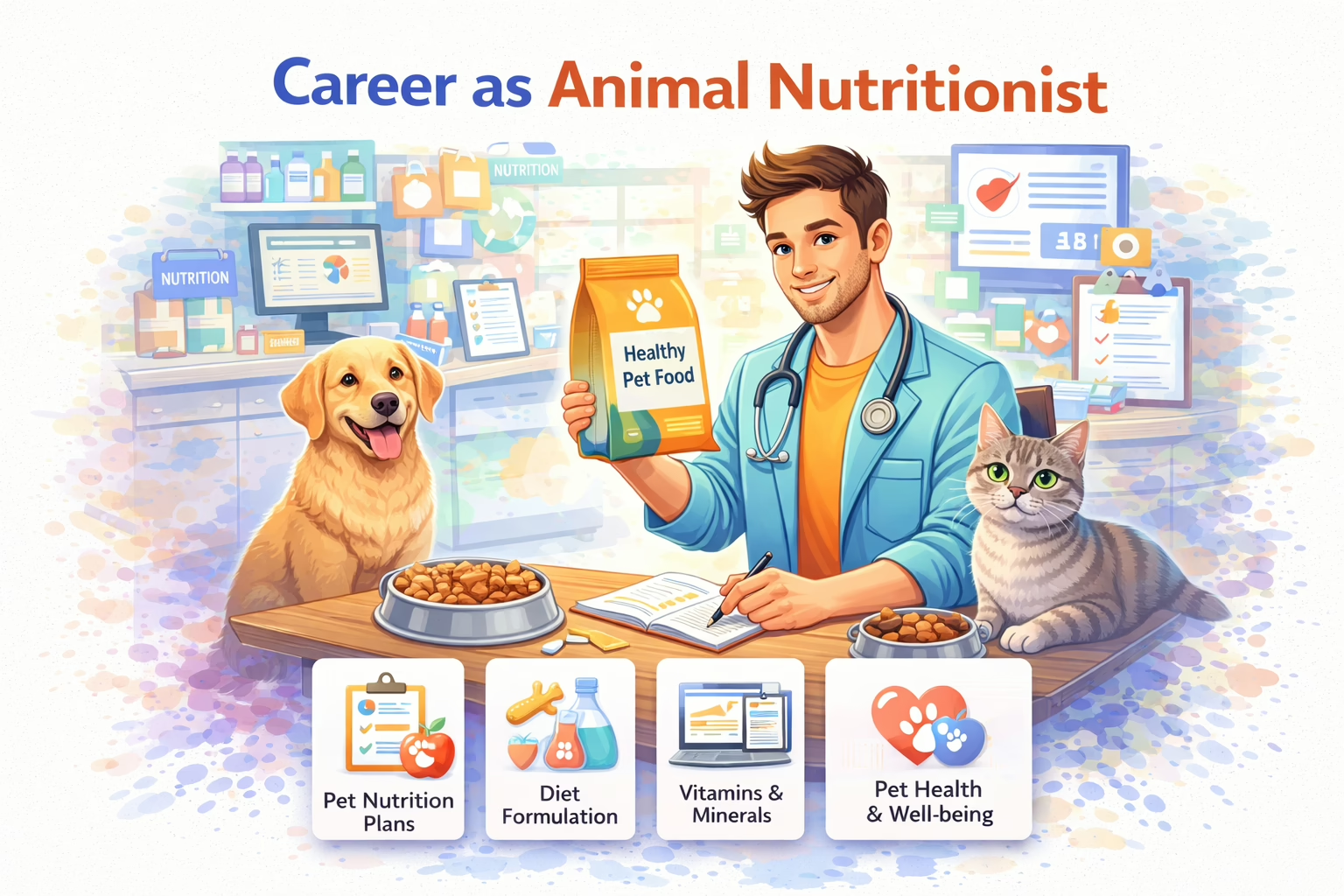
While a Veterinarian treats a sick animal, an Animal Nutritionist ensures they never get sick in the first place. In an era where pet humanization and high-yield dairy farming are peaking, the role of an Animal Nutritionist has evolved from a niche specialty into a high-demand corporate and research career.
Whether it’s formulating the perfect kibble for a golden retriever or optimizing the feed for a million-liter dairy cooperative, these professionals are the architects of animal health.
Quick Facts: Animal Nutrition at a Glance
| Feature | Details |
| Course Duration | 5.5 Years (BVSc) + 2 Years (MVSc Specialization) |
| Eligibility | 10+2 PCB (50% min) + BVSc & AH Degree |
| Key Entrance Exams | ICAR AIEEA (PG), NEET-UG (for entry to BVSc) |
| Starting Salary | ₹5 LPA – ₹9 LPA (Corporate/Research) |
| Top Recruiters | Amul, Godrej Agrovet, Suguna Foods, NDDB, Cargill |
The Roadmap: How to Become an Animal Nutritionist
Becoming a specialist in nutrition in India typically follows a veterinary path, though some enter through specialized Animal Science streams.
1. School Level (10+2)
You must clear your 12th standard with Physics, Chemistry, and Biology (PCB). High marks are essential to secure a seat in a government veterinary college via NEET-UG.
2. Undergraduate Foundation (B.V.Sc & A.H.)
You must first complete the Bachelor of Veterinary Science & Animal Husbandry. This 5.5-year degree provides the medical foundation required to understand animal metabolism and digestive anatomy.
3. Postgraduate Specialization (M.V.Sc in Animal Nutrition)
This is where you become a specialist. The 2-year Master of Veterinary Science (M.V.Sc) in Animal Nutrition focuses on:
- Ration Formulation: Balancing proteins, lipids, and minerals.
- Feed Technology: Processing and manufacturing of animal feed.
- Metabolic Disorders: Preventing diseases like Ketosis or Milk Fever through diet.
Entrance Exams & Admission (2026)
- NEET-UG: Essential for the initial 5.5-year B.V.Sc degree.
- ICAR AIEEA (PG): The primary national-level exam for admission into Master’s (M.V.Sc) programs in central and state agricultural universities.
- State University Tests: Universities like GADVASU (Punjab) or TANUVAS (Tamil Nadu) often conduct their own CETs for PG seats.
Top 5 Institutes for Animal Nutrition in India
| Institute Name | Location | Specialization Strength |
| National Dairy Research Institute (NDRI) | Karnal | Dairy Nutrition & Milk Yield |
| Indian Veterinary Research Institute (IVRI) | Bareilly | Research & Feed Quality Control |
| TANUVAS | Chennai | Poultry & Companion Animal Diet |
| GADVASU | Ludhiana | Livestock & Large Animal Nutrition |
| Assam Agricultural University (AAU) | Jorhat | High-Altitude & Exotic Nutrition |
Expert Quote (E-E-A-T)
“Modern animal nutrition is moving toward ‘precision feeding’ using IoT and AI to monitor real-time metabolic needs. Today’s nutritionist isn’t just a scientist; they are a sustainability expert, reducing methane emissions from livestock through innovative feed additives.”
— Dr. Vikram Mehra, R&D Lead at a Global Agri-Tech Firm.
Student Interview: A Day in the Life
Interviewee: Ananya K., M.V.Sc Scholar (NDRI)
Q: Is this career all about working in a lab?
A: “Not at all. I spend half my day in the feed mill or at the cattle sheds collecting samples and the other half analyzing data on a computer.”
Q: What is the hardest part of the studies?
A: “Biochemistry. You have to understand exactly how a specific amino acid affects a cow’s milk protein or a dog’s coat health.”
Q: Is there a demand for this outside of rural areas?
A: “Huge. The premium pet food industry in cities like Bengaluru and Delhi is desperate for qualified nutritionists to formulate organic and prescription diets.”
Skills for Success
- Analytical Chemistry: Testing feed samples for toxins or nutrient deficiencies.
- Software Proficiency: Using Ration Formulation Software (like WinFeed or NRC models).
- Critical Thinking: Adjusting diets based on seasonal changes or disease outbreaks.
- Math Skills: Calculating precise micro-ingredient dosages (ppm/ppb levels).
Salary & Growth (Indian Market)
- Entry-Level (Corporate): ₹5,00,000 – ₹8,00,000 per annum (Roles like Technical Officer).
- Government Sector: Scientist-level roles (Class-I Gazetted) start at approx. ₹70,000/month.
- Senior Level (10+ Years): R&D Managers or Consultants for MNCs can earn ₹20 LPA – ₹35 LPA.
Similar Career Options
- Feed Plant Manager
- Veterinary Pharmaceutical Consultant
- Livestock Farm Manager
- Quality Control Scientist
- Pet Food Entrepreneur
- Dairy Extension Officer
Pros & Cons
Pros
- Higher Corporate Pay: Generally pays better than entry-level clinical practice.
- Innovation: Opportunity to work on cutting-edge lab research and patents.
- Impact: One diet change can improve the health of thousands of animals in a herd.
Cons
- Educational Rigor: Requires 7.5 years of study (BVSc + MVSc) to be considered a “specialist.”
- Work Environment: May involve exposure to strong odors and dusty feed mill environments.
FAQ
While possible for entry-level lab roles, most high-paying industry and clinical roles require a B.V.Sc & A.H. degree as per Indian regulatory standards.
Yes. Brands like Drools, Royal Canin, and Mars Petcare hire specialists for product formulation and technical marketing.
While not the primary focus, you need a good grasp of proportions and statistics for formulation and research analysis.
It is a “hybrid” job. You will spend time in labs, feed plants, and on-field at farms or zoos.
Yes. Zoos and wildlife sanctuaries hire nutritionists to manage the diets of captive animals to ensure they replicate their natural intake.