
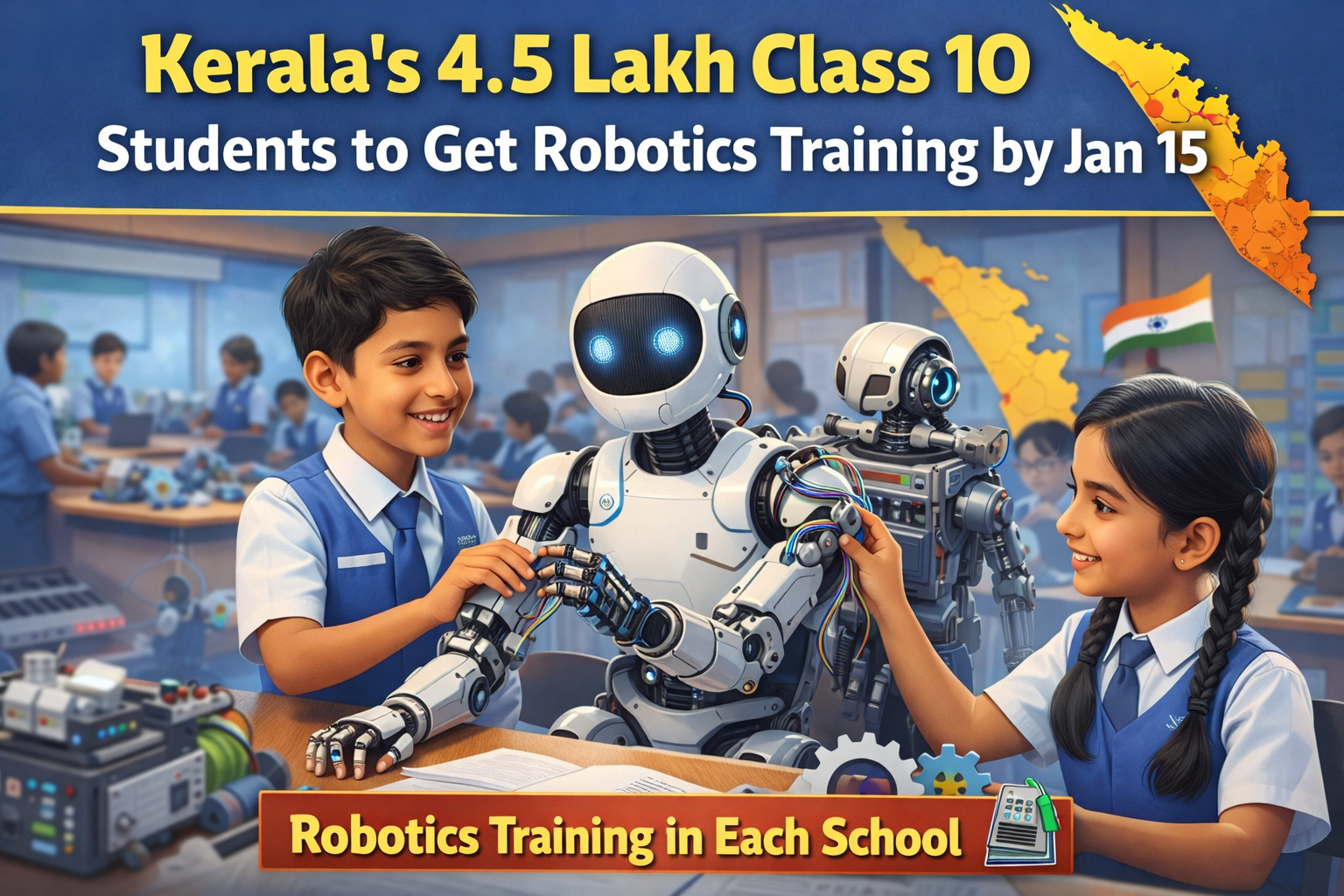
Kerala KITE Robotics Training 2026: 4.5 Lakh Class 10 Students to Master Robotics by Jan 15
Kerala Revolutionizes Public Education with Statewide Robotics Drive
The Kerala Infrastructure and Technology for Education (KITE), the technological wing of the state’s General Education Department, has officially commenced an ambitious statewide robotics training programme. Aimed at empowering approximately 4.5 lakh Class 10 students, this initiative marks a significant milestone in Kerala’s journey toward integrating cutting-edge technology into the public school curriculum.
The workshops are being spearheaded by ‘Little KITES’, recognized as India’s largest student-led IT network. According to KITE CEO K. Anvar Sadath, the programme is strategically aligned with the revised Class 10 Information Technology (IT) textbook to ensure students receive hands-on experience before the upcoming SSLC examinations.
| Organization/Board Name | Kerala Infrastructure and Technology for Education (KITE) |
| Exam/Admission Event | Statewide Robotics Training for Class 10 (SSLC) Students |
| Target Participants | ~4.5 Lakh Students (Govt & Aided Schools) |
| Completion Deadline | January 15, 2026 |
| Official Website | kite.kerala.gov.in |
Training Modules: From Basics to Practical Projects
The robotics training is structured into two comprehensive sessions designed to transition students from theoretical understanding to practical application.
Session 1: Introduction to Robotics Architecture
- Conceptual Overview: Students learn the global significance of robotics and its cross-sectoral applications.
- Hardware Components: Introduction to the “brain” and “senses” of a robot, including:
- Sensors: For input data.
- Microcontrollers: (Arduino UNO board) for processing.
- Actuators: (LEDs and Buzzers) for output.
- Kit Familiarization: Hands-on time with KITE’s specialized robotics kits, including breadboards and connecting components.
Session 2: Coding and Practical Assembly
- Block-Based Coding: Students utilize PictoBlox software to write code for basic electronic tasks.
- Interactive Tasks: Training includes programming LEDs to blink and operating buzzers.
- Major Project: The culmination involves students independently building an automatic sanitizer dispenser using IR sensors and servo motors.
Implementation Strategy & “Little KITES” Mentorship
To ensure high-quality learning, KITE has implemented a collaborative model:
- Peer Mentorship: Workshops are guided by trained Little KITES members and school mentors.
- Resource Sharing: One robotic kit is allocated for every group of 4 to 5 students to encourage teamwork.
- Collaborative Hubs: Schools without active Little KITES units have been directed to partner with neighboring schools to ensure no student is left behind.
The initiative leverages the existing high-tech labs in Kerala’s government schools to prepare the youth for future career opportunities in an increasingly automation-driven global economy.
Direct Links Section
- Official KITE Website: kite.kerala.gov.in
- Samagra Resource Portal: samagra.kite.kerala.gov.in
- Little KITES Management System: littlekites.kite.kerala.gov.in


