

Contents
- 1 Future of Agricultural Engineering
- 1.1 Smart Sensors and Monitoring
- 1.2 Precision Agriculture
- 1.3 Automation and Robotics
- 1.4 Internet of Things (IoT)
- 1.5 Vertical Farming and Controlled Environment Agriculture (CEA)
- 1.6 Biotechnology and Genetic Engineering
- 1.7 Big Data and Analytics
- 1.8 Sustainable Practices and Agroecology
- 1.9 Renewable Energy Integration
- 1.10 Advanced Irrigation Technologies
- 1.11 Post-Harvest Technology
- 2 FAQs
Agricultural engineering is a vital field that integrates engineering principles with agricultural practices to enhance productivity and sustainability. Here is an introduction to agricultural engineering based on the provided search results.
Agricultural engineering applies engineering science and technology to agricultural production, aiming to improve efficiency and reduce complexities in farming operations. This discipline encompasses various areas, including the design and development of machinery, irrigation systems, and farm structures, as well as the management of resources like land and water
Future of Agricultural Engineering
These trends indicate a significant transformation in agricultural engineering, driven by technological advancements and the need for sustainable practices to meet the demands of a growing global population. The integration of these innovations is essential for creating a resilient and efficient agricultural system.
Current Trends in Agricultural Engineering
Current trends in agricultural engineering reflect the integration of advanced technologies and innovative practices aimed at enhancing agricultural productivity, sustainability, and efficiency.
Here are the key trends shaping the field today:
Smart Sensors and Monitoring
Smart sensors and monitoring technologies are revolutionizing agriculture by providing real-time data and insights that enhance decision-making and resource management.
Smart sensors act as the “eyes and ears” of agricultural operations, enabling farmers to monitor various environmental and operational parameters. They collect data on soil health, crop growth, weather conditions, and machinery performance, which is essential for optimizing farming practices and improving productivity.
Key Functions of Smart Sensors
- Soil Moisture Monitoring: Soil moisture sensors provide critical data on the moisture content in the soil, allowing farmers to manage irrigation more effectively. This helps prevent overwatering or underwatering, optimizing water use and promoting healthier crops .
- Weather Monitoring: Weather sensors collect data on temperature, humidity, wind speed, and rainfall. This information aids farmers in predicting weather patterns and adjusting their farming practices accordingly, which is crucial for planning planting and harvesting schedules .
- Crop Health Monitoring: Sensors designed to assess crop health can measure parameters such as chlorophyll content and leaf temperature. By detecting early signs of disease or nutrient deficiencies, farmers can take timely action to protect their crops .
- pH and Nutrient Monitoring: pH sensors help maintain optimal soil acidity levels, which is essential for nutrient uptake by plants. These sensors enable farmers to adjust soil pH as needed, ensuring healthy crop growth .
- Light Sensors: Light sensors monitor the intensity and quality of light received by crops, which is particularly useful in indoor farming or greenhouses. This data helps optimize artificial lighting and improve crop yields .
- Location Sensors: These sensors utilize GPS technology to track the location of farming equipment and assets. They provide valuable insights into the layout of fields and help in managing resources effectively .
- Water Quality Monitoring: Sensors that monitor water quality ensure that irrigation water is free from contaminants, which is vital for maintaining soil health and crop quality .
- Data Integration and IoT: The integration of smart sensors with the Internet of Things (IoT) allows for remote monitoring and control of farming operations. This technology enables farmers to access real-time data from anywhere, facilitating timely decision-making .
Benefits of Smart Sensors
- Enhanced Decision-Making: By providing real-time data, smart sensors enable farmers to make informed decisions regarding irrigation, fertilization, and pest control, ultimately leading to increased crop yields and reduced waste .
- Resource Optimization: Smart sensors help optimize the use of water, fertilizers, and pesticides, contributing to more sustainable farming practices and reducing environmental impact .
- Increased Efficiency: Automation and data-driven insights from smart sensors streamline farming operations, reducing labor costs and improving productivity .
- Adaptation to Climate Change: By monitoring environmental conditions and crop health, smart sensors assist farmers in adapting to the challenges posed by climate change, such as erratic weather patterns and resource scarcity
Precision Agriculture
Precision agriculture utilizes data analytics, GPS, and remote sensing technologies to optimize field-level management regarding crop farming. This approach allows farmers to monitor crop health, soil conditions, and resource usage in real-time, leading to more efficient application of inputs such as water, fertilizers, and pesticides.
Automation and Robotics
1. Automation of Labor-Intensive Tasks
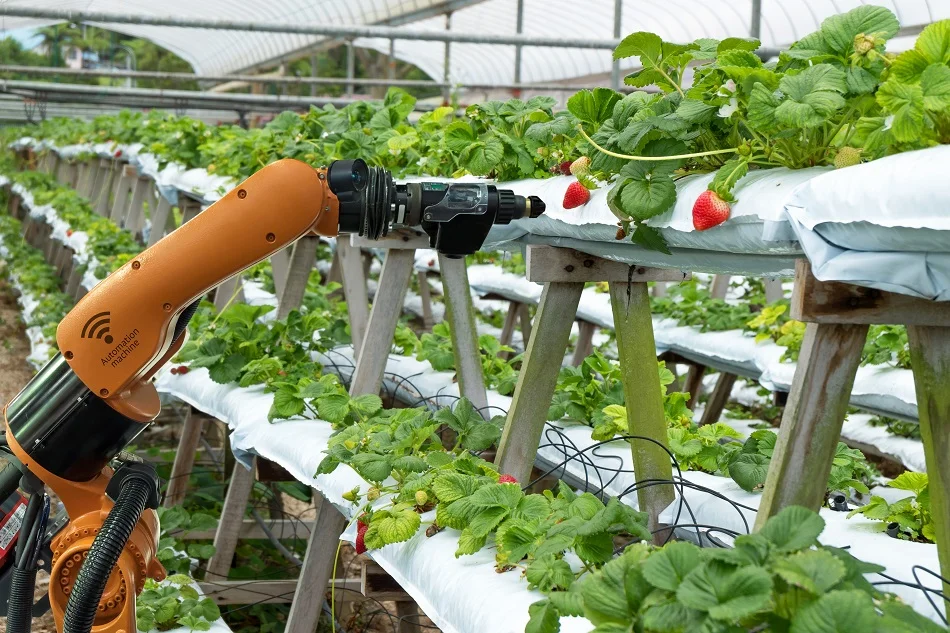
Robots are designed to automate various labour-intensive tasks in agriculture, including:
- Seeding and Planting: Autonomous machines can accurately sow seeds at optimal depths and spacing, enhancing crop establishment.
- Harvesting: Robots equipped with sensors and advanced algorithms can identify and pick ripe fruits and vegetables, significantly reducing the reliance on manual labor, especially during peak harvest times.
- Weeding and Pest Control: Precision robots can apply herbicides selectively, targeting weeds while minimizing chemical use on crops. Some robots even utilize lasers for weed removal, reducing environmental impact.
2. Crop Monitoring and Data Collection
Robots, including drones and ground vehicles, are employed to monitor crop health and gather critical data. They can assess moisture levels, detect diseases, and evaluate plant health, allowing farmers to make informed decisions based on real-time information.
3. Enhanced Efficiency and Productivity
The integration of robotics in agriculture leads to increased efficiency and productivity. Robots can operate continuously without fatigue, performing tasks faster and more accurately than human laborers. This capability is particularly beneficial in large-scale operations where timely interventions are crucial to prevent crop losses.
4. Reduction of Human Error
With limited human involvement, agricultural robots minimize the chances of human error in repetitive tasks. This precision ensures consistent application of inputs like fertilizers and pesticides, contributing to better crop quality and yield.
5. Addressing Labor Shortages
The agricultural sector faces significant labor shortages, particularly for seasonal tasks like fruit picking. Robotics provides a solution by offering reliable and consistent labor alternatives, ensuring that crops are harvested at the right time and reducing waste due to unharvested produce.
6. Sustainability and Environmental Benefits
Robots contribute to sustainable farming practices by optimizing resource use. For example, precision irrigation systems can apply water only where needed, reducing waste and conserving resources. Moreover, the targeted application of chemicals helps protect the environment and promotes biodiversity.
7. Advanced Technologies Integration
Modern agricultural robots are increasingly integrated with artificial intelligence (AI) and machine learning (ML), enabling them to learn from data and improve their performance over time. This technological advancement enhances their ability to adapt to various farming conditions and tasks.
8. Future Prospects and Market Growth
The agricultural robotics market is projected to grow significantly, driven by the rising demand for automation and the need to increase food production efficiency. The global market is expected to expand from $13.4 billion in 2023 to approximately $86.5 billion by 2033, indicating a compound annual growth rate of 20.5%.
Internet of Things (IoT)
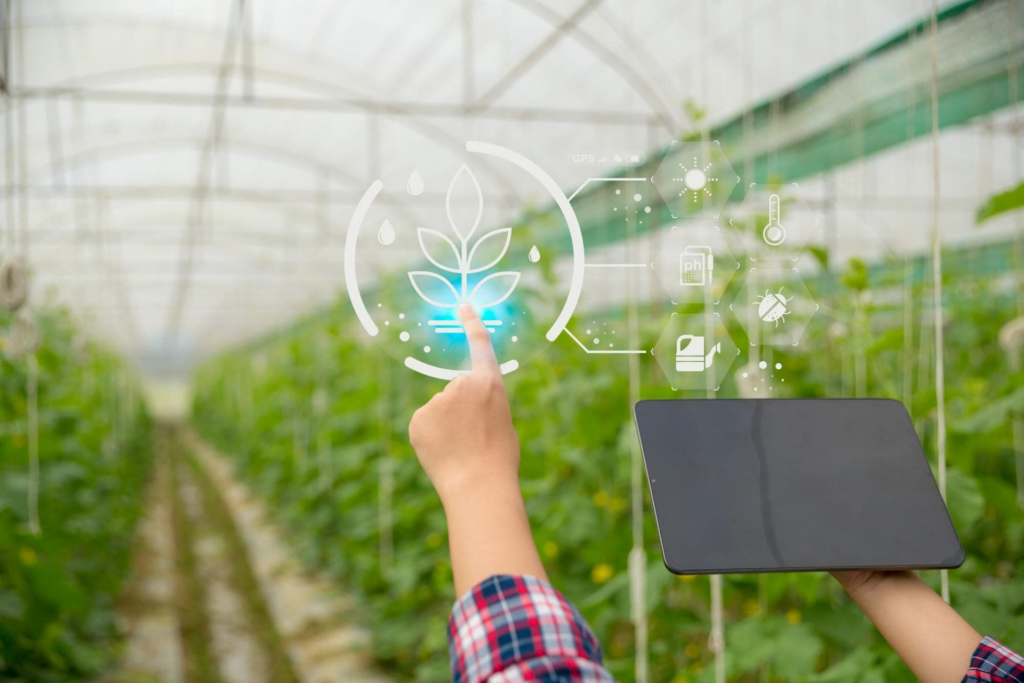
IoT technology is being increasingly adopted in agriculture, enabling the interconnection of devices and sensors to collect data on various farming parameters. This real-time data helps farmers make informed decisions, enhancing productivity and sustainability.
Key Applications of IoT in Agriculture
- Crop Monitoring
- Smart Irrigation Systems
- Livestock Management
- Weather Forecasting
- Pest and Disease Control
- Data Analytics and Decision Support
Benefits of Implementing IoT in Agriculture
- Increased Efficiency: IoT technologies automate various farming processes, reducing the need for manual labor and increasing operational efficiency.
- Resource Optimization: By monitoring and analyzing data, farmers can optimize the use of water, fertilizers, and pesticides, leading to cost savings and reduced environmental impact.
- Enhanced Productivity: Real-time monitoring allows for timely interventions, improving crop yields and overall farm productivity.
- Sustainability: IoT promotes sustainable farming practices by enabling precise resource management, reducing waste, and minimizing the ecological footprint of agricultural activities.
Vertical Farming and Controlled Environment Agriculture (CEA)
Vertical farming and CEA are gaining popularity, especially in urban areas where land is limited. These methods allow for year-round crop production in controlled environments, reducing water usage and minimizing the need for pesticides while maximizing yield per square foot.
Biotechnology and Genetic Engineering
Advancements in biotechnology and genetic engineering are crucial for developing crops with improved traits such as drought resistance and higher nutritional value. These innovations promote sustainable agricultural practices and help meet the growing food demand.
Biotechnology has significantly impacted farming by introducing innovative techniques that enhance agricultural productivity, sustainability, and food quality. Here are the key ways in which biotechnology is transforming agriculture:
1. Increased Crop Production: Biotechnology enables the development of genetically modified organisms (GMOs) that can yield higher outputs with fewer resources. For instance, crops like Bt cotton are engineered to resist pests, resulting in reduced losses after harvest and increased overall productivity. This is crucial in meeting the demands of a growing global population while utilizing limited arable land.
2. Enhanced Nutritional Value: Biotechnology allows for the fortification of crops with essential nutrients. For example, genetically engineered crops can be modified to have higher vitamin content, improving their nutritional value and addressing deficiencies in diets, particularly in developing countries.
3. Pest and Disease Resistance: Biotech crops are often designed to be resistant to specific pests and diseases, reducing the need for chemical pesticides. This not only lowers production costs for farmers but also minimizes the environmental impact associated with pesticide use. Crops engineered for disease resistance can lead to healthier plants and reduced crop failures.
4. Environmental Sustainability: Biotechnology contributes to more sustainable farming practices by reducing the reliance on chemical fertilizers and pesticides. For instance, genetically modified crops can be engineered to tolerate herbicides, allowing for more efficient weed control without harming the crop itself. This leads to improved soil health and reduced chemical runoff into waterways.
5. Drought and Stress Tolerance: With climate change posing challenges to agriculture, biotechnology plays a crucial role in developing crops that can withstand extreme weather conditions, such as drought, flooding, and temperature fluctuations. These stress-tolerant varieties help ensure food security in adverse environmental conditions.
6. Improved Crop Quality: Biotechnology can enhance the quality of agricultural products, making them more appealing to consumers. This includes improvements in flavor, texture, and shelf life, which can lead to reduced food waste and better marketability of produce.
7. Efficient Resource Use: Biotech innovations enable more efficient use of resources such as water and fertilizers. For example, certain genetically modified crops require less water or can thrive in nutrient-poor soils, which is particularly beneficial in regions facing water scarcity or poor soil quality.
8. Research and Development Advancements: The field of agricultural biotechnology is continuously evolving, with ongoing research aimed at discovering new genetic traits and improving existing technologies. This includes advancements in gene editing techniques, such as CRISPR, which allow for precise modifications to plant genomes, leading to faster development of improved crop varieties
9. Economic Benefits for Farmers: Adoption of GM crops has been associated with increased profits for farmers. Studies indicate that farmers who use GM crops can experience profit increases of up to 69% compared to those who do not use them. This economic advantage is particularly beneficial for farmers in developing countries, where agricultural productivity is crucial for economic stability
Big Data and Analytics
The agricultural sector is increasingly leveraging big data analytics to analyze trends and improve decision-making processes. By utilizing large datasets, farmers can predict crop yields, manage risks, and enhance overall farm management strategies.
Sustainable Practices and Agroecology
There is a growing emphasis on sustainable agricultural practices that minimize environmental impact. This includes resource-efficient farming techniques, agroecology, and practices that enhance biodiversity and soil health.
Agroecology and conservation agriculture are closely intertwined concepts that focus on sustainable farming practices aimed at enhancing productivity while preserving the environment.
Conservation agriculture (CA) is defined by the Food and Agriculture Organization (FAO) as a farming system that promotes:
- Minimum Soil Disturbance: This principle emphasizes no-till farming practices, which help maintain soil structure, enhance organic matter, and reduce erosion. By minimizing mechanical soil disturbance, farmers can preserve soil health and improve water retention.
- Permanent Soil Cover: Maintaining a cover of living or dead plant material protects the soil from erosion and improves soil moisture retention. This practice also enhances biodiversity and promotes beneficial biological processes in the soil.
- Diversification of Plant Species: Crop diversification through rotations or intercropping increases biodiversity, which can lead to improved pest and disease resistance, better nutrient cycling, and enhanced resilience to climate variability.
Environmental Benefits
- Soil Health Improvement: By reducing soil disturbance and maintaining cover, CA enhances soil structure, increases organic matter, and promotes microbial activity, which are crucial for soil fertility.
- Biodiversity Enhancement: The diversification of crops helps to increase both above and below-ground biodiversity, contributing to healthier ecosystems.
- Water Conservation: CA practices improve water infiltration and retention, which is vital for crop growth, especially in regions facing drought conditions.
Economic Advantages
- Cost Reduction: Farmers practicing CA can save on labor and fuel costs associated with tillage operations. Reports suggest that not tilling the soil can save between 30% and 40% in time and labor costs compared to conventional methods.
- Yield Stability: While initial yield benefits may take time to manifest, over the long term, CA can lead to improved yields and reduced variability due to its focus on soil health and resilience to climate impacts.
Renewable Energy Integration
Agricultural engineering is also focusing on integrating renewable energy sources, such as solar and wind, into farming operations. This shift not only reduces reliance on fossil fuels but also promotes energy efficiency in agricultural processes.
Advanced Irrigation Technologies
Innovations in irrigation technologies, such as drip irrigation and smart irrigation systems, help optimize water use, ensuring that crops receive the necessary moisture while conserving water resources.
Post-Harvest Technology
Advancements in post-harvest technology are crucial for reducing food waste and improving food safety. This includes better storage solutions, processing technologies, and transportation methods that ensure the quality and longevity of agricultural products
FAQs
Recent advancements in agricultural engineering include the integration of IoT technologies, sensor systems, unmanned aerial vehicles (UAVs), and automation in farming practices. These innovations enhance precision agriculture, improve resource management, and promote sustainable farming methods, ultimately increasing productivity and efficiency in agricultural operations
Technology significantly impacts agricultural practices by enabling precision farming, which optimizes resource usage and enhances crop yields. Innovations such as remote sensing, data analytics, and automation allow farmers to monitor crop health, manage irrigation more effectively, and reduce labor costs. Additionally, technology facilitates sustainable practices by minimizing waste and environmental impact .
Precision agriculture is a farming management approach that uses technology to monitor and manage field variability in crops. It involves the use of GPS, sensors, and data analytics to optimize inputs like water, fertilizers, and pesticides. This approach is important because it increases efficiency, reduces costs, minimizes environmental impact, and enhances crop yields, which is crucial for feeding a growing global population .
Robotics improve farming efficiency by automating labor-intensive tasks such as planting, harvesting, and monitoring crops. Robotic systems equipped with sensors and AI can perform these tasks with high precision and consistency, reducing the need for manual labor and addressing labor shortages. This automation not only enhances productivity but also lowers operational costs .
Current sustainability challenges in agriculture include soil degradation, water scarcity, climate change, and the need to reduce greenhouse gas emissions. Additionally, there is a growing concern about biodiversity loss and the overuse of chemical inputs. Addressing these challenges requires the adoption of sustainable practices, such as conservation agriculture, integrated pest management, and the use of biotechnology to enhance crop resilience .