

Contents
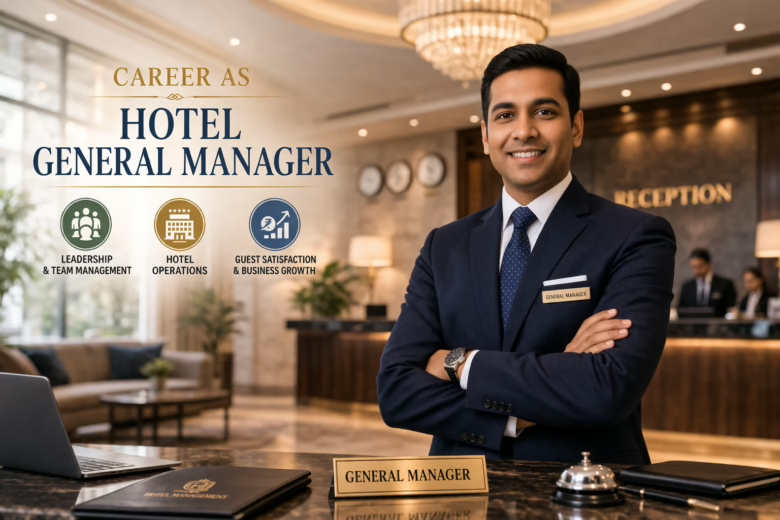
A Hotel General Manager (GM) is the strategic heart of a hospitality establishment. From managing multi-million dollar budgets and leading diverse teams to ensuring every guest receives world-class service, the GM is the ultimate decision-maker. In 2026, as India’s hospitality market is projected to hit $28 billion, the demand for tech-savvy, emotionally intelligent leaders has never been higher.
Quick Facts: Hotel General Manager
| Feature | Details |
| Duration | 3–4 Years (UG) + 5–10 Years Experience |
| Eligibility | 10+2 (Any Stream: PCM/PCB/Commerce/Arts) |
| Key Entrance Exams | NCHMCT JEE, IIHM eCHAT, CUET, MAH BHMCT CET |
| Starting Salary (Fresher) | ₹3.5 LPA – ₹6 LPA |
| Mid-Career Salary (GM) | ₹18 LPA – ₹35 LPA+ |
| Top Recruiters | Taj, ITC, Marriott, The Oberoi, Hyatt, Hilton |
The Hook: Why This Career Matters Today
The hospitality industry is no longer just about “beds and breakfast.” In a post-digital era, the role of a Hotel General Manager has evolved into that of a Chief Experience Officer. Today’s GMs integrate AI for hyper-personalization, lead sustainability initiatives, and manage complex global brands. If you thrive in high-pressure environments, love cultural diversity, and possess a “service-first” mindset, this is one of the most prestigious and globally mobile careers you can choose.
The Roadmap: From Student to General Manager
1. School Level (10+2)
- Stream: You can come from any stream (Science, Commerce, or Arts).
- Requirement: Minimum 50% aggregate in Class 12.
- Key Subject: Proficiency in English is mandatory, as it is the primary language of the industry and entrance exams.
2. Undergraduate Degree
To reach the GM level, a formal degree is non-negotiable for luxury chains:
- B.Sc. in Hospitality & Hotel Administration: The gold standard in India (offered by IHMs).
- BHM (Bachelor of Hotel Management): A 4-year intensive professional degree.
- BBA in Hotel Management: Focuses more on the business and administrative side.
3. The Experience Ladder
You don’t become a GM overnight. The typical path is:
- Management Trainee (MT): Most luxury hotels hire top graduates into MT programs.
- Department Head: Excelling in Front Office, F&B, or Rooms Division (5–7 years).
- EAM (Executive Assistant Manager): The “Second-in-Command” role.
- General Manager: Usually achieved after 10–12 years of proven excellence.
Entrance Exams & Admission
To get into top-tier colleges, you must clear one of these major exams:
- NCHMCT JEE: The most prestigious national exam for admission to 70+ Government Institutes of Hotel Management (IHMs).
- IIHM eCHAT: An online-based test for the International Institute of Hotel Management campuses.
- MAH BHMCT CET: Specifically for top-rated government and private colleges in Maharashtra.
- CUET (UG): Now used by several central and private universities for hospitality programs.
Top 5 Institutes in India
| Institute | Location | Why Choose It? |
| IHM Pusa | New Delhi | Consistently ranked #1; elite alumni network. |
| Welcomgroup (WGSHA) | Manipal | Private excellence with global industry tie-ups. |
| IHM Mumbai | Mumbai | Proximity to corporate headquarters of major chains. |
| IHM Bangalore | Bengaluru | Known for the best Return on Investment (ROI). |
| IIHM | Kolkata/Multiple | Strong focus on international placements and internships. |
Expert Quote
“The Hotel General Manager of 2026 must be a ‘Hybrid Leader.’ You need the traditional warmth of Indian hospitality paired with the ability to interpret data analytics and manage green-certified operations. The future belongs to those who can balance high-tech efficiency with high-touch human connection.”
— Dr. Vikram Aditya, Senior Consultant & Former Regional Director of Luxury Brands.
Student Interview: A Day in the Life
Student: Rohan Sharma, Final Year, IHM Mumbai.
Q: What is the biggest challenge during the course?
“The physical stamina required. During internships, you might be on your feet for 10 hours, ensuring every detail is perfect. It’s not just glamour; it’s hard work.”
Q: Does the ‘General Manager’ goal feel attainable?
“Yes, but you have to be patient. The industry has a clear ‘MT to GM’ pipeline. If you get into a good Management Trainee program, the path is structured.”
Q: One piece of advice for aspirants?
“Work on your communication and grooming. In the first 30 seconds of an interview, the recruiter is checking if you can represent their brand.”
Skills for Success
- Technical Skills: Revenue management, Property Management Systems (PMS), and Financial Budgeting.
- Soft Skills: Emotional Intelligence (EQ), Crisis Management, Multilingualism, and Leadership.
Salary & Growth
- Entry-Level (Management Trainee): ₹30,000 – ₹45,000 per month.
- Mid-Level (Department Manager): ₹80,000 – ₹1,20,000 per month.
- Senior-Level (General Manager): ₹1.5 Lakh – ₹4 Lakh+ per month (plus perks like on-site housing and bonuses).
Similar Career Options
- Cruise Ship Manager
- Luxury Retail Manager
- Event & Wedding Planner
- Airline Cabin Crew/Ground Manager
- Corporate Catering Head
- Entrepreneur (Restaurant/Boutique Stay owner)
Pros & Cons
Pros:
- High social status and global travel opportunities.
- Dynamic work environment (no two days are the same).
- Lucrative perks in senior roles (housing, travel, dining).
Cons:
- Irregular hours, including weekends and holidays.
- High-stress levels during peak seasons.
- Long lead time to reach the top executive position.
FAQ
No, Math is not mandatory. However, basic numerical aptitude is required for the entrance exams and for revenue management later in your career.
While you can study in Government IHMs, most GM roles are in the private sector. However, government organizations like ITDC and IRCTC also hire hotel management professionals.
Absolutely. Indian hospitality graduates are highly valued in the Middle East, USA, and Europe due to their rigorous training.
Hospitality is a broad term including travel, events, and tourism. Hotel Management focuses specifically on the operations of lodging establishments.
It is possible but very difficult in luxury chains. A degree (B.Sc./BHM) is usually required to enter the management cadre.